By Brenda Wereh29 Jul, 202525 mins read 2,337 views
0 comments 0 likes
The Independent Electoral and Boundaries Commission plans to scrap voter cards for the 2027 polls, favoring biometric verification with national IDs or passports to cut costs and misuse.
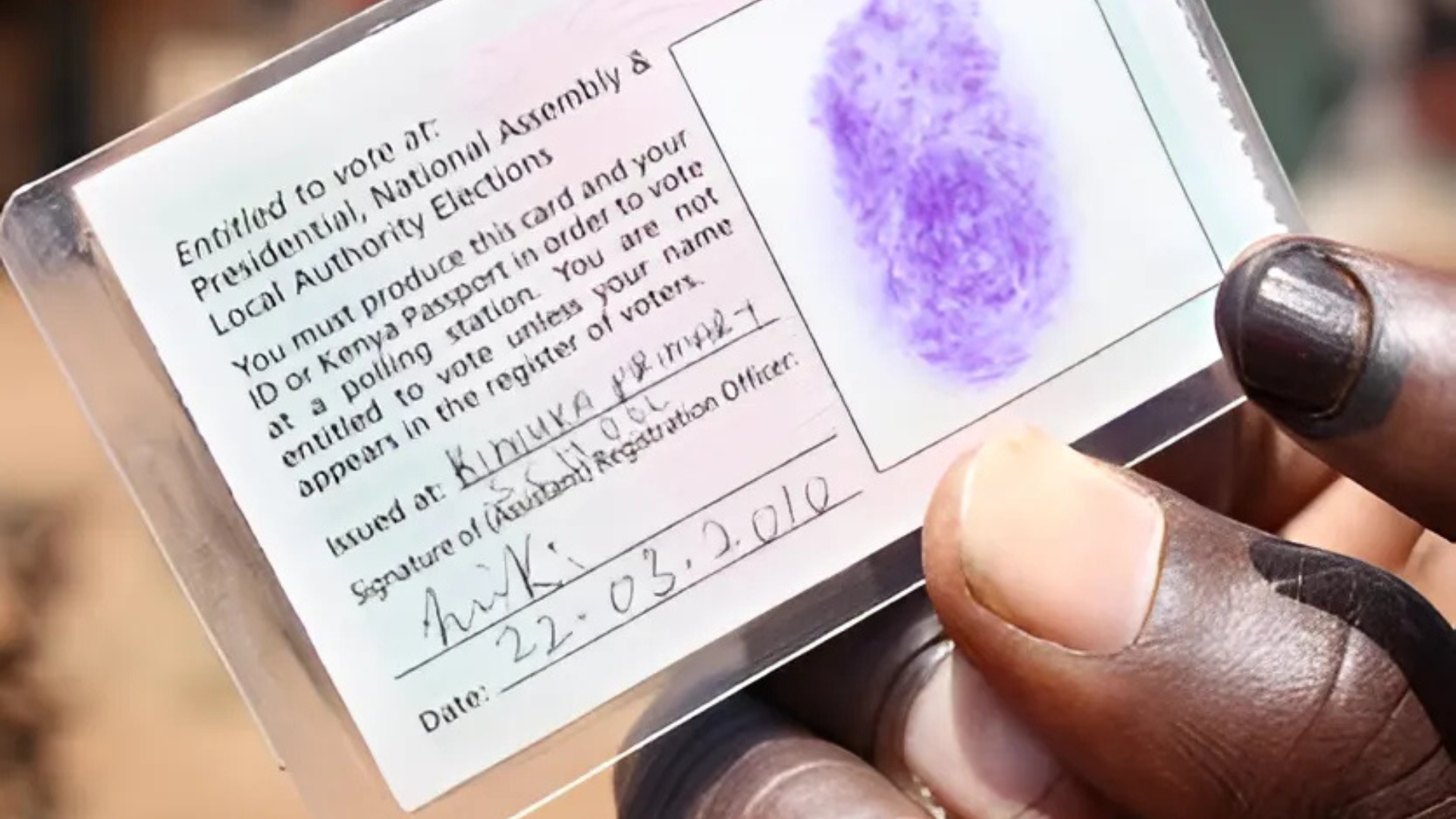
A significant shift in Kenya’s electoral process began to take shape on Tuesday, July 29, 2025, as the Independent Electoral and Boundaries Commission (IEBC) announced plans to eliminate voter cards for the 2027 General Election, opting instead for full biometric verification using national identification cards or passports. The decision, revealed during a press briefing in Nairobi at 8:00 AM East Africa Time, aims to streamline voting, reduce costs, and address concerns over misuse, marking a bold departure from decades of tradition. IEBC Chairman Erastus Ethekon outlined the proposal, stating, “Voter cards have become an unnecessary expense and are prone to manipulation; moving to biometric systems with existing IDs will strengthen our elections.” The announcement has sparked a wave of reactions across the country, with citizens weighing the convenience against potential risks.
Voters card
The move comes as the IEBC seeks to modernize its operations ahead of the 2027 polls, building on the Kenya Integrated Elections Management System (KIEMS) introduced in 2017. Voter cards, issued since the early 1990s as proof of registration, have been criticized for their high production and distribution costs, estimated at millions of shillings annually. Officials argue that the cards are no longer essential, given the biometric data captured during registration, which includes fingerprints and facial recognition linked to national IDs or passports. The new system would allow voters to present these documents at polling stations, where KIEMS devices would verify their identity instantly. A farmer in Nakuru, tending his maize fields, remarked, “If it saves money and works, I’m fine with using my ID.”
Public response has been a mix of curiosity and concern. In Kisumu, a teacher preparing lessons listened to the radio, saying, “This could speed things up if the machines don’t fail.” In Mombasa, a shopkeeper serving customers expressed doubt. “What if my ID gets lost or someone uses it to vote twice?” he asked as the news played. The IEBC insists that biometric verification, already tested in past elections, will prevent fraud, with safeguards like real-time data checks to detect duplicates. However, the proposal has raised questions about accessibility, particularly in remote areas where national ID uptake lags or biometric devices face technical issues. A youth leader in Naivasha, organizing a community meeting, added, “We need training so everyone understands this change.”
The decision to scrap voter cards follows years of debate over their utility. Critics have pointed to instances of cards being sold or used fraudulently, especially in border regions where identity verification has been lax. The IEBC estimates that producing and distributing cards costs over Sh500 million per election cycle, a burden it hopes to offset by relying on the National Registration Bureau’s existing database. The transition would also align Kenya with global trends, where countries like India and Nigeria use biometric systems to enhance electoral integrity. A driver in Garissa, fueling his matatu, noted, “If it stops cheating, I support it, but the signal must be strong out here.”
Communities across Kenya have begun discussing the implications. In rural Kitale, a farmer heard a radio update, saying, “Voter cards felt like my voting proof; this feels different.” In urban Eldoret, a student at a cyber cafe scrolled through updates, adding, “It’s modern, but what if the system crashes?” The IEBC plans a public education campaign, including SMS alerts and community forums, to address such concerns. The commission also intends to conduct pilot tests in select constituencies before the 2027 rollout, ensuring the system handles the projected 28 million voters, including 5.7 million new registrants. A mother in Nyeri, feeding her children, expressed hope. “If it’s fair, it could make voting easier,” she said, clearing the table.
The morning’s announcement drew diverse reactions. In Thika, a father waiting at a clinic said, “My wife lost her voter card last time; this might help.” In Baringo, a herder tending cattle paused to hear a broadcast, noting, “We need IDs first before this works.” The IEBC acknowledges that not all Kenyans possess national IDs, with plans to expedite registration drives in underserved areas. The biometric system, reliant on KIEMS devices, has faced past challenges like power outages and server delays, prompting the commission to invest in backup generators and offline verification modes. A health worker in Kisii, coordinating a vaccination drive, added, “Reliability is key; we can’t afford glitches on election day.”
As the day progressed, the story spread to remote regions. In Marsabit, a herder listening to a radio update said, “This could be good if they reach us.” In Mombasa’s markets, a vendor packing fish asked, “Will it stop rigging?” The IEBC argues that eliminating voter cards reduces the risk of pre-election manipulation, such as bulk printing of fake cards, a concern raised during the 2022 polls. The commission also cites cost savings to fund voter education and technology upgrades, estimated at Sh1 billion over two years. A youth leader in Naivasha, organizing a forum, reflected, “This could empower us if they get it right.” The proposal awaits public input before final approval.
The afternoon brought a reflective mood to offices and homes. In Eldoret, a public servant preparing a report said, “This could cut costs, but we need trust in the system.” In Kisumu, a mother checking on her family added, “I hope it doesn’t exclude the elderly.” The IEBC has promised to address accessibility, with plans for mobile registration units to issue IDs in rural areas. The shift also aligns with calls from political figures like Raila Odinga, who has advocated for simpler voting processes, though some critics worry it could enable identity theft if not secured. A community organizer in Turkana, planning a radio talk, remarked, “We need guarantees this won’t backfire.”
Economic pressures, with public debt at Sh10 trillion and inflation at 5.5%, underpin the IEBC’s cost-cutting rationale. The savings from scrapping voter cards could fund critical election infrastructure, including new KIEMS units and staff training. A lawyer in Nairobi, discussing over tea, noted, “This makes sense financially, but security must be airtight.” The commission plans to enhance data encryption and conduct audits to prevent breaches, addressing privacy concerns raised in past biometric implementations. A vendor in Timau, closing his stall, said, “Let’s see if it delivers on promises.” The change could set a precedent for future elections, reshaping voter engagement.
The evening saw continued engagement across the country. In Nakuru, a group at a market debated the news. “Will it work without cards?” one trader asked, sorting goods. In Nairobi’s cyber cafes, a student scrolling through updates noted, “People are talking about it online.” The IEBC’s next step involves a 60-day consultation period, inviting feedback from citizens and stakeholders. A youth leader in Kitale, organizing an event, reflected, “We want a voice in this; it affects us all.” The proposal marks a pivotal moment for Kenya’s electoral system, balancing efficiency with the need for inclusivity and trust.
Former Kiambu Governor Ferdinand Waititu has secured a major bail reprieve from the High Court, with Justice Winfrida Okwany reducing his bail from Sh53.5 million to Sh20 million cash pending appeal in his ongoing corruption case.
President Ruto and Governor Sakaja signed a cooperation agreement allocating funds for 50,000 new streetlights, water plants saving 50 million litres daily, 27 km Nairobi River sewer and ward road upgrades, with Ruto calling it a partnership to make the city livable while opposition senators warn of devolution threats.
A staff member at Moi Teaching and Referral Hospital allegedly stole Sh10 million by falsifying patient bills as paid in the eCitizen system while diverting the money to her personal account, prompting an ongoing police and hospital investigation.