In the quiet village of Githunguri in Kangema, Murang’a County, a somber air envelops the home of Boniface Mwangi Kariuki as his family prepares to lay him to rest on July 11, 2025. The 22-year-old mask vendor, whose life was tragically cut short by a police bullet on June 17 during protests in Nairobi’s Central Business District, has become a symbol of the struggle against police brutality in Kenya. His death, captured in a heart-wrenching video that spread across social media, sparked nationwide outrage and intensified demands for accountability. As the family organizes his burial, supported by donations from former Nairobi Governor Mike Sonko and President William Ruto, mourners, activists, and leaders are rallying to honor Kariuki’s memory while pushing for justice. “Boniface was our light, our provider,” said his mother, Susan Njeri, clutching a worn photograph of her son. “We’re preparing to say goodbye, but we won’t rest until those responsible are held accountable.”
The events leading to Kariuki’s death unfolded on a chaotic afternoon along Mondlane Street near Imenti House, where he was selling surgical masks to commuters. The protests, fueled by anger over the death of blogger Albert Ojwang in police custody, saw thousands of mostly young Kenyans take to the streets, demanding an end to extrajudicial killings and systemic issues like a KSh11.36 trillion public debt and 67 percent youth unemployment. According to eyewitnesses, Kariuki was not participating in the demonstrations but was caught in the melee as anti-riot police moved to disperse the crowd. A viral video showed two officers, later identified as Police Constables Klinzy Masinde Baraza and Duncan Kiprono, confronting Kariuki. Baraza allegedly fired a shot at close range, striking Kariuki near the left temple. “He raised his hands, trying to explain he was just working,” said Jane Atieno, a nearby vendor. “The officer shot him anyway, like his life didn’t matter.”
Kariuki was rushed to Bliss Health Facility for first aid before being transferred to Kenyatta National Hospital (KNH), where he underwent three emergency surgeries. Despite efforts to save him, doctors declared him brain dead on June 29, and he passed away on June 30 at 3:15 p.m. A postmortem conducted by government pathologist Dr. Bernard Midia and family-appointed Dr. Peter Ndegwa revealed four bullet fragments lodged in his brain, confirming severe head injuries as the cause of death. “The bullet caused irreparable damage,” Dr. Ndegwa said. “His chances of survival were minimal from the start.” The findings, coupled with the video evidence, led the Office of the Director of Public Prosecutions (ODPP) to approve murder charges against Baraza on July 10, while Kiprono was released due to insufficient evidence linking him to the shooting.
The financial toll of Kariuki’s 12-day stay in KNH’s Intensive Care Unit has added to the family’s grief. The hospital bill soared to KSh3.6 million, an overwhelming burden for a family reliant on hawking for their livelihood. “We couldn’t afford the daily cost of KSh180,000,” said family spokesperson Emily Wanjira. “Boniface was our breadwinner, supporting his three sisters and parents.” Relief came unexpectedly when former Nairobi Governor Mike Sonko, upon learning of their plight during a visit to Nairobi Funeral Home, donated KSh150,000 to cover transport and medical-related burial expenses. “The family was struggling to give Boniface a dignified send-off,” Sonko posted on social media. “We provided a modern hearse, a white casket, and medical support for the burial.” President Ruto, through Murang’a Woman Representative Betty Maina, also contributed KSh1 million, though some activists criticized the gesture as an attempt to deflect calls for justice.
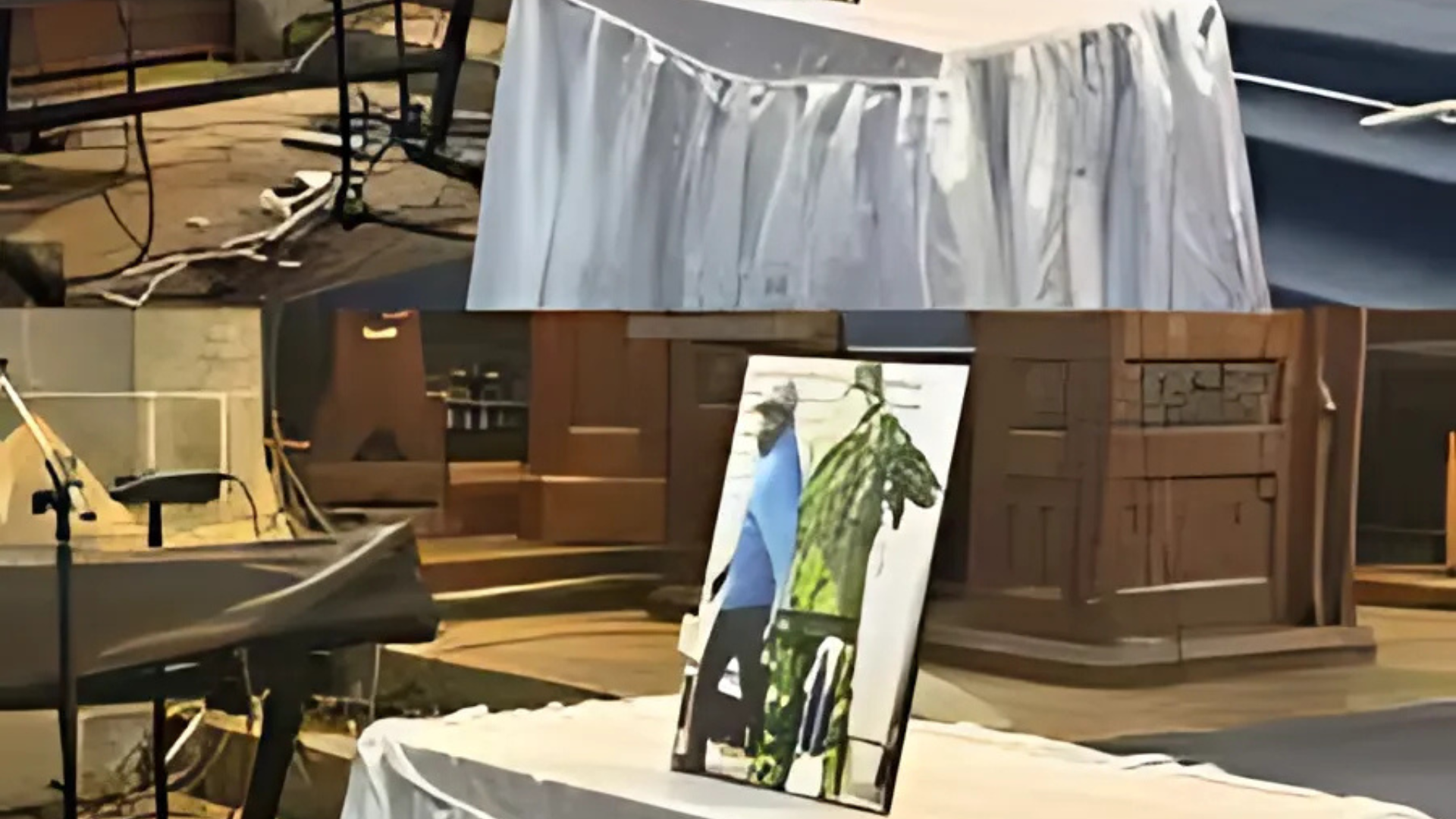
Burial preparations have been emotionally taxing, with the family holding prayer meetings in Githunguri to cope with their loss. On July 9, a requiem mass at All Saints Cathedral in Nairobi drew hundreds of mourners, including family, friends, and activists like comedian Eric Omondi, who distributed black face masks to honor Kariuki’s trade. “Boniface was selling masks to survive, not to fight,” Omondi said, his voice breaking. “We wore masks to celebrate his life and demand justice.” The service was marked by candlelight vigils, with mourners chanting “No more blood” at the spot where Kariuki was shot. Starehe MP Amos Mwago, who attended, called Kariuki a “national hero” and blamed the government for escalating peaceful protests into violence. “The state unleashed chaos, and Boniface paid the price,” Mwago said.
The family’s pursuit of justice has gained traction, with Baraza facing trial at the Milimani High Court. On July 10, High Court Judge Kanyi Kimondo ordered a mental assessment for Baraza, deferring his plea to July 28. “The officer must answer for this crime,” said Kangema MP Peter Kihungi, who, alongside MPs Mary Wamaua and Betty Maina, pledged legal support. The family’s decision to engage a private pathologist for the postmortem, announced by Wanjira on July 1, reflected their distrust in official accounts. “We needed the truth about how Boniface died,” she said, flanked by Wiper Party leader Kalonzo Musyoka and DAP-K leader Eugene Wamalwa. The autopsy’s findings, confirming the brutality of the shooting, have amplified calls for systemic police reforms.
Kariuki’s death has become a focal point in Kenya’s ongoing protests, which have seen at least 39 fatalities since June 2024, according to human rights groups. The movement, driven by Gen Z, demands accountability for police excesses and broader issues like corruption and economic mismanagement. On X, the hashtag #JusticeForBoniface trended, with users posting, “Boniface was no criminal, just a hustler. Hold the police accountable,” and “His masks protected lives; the police took his.” A candlelight vigil on July 9 near Imenti House turned chaotic when police lobbed teargas at mourners, prompting criticism from activist Okiya Omtatah. “Even in grief, we’re met with violence,” he said. “This must stop.”
The family’s modest home in Githunguri, where Kariuki bought goats to support his mother’s livelihood, now stands as a testament to his hard work. “He dreamed of building us a better house,” said his grandfather, Abel Kinyanjui, wiping away tears. “Now we’re left with memories.” Relatives described Kariuki as a selfless provider who used his earnings to educate his sisters. “He never kept much for himself,” said cousin Beatrice Wairimu. “His death has left a void we can’t fill.” The family plans to move Kariuki’s body to Kenyatta University Funeral Home before the burial, with prayers and tributes continuing in Kangema.
Political leaders have joined the outcry, with Murang’a Senator Joe Nyutu and Governor Irungu Kang’ata condemning the use of excessive force. “Boniface was unarmed, just selling masks,” Nyutu said. “This recklessness must end.” Kang’ata, a lawyer, offered pro bono legal services, vowing to see the case through. The National Integrity Alliance has called for the resignation of Interior Cabinet Secretary Kipchumba Murkomen and Inspector General Douglas Kanja, citing systemic failures. Meanwhile, the Independent Policing Oversight Authority (IPOA) is finalizing its report for the ODPP, with hopes of strengthening the case against Baraza.
The broader context of Kariuki’s death reflects Kenya’s turbulent socio-political landscape. The protests, initially sparked by Ojwang’s death, have exposed deep frustrations with governance, with demands for Deputy Inspector General Eliud Lagat’s resignation gaining momentum. The Law Society of Kenya, led by Faith Odhiambo, described Kariuki’s shooting as “premeditated,” urging swift prosecution. “This officer represents impunity in the police service,” Odhiambo said. Critics, however, question whether financial aid, like Ruto’s donation, aims to silence families, a sentiment echoed by youth leader Ubuntu Kamau, who warned against “state-sponsored cover-ups.”
As the burial approaches, the family is appealing for continued support to clear the KNH bill and ensure a dignified farewell. “Boniface deserved better,” Wanjira said, her voice steady despite her grief. “We’re grateful for the help, but justice is our priority.” The ceremony in Kangema will be a moment of closure for a family shattered by loss, but also a rallying point for a nation demanding change. Kariuki’s story, etched in the collective memory of Kenyans, underscores the cost of unchecked power and the resilience of those seeking justice.