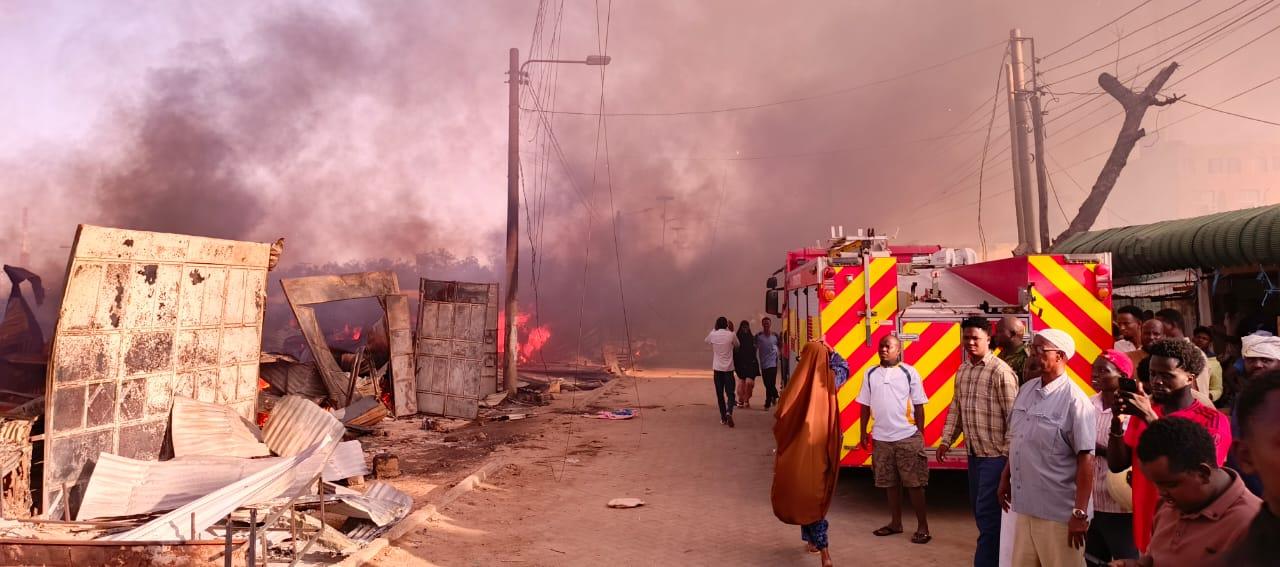
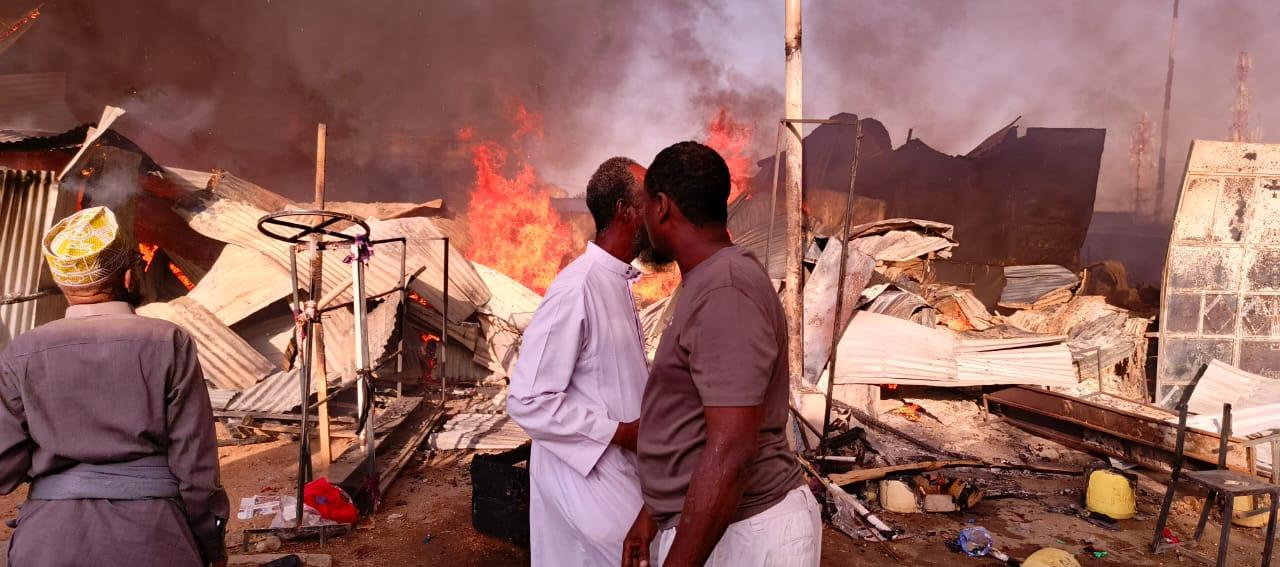
A ferocious fire tore through Garissa’s bustling Suq Mugdi market, reducing countless stalls to ashes and leaving traders in one of Kenya’s largest open-air markets reeling from devastating losses. The blaze, which erupted around 2:30 a.m., swept through the market’s densely packed wooden and iron-sheet structures, engulfing shops selling clothes, electronics, groceries, and household goods. By dawn, the once-vibrant marketplace, a lifeline for thousands of families in Garissa County, was a smoldering ruin, with traders sifting through the debris in a desperate bid to salvage what little remained of their livelihoods. The incident, the latest in a series of fires to strike the market in recent years, has sparked outrage over inadequate firefighting infrastructure and raised urgent questions about how the affected traders will recover.
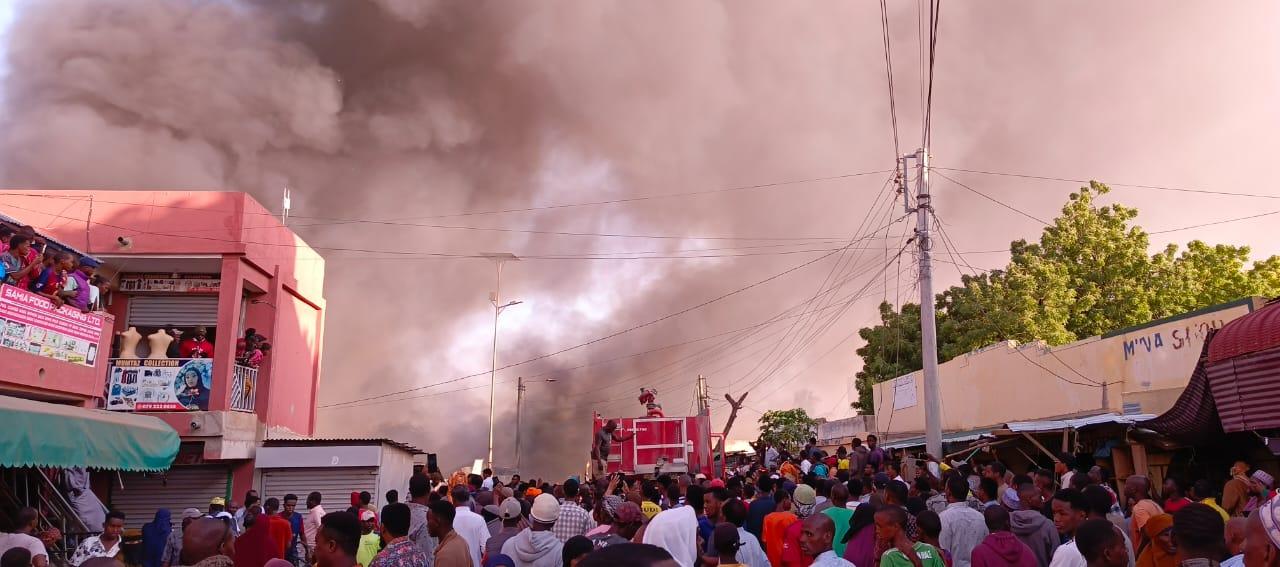
The fire broke out in the market’s western section, home to a cluster of eateries and clothing stalls, and spread rapidly due to the flammable materials used in the market’s construction. Eyewitnesses described a chaotic scene as flames illuminated the night sky, with traders and residents attempting to douse the fire with buckets of water before fire services arrived. “I heard shouts at around 2 a.m., and when I rushed to my stall, everything was already burning,” said Halima Mohamed, a clothing vendor who lost her entire stock of dresses and hijabs. “I tried to save something, but the fire was too strong. My whole life’s work is gone.” Mohamed, like many others, had invested years of savings into her business, which supported her three children and elderly parents.
Garissa’s Officer Commanding Police Division (OCPD), James Ngetich, confirmed that police were alerted to the fire shortly after it began but struggled to contain it due to its intensity. “We were notified around 2:30 a.m., but the fire spread so quickly that there was little we could do initially,” Ngetich said. “Our officers are now on the ground to secure the area and investigate the cause.” Preliminary suspicions point to an electrical fault, possibly from one of the hotels within the market, though some traders whispered fears of arson, given the market’s history of recurring fires. “This is not the first time,” said Abdi Hussein, a wholesaler who lost electronics worth over KSh2 million. “We’ve had fires before, and no one tells us why they keep happening. Is it sabotage or just negligence?”
The Suq Mugdi market, often referred to as the “dark market” due to its sprawling, maze-like layout, is a critical economic hub in Garissa, supporting over 5,000 traders and indirectly sustaining tens of thousands of livelihoods. The market’s diverse offerings, from fresh produce to second-hand clothing and hardware, make it a vital trading center for both locals and visitors from neighboring counties. The fire’s destruction is estimated to have wiped out property worth tens of millions of shillings, though exact figures remain unclear as traders continue to assess their losses. “I had just restocked my shop with new phones and accessories,” said Fatuma Ali, an electronics trader. “I took a loan to buy them, and now I have nothing to show for it. How do I repay that loan?”
The response from Garissa County’s fire services has drawn sharp criticism from traders and residents, who accused the county government of failing to invest in adequate emergency infrastructure. “The fire engine arrived too late, and when it did, it ran out of water quickly,” said Yusuf Aden, a grocery vendor who lost his entire stall. “If we had proper firefighting equipment, we could have saved more.” Former Garissa Governor Nathif Jama, who visited the site hours after the fire, echoed these sentiments, blaming the current administration for neglecting critical services. “When I left office, we had functional fire engines,” Jama said. “It’s heartbreaking to see traders suffer because of grounded equipment.” The county government, in response, promised to investigate the delays and provide support to affected traders, though no concrete plans were announced by midday.
The fire comes at a particularly difficult time for Garissa’s traders, many of whom are still recovering from the economic fallout of recent political unrest. The Gen Z protests that swept across Kenya in June 2025, including violent demonstrations in Garissa on June 25, had already strained businesses, with some traders reporting looting and vandalism. “First, we had to deal with looters during the protests, and now this fire,” said Amina Osman, a mother of four who sold kitchenware. “It feels like we’re being hit from all sides.” The protests, which marked the anniversary of the 2024 demonstrations against the Finance Bill, saw shops along Garissa’s main streets targeted, adding to the economic strain now compounded by the fire.
Local leaders and community organizations have begun mobilizing to assist the affected traders, but the scale of the disaster poses significant challenges. Garissa Senator Abdul Haji called for immediate relief, urging the national and county governments to provide financial aid and temporary trading spaces. “These traders are the backbone of our economy,” Haji said. “We cannot let them sink into poverty because of this tragedy.” The Garissa Chamber of Commerce and Industry also announced plans to set up a relief fund, with chairperson Maryan Abdi appealing for donations from businesses and well-wishers. “We need to come together as a community to rebuild,” Abdi said. “These traders have lost everything, but with support, they can start again.”
The recurring fires at Suq Mugdi, with similar incidents reported in 2022 and earlier, have reignited calls for modernizing the market’s infrastructure. Traders and residents have long demanded concrete structures to replace the wooden and iron-sheet stalls, which are highly susceptible to fire. “Every few years, we lose everything,” said Mohamed Farah, a butcher who lost his stall. “Why can’t the county build a proper market with fireproof materials?” Others pointed to the lack of fire hydrants and accessible roads within the market, which hinder firefighting efforts. “The market is too crowded, and the paths are too narrow for fire trucks to reach,” said trader Rahma Ibrahim. “We need a complete overhaul.”
The Ministry of Trade, Industry, and Investment has promised to work with the county government to assess the damage and explore long-term solutions. Principal Secretary Susan Mang’eni, who visited the site on June 30, expressed sympathy for the traders and vowed to prioritize their recovery. “This is a devastating blow to Garissa’s economy,” Mang’eni said. “We are engaging with stakeholders to provide immediate relief and plan for a more resilient market.” Proposals include low-interest loans, tax waivers, and a redesign of the market to include fire-resistant materials and better emergency access. However, traders remain skeptical, citing unfulfilled promises from previous administrations.
The fire’s impact extends beyond the traders to the wider Garissa community, which relies on Suq Mugdi for affordable goods. Shoppers like Halima Noor, a regular at the market, expressed concern about rising prices in the aftermath. “This market is where we get everything at a good price,” Noor said. “Now, with so many stalls gone, things will get expensive, and we’re already struggling.” The ripple effects are likely to be felt across the county, where small-scale traders play a critical role in the local economy.
Civil society groups, including the Garissa Human Rights Network, have called for a transparent investigation into the fire’s cause, warning against assumptions of arson without evidence. “We need to know what happened to prevent this in the future,” said director Hassan Abdi. “Blaming arson without proof only creates fear and division.” The Law Society of Kenya’s Garissa chapter also urged the government to prioritize support for the traders, many of whom lack insurance. “These are small-scale entrepreneurs with no safety net,” said chairperson Amina Warsame. “The government must step in to prevent them from falling into poverty.”
On platforms like X, Kenyans expressed solidarity with the traders, with many sharing images of the charred market and calling for urgent action. “Suq Mugdi is more than a market; it’s the heart of Garissa,” one user posted. “The government must help these traders rebuild.” Others criticized the recurring fires, with one writing, “How many times will Suq Mugdi burn before we get real solutions?” The sentiment reflects growing frustration with the lack of preventive measures in one of Kenya’s most important markets.
As investigations continue, the immediate focus is on supporting the displaced traders. The county government has set up a temporary relief center to provide food and shelter for those who lost their homes within the market’s residential sections. National government officials, including Interior Cabinet Secretary Kipchumba Murkomen, have promised to expedite aid, though specifics remain scarce. For now, the traders of Suq Mugdi face an uncertain future, their resilience tested by a disaster that has left their livelihoods in ashes. “We’ve survived tough times before,” said Halima Mohamed, her voice trembling but determined. “We’ll find a way to come back, but we need help to do it.”