A group of pro-government Members of Parliament, led by Kimilili MP Didmus Barasa, issued a fervent call for the immediate arrest of former Deputy President Rigathi Gachagua, accusing him of orchestrating violent protests and inciting chaos in Kenya’s capital. The demand, made during a press conference in Nairobi, came a day after demonstrations on June 25, which marked the anniversary of the 2024 Finance Bill protests, turned disruptive in the Central Business District (CBD). Barasa and his colleagues alleged that Gachagua, impeached in October 2024, hired goons from central Kenya to destroy properties and target businesses of political opponents, claims that have intensified Kenya’s already polarized political climate. The accusations, coupled with Gachagua’s ongoing appeal against his impeachment, have thrust the former deputy president into a precarious legal and political spotlight.
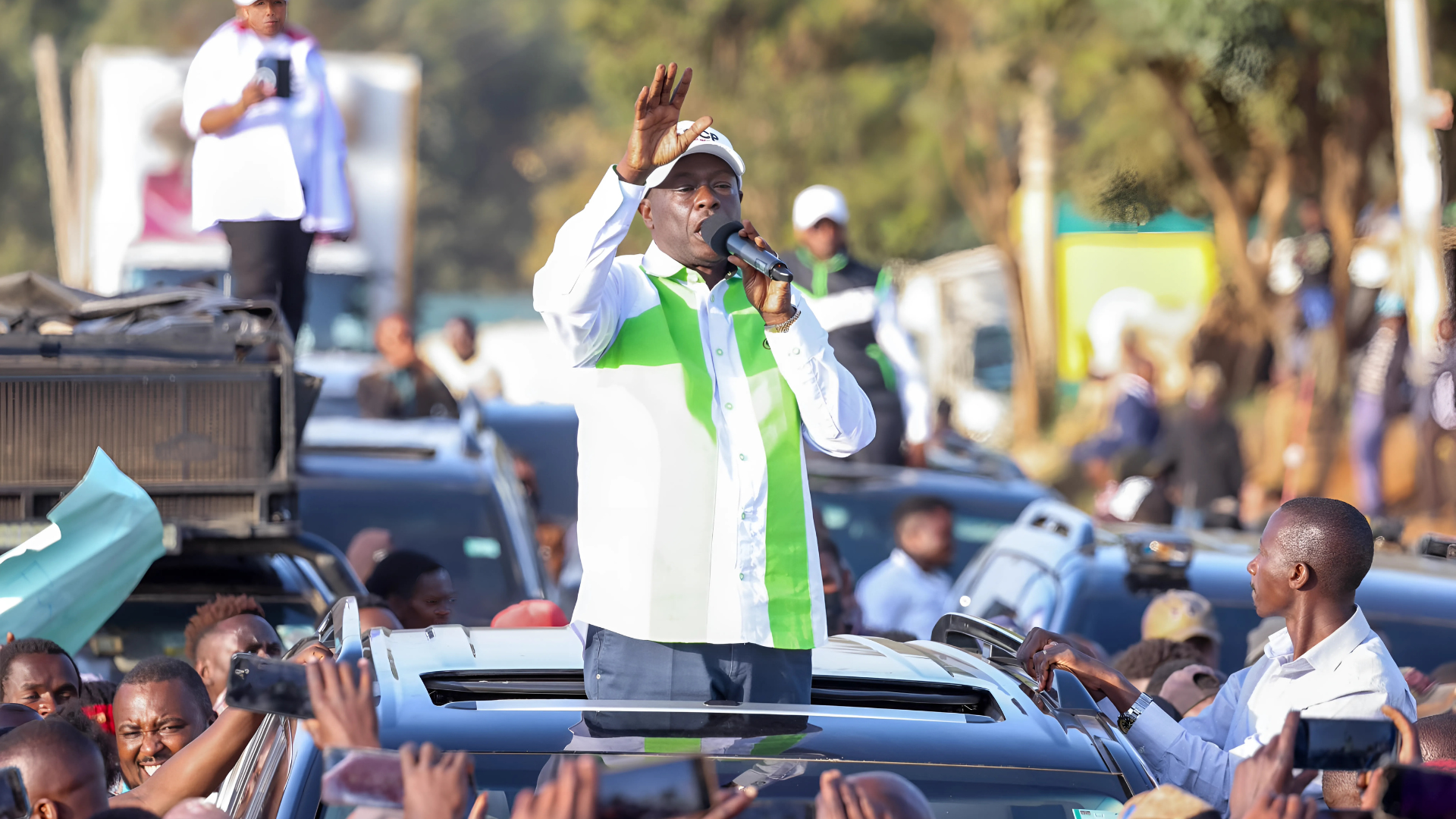
The MPs’ allegations center on Gachagua’s purported role in mobilizing resources to fuel unrest during the June 25 protests, which saw looting and property damage in Nairobi and other cities like Kitengela. “We are demanding the immediate arrest of the former deputy president, who has been on record sounding drums of war, inciting our young people against individuals who do not subscribe to his political ideology,” Barasa declared, flanked by fellow Kenya Kwanza and ODM lawmakers. He claimed Gachagua’s actions were not only criminal but aimed at destabilizing the government of President William Ruto, with whom Gachagua has had a public falling out. “It is clear that our former impeached deputy president has been mobilizing goons to destroy government properties and target businesses of people who do not support his ideas,” Barasa added, urging the Directorate of Criminal Investigations (DCI) to act swiftly.
Gachagua, who has been a vocal critic of Ruto since his impeachment, has faced similar accusations in recent months. In May 2025, he evaded a police dragnet in Murang’a after warnings from Deputy President Kithure Kindiki and Interior Cabinet Secretary Kipchumba Murkomen, who accused him of making inciteful remarks about the 2027 general elections. During a press conference on May 19 at his Karen home, Gachagua dared the government to arrest him, stating, “If the government knows that I have committed a crime, they know where my home is. I am here.” He denied incitement, claiming his comments were meant to urge the Independent Electoral and Boundaries Commission (IEBC) to ensure free and fair elections. “I was warning based on historical facts from 1992, 1997, and 2007,” he said, referencing past electoral controversies. His defiance, coupled with allegations of a “killer squad” targeting him, has fueled a narrative of political persecution among his supporters.
The June 25 protests, organized by Gen Z activists to commemorate the 2024 unrest that killed over 60 people, were intended to be peaceful but descended into chaos in some areas. Posts on X reflected public frustration, with users noting disruptions like the looting of a Pizza Inn outlet in Kitengela. The National Cohesion and Integration Commission (NCIC), which had summoned Gachagua on June 25 over hate speech linked to his election remarks, called for his arrest after he failed to honor the summons. “When we summon people and they do not honor our summons, we are authorized to forward that case to the DPP,” NCIC chairperson Samuel Kobia said, noting that Gachagua is among 26 high-profile leaders under investigation for incitement. Gachagua’s lawyer, Kibe Mungai, dismissed the summons as biased, accusing the NCIC of ignoring provocative statements by Ruto’s allies.
The MPs’ demand for Gachagua’s arrest has sparked a heated debate. Minority Whip Junet Mohamed, who previously moved an adjournment motion on May 27 to discuss Gachagua’s conduct, accused him of undermining national unity. “It is a sad thing to have someone who served as deputy president incite people to violence,” Mohamed said, referencing Gachagua’s comparison of potential 2027 election violence to a “Christmas party.” The remark, made during an interview with Obinna TV, drew widespread condemnation for trivializing the 2007 post-election violence, which claimed over 1,000 lives. Majority Leader Kimani Ichung’wah called Gachagua’s rhetoric “unconscionable,” arguing it justified his impeachment. “This is a man with a dark soul,” Ichung’wah said, urging the NCIC to act decisively.
However, not all lawmakers agree. Funyula MP Wilberforce Oundo cautioned against suppressing free speech, warning that targeting Gachagua could deepen divisions. “The danger of killing the messenger is believing you’ve killed the message,” Oundo said during a May 27 parliamentary debate. “We must learn from history to avoid anarchy.” Supporters of Gachagua, particularly in his central Kenya stronghold, view the arrest calls as politically motivated. A petition filed on May 29 at the Milimani Law Court by activist George Mogire sought to block Gachagua’s arrest, arguing that the charges lack credible evidence and stem from his opposition to Ruto. “Any move to detain or prosecute him amounts to politically motivated persecution,” Mogire’s lawyer, Moses Mabeya, told the court, securing temporary conservatory orders.
Gachagua’s impeachment last year, backed by over 116 MPs, was driven by allegations of gross misconduct, including ethnic mobilization and undermining the government. His launch of the Democracy for Citizens Party (DCP) in June 2025, which turned chaotic after goons disrupted the event, further escalated tensions. Murkomen announced investigations into armed individuals at the launch, hinting at Gachagua’s involvement. “We will put you in jail, and there’s nothing you’ll do about it,” Murkomen warned, accusing Gachagua of threatening national unity. Gachagua, in response, alleged that Ruto ordered a “killer squad” of 101 officers to target him with poison-laced tear gas, claims the government has not addressed.
The Senate, set to hear Gachagua’s appeal against his impeachment, now faces added pressure as the arrest demands intensify. If convicted of incitement or related charges, Gachagua could be barred from holding public office, a move MPs like Rarieda’s Otiende Amollo have advocated through a constitutional petition. “No one should refer to 2007 lightly,” Amollo said, emphasizing the need for accountability. Uasin Gishu Woman Representative Gladys Boss Shollei criticized the NCIC for selective enforcement, questioning, “Why hasn’t the former deputy president been arrested? There must be no double standards.”
Public sentiment, as seen on X, is deeply divided. Some users support the arrest calls, citing Gachagua’s alleged role in the protests. “He has been mobilizing goons to bring chaos,” posted one user, echoing Barasa’s claims. Others defend Gachagua, viewing him as a victim of Ruto’s administration. “This is a witch hunt to silence opposition,” wrote another. The controversy has also drawn attention to Kenya’s broader political climate, with opposition leaders like Kalonzo Musyoka condemning alleged abductions and intimidation. “This must stop,” Musyoka said on May 18. “If you want to arrest Gachagua, follow the law.”
Isiolo’s recent impeachment of Governor Abdi Guyo, reported on the same day, underscores the turbulent political atmosphere, with local and national leaders facing scrutiny. For Gachagua, the path forward is uncertain. His defiance, coupled with legal protections from allies like MPs James Gakuya and Benjamin Mejja Donk, who secured court orders against arrests in 2024, suggests a protracted battle. “I’m ready to face whatever comes,” Gachagua said, vowing to continue his fight. As Kenya grapples with economic challenges and the 2027 elections loom, the saga highlights the fragile balance between free speech, accountability, and political stability in a nation still healing from past conflicts.