The High Court in Nairobi delivered a groundbreaking ruling that prohibits the National Police Service from deploying teargas near hospitals, schools, places of worship, and other designated safe zones, a decision hailed as a victory for human rights and public safety. Justice Mwamuye, presiding over the case brought by the Kenya Human Rights Commission (KHRC), issued the orders in response to mounting concerns over the health risks and human rights violations caused by the indiscriminate use of teargas during public demonstrations. The ruling, which comes in the wake of widespread protests sparked by the controversial Finance Bill 2025, marks a significant step toward regulating police conduct and protecting vulnerable populations in Kenya, while sparking a broader debate about law enforcement tactics in a democratic society.
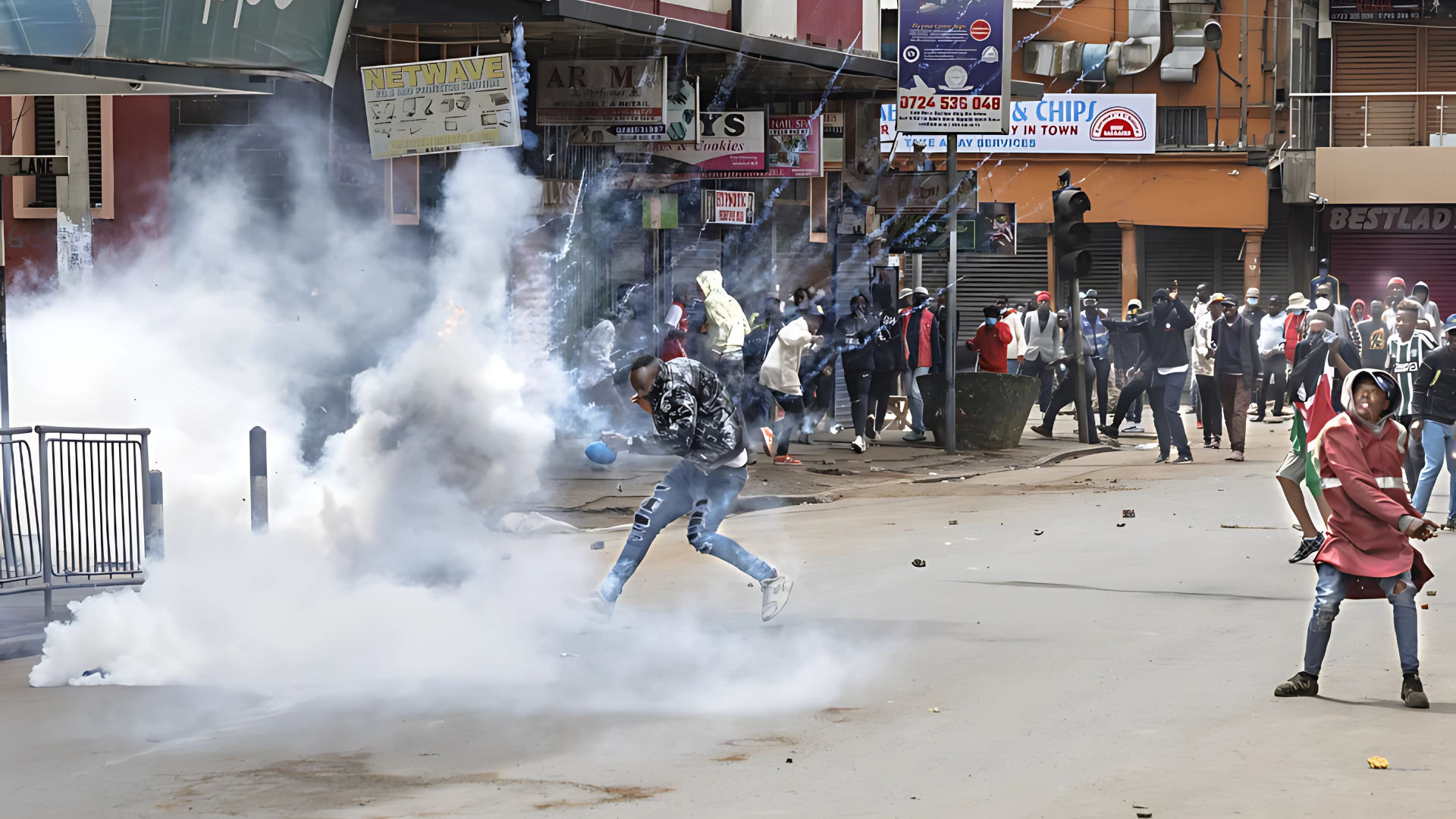
The case stemmed from a petition filed by the KHRC, which argued that teargas use in densely populated areas and near sensitive facilities posed severe risks to public health, particularly for patients, children, and the elderly. The commission cited numerous incidents, including a June 2024 protest in Nairobi’s Central Business District where teargas canisters landed near Kenyatta National Hospital, causing respiratory distress among patients and staff. “Teargas is a chemical weapon that has no place near hospitals or schools,” said KHRC Executive Director David Mwaure during a press briefing outside the Milimani Law Courts. “This ruling is a victory for the right to health and safety for all Kenyans.” The court’s decision mandates the police to refrain from using teargas within a 200-meter radius of designated safe zones and requires the development of guidelines for its use in public spaces.
Justice Mwamuye’s ruling emphasized the need to balance public order with the protection of fundamental rights. In his 40-page judgment, he noted that while the police have a duty to maintain law and order, their methods must not endanger lives or infringe on constitutional protections. “The right to life and health supersedes the need for crowd control in areas where vulnerable populations are present,” Mwamuye said. He directed the Inspector General of Police, Douglas Kanja, to ensure compliance and to train officers on alternative crowd management strategies. The court also ordered the Ministry of Interior to collaborate with the Ministry of Health to assess the long-term health impacts of teargas exposure, a move activists described as long overdue.
The ruling has been met with widespread approval from civil society, medical professionals, and affected communities. Dr. James Mwangi, a pulmonologist at Aga Khan Hospital, welcomed the decision, citing the harmful effects of teargas on respiratory health. “We’ve seen patients with asthma and chronic lung conditions suffer exacerbations after exposure,” he said. “Hospitals are sanctuaries for healing, not places for chemical exposure.” Parents like Mary Wanjiku, whose son experienced breathing difficulties after teargas was used near his school in Ngong during a protest, expressed relief. “My son was coughing for days,” she said. “This ruling means our children can feel safer at school.”
The decision comes against the backdrop of heightened tensions between the police and citizens, particularly following the violent crackdowns on protests against the Finance Bill 2025. The bill, which introduced new taxes on essential goods, sparked nationwide demonstrations, with police deploying teargas, water cannons, and, in some cases, live ammunition to disperse crowds. Reports from human rights groups documented over 50 injuries linked to teargas exposure in Nairobi and Kisumu alone, with several cases involving children and the elderly. “The police have been reckless,” said activist Jane Atieno, who participated in the Nairobi protests. “This ruling forces them to think twice before firing canisters into crowds.”
The KHRC’s petition was supported by medical evidence and testimonies from affected individuals, including a nurse who recounted treating patients with teargas-related injuries at a Nairobi clinic. “We had elderly patients struggling to breathe after teargas drifted into the hospital,” said nurse Esther Njoroge. “It was chaotic, and we weren’t equipped to handle such cases.” The petition also highlighted the psychological trauma caused by teargas, particularly among schoolchildren exposed during protests near educational institutions. Justice Mwamuye cited these accounts as critical in his decision, noting that the state has a duty to protect the most vulnerable.
The ruling has sparked a broader conversation about police reform in Kenya, where excessive force has long been a contentious issue. The 2024 protests, which saw at least 20 deaths and hundreds of injuries, reignited calls for accountability, with organizations like Amnesty International Kenya urging the government to address systemic issues within the National Police Service. “This is a step forward, but it’s not enough,” said Amnesty’s Kenya Director, Sarah Wambui. “We need comprehensive reforms to ensure police respect human rights in all situations.” The court’s directive for officer training on alternative crowd control methods, such as negotiation and de-escalation, was seen as a nod to these demands.
However, some police officials expressed concerns about the ruling’s implications for maintaining public order. An officer at Central Police Station, speaking anonymously, argued that teargas is a critical tool for managing violent protests. “Without teargas, how do we control crowds that turn aggressive?” he asked. “We need clear alternatives and resources to implement them.” Inspector General Kanja, in a statement, assured compliance with the court’s orders but emphasized the need for public cooperation. “We will adapt our methods, but citizens must also protest peacefully,” he said. The Ministry of Interior has been given 90 days to submit a compliance report, including a plan for training and guideline development.
The ruling has also drawn attention to the health risks of teargas, a chemical agent known to cause respiratory irritation, eye damage, and, in severe cases, long-term health complications. A 2023 study by the Kenya Medical Research Institute found that prolonged exposure to teargas can exacerbate conditions like asthma and bronchitis, particularly in urban areas with poor ventilation. “Teargas is not as harmless as some claim,” said Dr. Mwangi. “Its effects linger, especially for those with pre-existing conditions.” The court’s order for a joint health assessment by the Ministries of Interior and Health is expected to provide further clarity on these risks, potentially shaping future regulations.
Communities near hospitals and schools, particularly in urban centers like Nairobi, Kisumu, and Mombasa, have welcomed the ruling as a protective measure. In Kibera, where protests frequently occur near health clinics, residents expressed hope for safer environments. “We’ve had teargas canisters land in our compounds,” said community leader Peter Kamau. “This ruling gives us some peace of mind.” Religious leaders also praised the decision, with Pastor John Mwaura of a Nairobi church noting, “Places of worship are for refuge, not conflict. The police must respect that.”
The ruling’s impact extends beyond Kenya, with regional human rights groups citing it as a precedent for other East African nations. In Uganda, where teargas has been used extensively during protests, activists called for similar legal protections. “Kenya’s ruling sets a standard,” said a Kampala-based activist. “It shows courts can hold security forces accountable.” The decision also aligns with international human rights standards, including United Nations guidelines on the use of less-lethal weapons, which urge restraint in populated areas.
Public sentiment on platforms like X reflects a mix of relief and skepticism. Many users celebrated the ruling as a win for human rights, with one posting, “Finally, some protection for our hospitals and schools.” Others questioned enforcement, with a user writing, “The police will find ways to ignore this unless there’s strict oversight.” The debate underscores the challenge of implementing the ruling, particularly in high-pressure situations where police face volatile crowds. The KHRC has vowed to monitor compliance, with Mwaure stating, “We’ll ensure this order is not just words on paper.”
The ruling comes at a time of heightened scrutiny of Kenya’s security apparatus, with recent incidents like the Eldoret shooting by a police officer fueling public distrust. The Finance Bill 2025 protests, which saw clashes across major cities, exposed the need for better crowd control measures. “The police must adapt to a democratic society,” said Wambui. “This ruling is a reminder of their duty to protect, not harm.” The court’s directive for guideline development is seen as a step toward aligning police practices with constitutional rights, though activists warn that cultural change within the force will take time.
As Kenya navigates its complex socio-political landscape, the High Court’s ruling marks a pivotal moment in the fight for accountable policing. The orders place a spotlight on the delicate balance between public safety and individual rights, challenging the government to rethink its approach to crowd management. For communities near hospitals and schools, the decision offers a glimmer of hope, ensuring that safe spaces remain sanctuaries even in times of unrest. “This is about protecting our most vulnerable,” said Mwaure. “The court has spoken, and now the police must listen.” As the nation awaits the implementation of these orders, the ruling stands as a testament to the power of judicial intervention in safeguarding human rights.