By Brenda Wereh09 Jul, 202531 mins read 2,343 views
0 comments 0 likes
The High Court in Nairobi issued conservatory orders restraining Inspector General of Police Douglas Kanja from setting up roadblocks in the Central Business District during protests, citing violations of constitutional rights to assembly and movement.
The High Court in Nairobi delivered a significant ruling that reverberated through Kenya’s political and civil society circles, issuing conservatory orders to bar Inspector General of Police Douglas Kanja from erecting roadblocks in the Nairobi Central Business District (CBD) during protests. The decision, handed down by Justice Lawrence Mugambi, came in response to a petition filed by the Katiba Institute, a human rights organization, which argued that the police’s practice of sealing off major roads to suppress demonstrations violated Kenyans’ constitutional rights to peaceful assembly and freedom of movement. “The right to protest is enshrined in our Constitution,” Justice Mugambi declared in his ruling. “Barring access to public spaces without lawful justification undermines the democratic gains we have fought for.” The court’s intervention marks a pivotal moment in the ongoing struggle between Kenya’s youth-led protest movement and the government’s security apparatus, particularly in the wake of the deadly Saba Saba protests that left 31 dead.
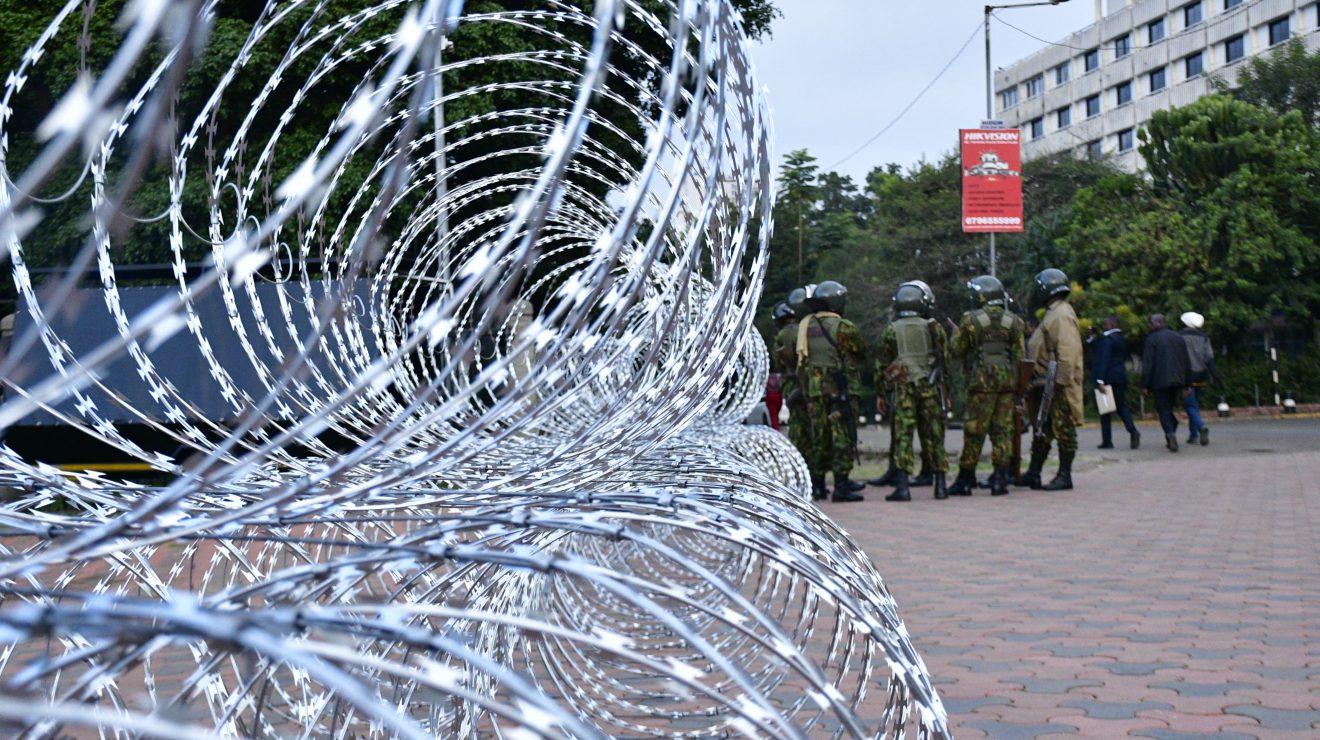
The ruling stems from the police’s actions during the July 7, 2025, Saba Saba demonstrations, which commemorated the 35th anniversary of the 1990 pro-democracy movement. Protesters, largely from Generation Z, took to the streets to voice grievances over high taxes, unemployment, corruption, and alleged police brutality. In response, the National Police Service, under Kanja’s command, deployed heavy barricades across major roads leading to the CBD, including Jogoo Road, Thika Road, Mombasa Road, and Ngong Road. These roadblocks, fortified with razor wire and armed officers, effectively turned Nairobi into a ghost town, with businesses shuttered and public transport paralyzed. “We were told no one gets in,” said a matatu driver on Waiyaki Way, recounting how police turned back vehicles and pedestrians. “This isn’t security; it’s a lockdown.” The restrictions not only disrupted protests but also prevented essential workers, such as medical personnel, from accessing the CBD, prompting widespread outrage.
The Katiba Institute’s petition, filed on June 25, 2025, challenged the legality of these roadblocks, arguing that they constituted an unlawful restriction of rights guaranteed under Articles 37 and 39 of the Constitution. The organization sought urgent conservatory orders to compel Kanja to remove the barricades and a permanent prohibition against future restrictions on protest rights without prior notice. “This is not just about roads; it’s about the future of constitutional governance,” said Nora Mbagathi, Katiba Institute’s Executive Director. “The police cannot arbitrarily block public spaces to suppress dissent.” The petition highlighted the lack of transparency in the police’s actions, noting that no public notice was issued before the CBD was sealed off, a move the court deemed an abuse of power.
The High Court’s ruling builds on a series of legal challenges to police conduct during protests. Earlier in 2025, the court declared a blanket ban on CBD demonstrations unconstitutional, reinforcing the right to peaceful assembly. Justice Mugambi’s orders specifically prohibit Kanja and his officers from erecting roadblocks without lawful justification and mandate timely notifications for any non-emergency road closures. “The Constitution is clear,” Mugambi said. “The Inspector General must act within the law, not above it.” The ruling also addressed allegations of plainclothes officers and unmarked vehicles operating alongside uniformed police, a practice the court condemned as a violation of a prior order requiring officers to be identifiable during protests.
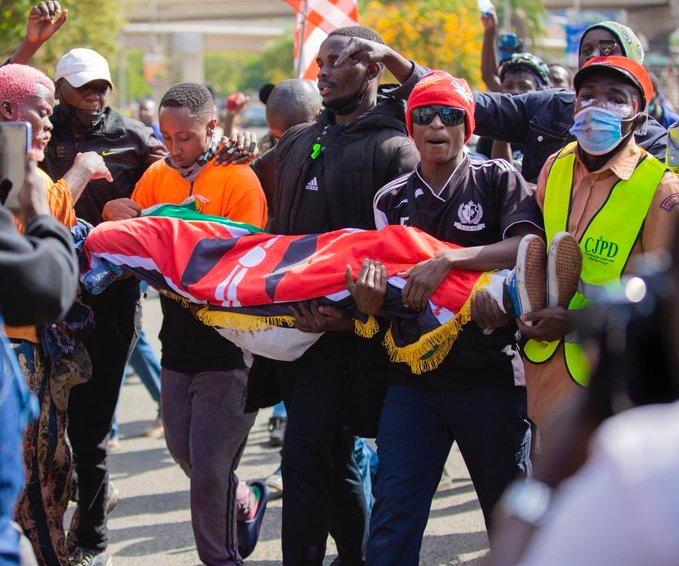
The Saba Saba protests, which saw running battles between demonstrators and police, underscored the tensions driving the court’s intervention. The Kenya National Commission on Human Rights reported 31 deaths, with many victims suffering gunshot wounds, and over 400 injuries across Nairobi, Kisumu, and Nakuru. The death of blogger Albert Ojwang in custody and the shooting of vendor Boniface Kariuki during earlier protests fueled public anger, with activists accusing the police of excessive force. “We’re not criminals; we’re citizens demanding accountability,” said a protester in Eastlands, reflecting sentiments shared on X, where the hashtag #SabaSaba2025 trended alongside images of tear gas and burning barricades. The court’s ruling was met with cautious optimism, with one X user posting, “Finally, a win for our rights. No more roadblocks to silence us.”
The government’s response was swift but measured. Inspector General Kanja, who assumed the role in July 2024 following Japhet Koome’s resignation, defended the roadblocks as necessary to protect critical installations like Parliament and State House. “Our priority is public safety,” Kanja said during a May 2025 briefing. “We cannot allow chaos to disrupt the city.” However, the court rejected this argument, noting that blanket restrictions without specific threats were disproportionate. Interior Minister Kipchumba Murkomen, who has labeled protesters “anarchists,” reiterated the government’s commitment to security but avoided commenting directly on the ruling. “We respect the judiciary, but we must protect lives and property,” he said at a Nakuru event, sidestepping questions about compliance.
The ruling has significant implications for Kenya’s protest movement, which has gained momentum since the 2024 anti-Finance Bill demonstrations. Those protests, which forced President William Ruto to withdraw controversial tax hikes, established Gen Z as a formidable force, using social media to mobilize without traditional political leadership. The 2025 protests have expanded to demand justice for abductions, police brutality, and economic mismanagement, with a public debt of KSh 11.36 trillion and 67 percent youth unemployment driving discontent. “The court has given us hope,” said a student activist in Nairobi. “We can protest without being caged.” However, some fear the government may find loopholes, such as citing national security to justify future restrictions.
Businesses, already reeling from protest disruptions, expressed mixed reactions. The Nairobi CBD, a hub for East Africa’s largest economy, has suffered losses estimated at KSh 6 billion since June 2024, with shops and matatus bearing the brunt. “The roadblocks hurt us as much as the protests,” said a retailer on Moi Avenue. “We need peace, but also freedom for customers to move.” The Kenya Private Sector Alliance urged dialogue to balance security and economic stability, warning that prolonged unrest could deter investors. On X, a post read, “No roadblocks, but will police respect the court? We’re watching.”
The ruling also reignites debate over police accountability. Kanja’s predecessor, Japhet Koome, faced legal consequences for unconstitutional orders during a 2024 doctors’ strike, with the High Court holding him personally liable for violence against protesters. “This precedent shows the judiciary is serious about checking police power,” said Joshua Malidzo Nyawa, Katiba Institute’s Litigation Counsel. “Kanja must comply or face contempt.” The court’s emphasis on command responsibility underscores that Kanja, as Inspector General, bears direct accountability for his officers’ actions, particularly after reports of plainclothes officers and alleged state-sponsored gangs operating during protests.
Political undertones are evident, with the opposition, led by figures like Raila Odinga and Rigathi Gachagua, seizing on the ruling to rally support. The United Opposition’s boycott of state-linked businesses, announced on July 8, 2025, aligns with the court’s decision, framing it as a victory against government overreach. “The judiciary is standing with the people,” Gachagua said, urging Kenyans to continue peaceful protests. However, the government’s narrative, backed by Ruto’s allies, portrays the protests as economic sabotage, complicating the path to dialogue.
The ruling’s implementation remains a challenge. The National Police Service has a history of defying court orders, with Kanja himself warned of contempt in January 2025 for missing a court session. Activists fear that without robust enforcement, the orders may be symbolic. “The court has spoken, but will the police listen?” asked a human rights lawyer in Nairobi. The Katiba Institute plans to monitor compliance, with plans to escalate the case if violations persist. For now, the ruling offers a lifeline to protesters, affirming their right to assemble in a nation grappling with economic and political turmoil.
As Kenya approaches the 2027 elections, the court’s decision could shape the dynamics of civic engagement. With Gen Z at the forefront, the fight for protest rights is intertwined with demands for systemic change. “Saba Saba isn’t just a day; it’s a spirit,” said an activist in Dandora. “This ruling keeps that spirit alive.” Whether the government will respect the judiciary’s authority or double down on security measures remains uncertain, but for now, the High Court has reaffirmed that Kenya’s streets belong to its people.
Former Kiambu Governor Ferdinand Waititu has secured a major bail reprieve from the High Court, with Justice Winfrida Okwany reducing his bail from Sh53.5 million to Sh20 million cash pending appeal in his ongoing corruption case.
President Ruto and Governor Sakaja signed a cooperation agreement allocating funds for 50,000 new streetlights, water plants saving 50 million litres daily, 27 km Nairobi River sewer and ward road upgrades, with Ruto calling it a partnership to make the city livable while opposition senators warn of devolution threats.
A staff member at Moi Teaching and Referral Hospital allegedly stole Sh10 million by falsifying patient bills as paid in the eCitizen system while diverting the money to her personal account, prompting an ongoing police and hospital investigation.