In a landmark ruling delivered on the evening of June 25, 2025, the High Court in Nairobi suspended a controversial directive by the Communications Authority of Kenya (CA) that had barred television and radio stations from broadcasting live coverage of nationwide protests. Justice Chacha Mwita, presiding over an urgent petition filed by media stakeholders, declared the CA’s order unconstitutional, ordering the immediate restoration of all switched-off media signals. The judge issued a stern warning to the CA leadership, including Director General David Mugonyi, stating that failure to comply would result in their prosecution for contempt of court. The decision marked a significant victory for press freedom in Kenya, where Gen Z-led protests commemorating the 2024 anti-Finance Bill uprising have dominated the national conversation.
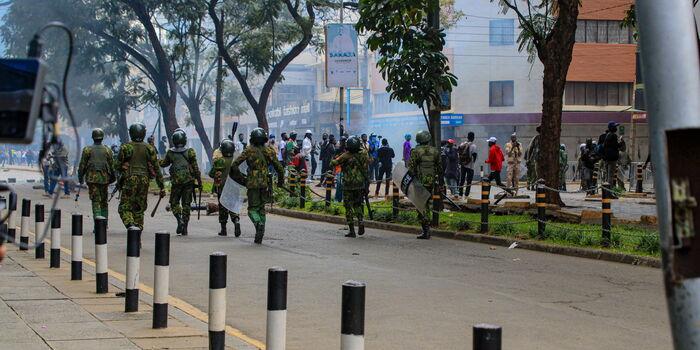
The CA’s directive, issued mid-morning on June 25, had sent shockwaves through Kenya’s media sector, ordering all broadcasters to cease live coverage of the protests, which saw thousands of youths take to the streets in Nairobi, Kitengela, Mombasa, and other cities. The authority cited violations of Articles 33(2) and 34(1) of the Constitution, which address freedom of expression and media independence, and Section 461 of the Kenya Information and Communications Act, 1998, claiming that live broadcasts incited unrest. The order threatened regulatory action, including license revocation, for non-compliant stations, prompting major outlets like Citizen TV, NTV, and KTN to shift to pre-recorded content. The move drew swift condemnation from media organizations, civil society, and protesters, who accused the government of attempting to suppress public awareness of the demonstrations.
The High Court’s intervention came after an urgent petition filed by the Kenya Editors’ Guild, the Kenya Union of Journalists, and the Katiba Institute, which argued that the CA’s directive violated constitutional protections for press freedom and the public’s right to information. Justice Mwita, in his ruling delivered at 6:30 p.m., described the ban as “a gross overreach of authority” that undermined Kenya’s democratic principles. “The media plays a critical role in informing citizens, especially during moments of public interest like these protests,” Mwita said from the bench. “The CA’s directive is unconstitutional, null, and void, and I hereby suspend it with immediate effect.” His order to restore all switched-off signals was met with applause from lawyers and journalists present in the courtroom.
The ruling also addressed reports that some media signals had been disrupted during the day, with certain radio and TV stations going off-air in parts of Nairobi and Mombasa. Mwita’s order for immediate restoration was unequivocal, emphasizing the urgency of ensuring uninterrupted access to information. “Any media house whose signal has been switched off must have it restored without delay,” he said. “Failure to comply will result in the prosecution of the CA leadership for contempt of court.” The judge’s warning was directed at Mugonyi, whose appointment as CA Director General in December 2024 has been criticized for its perceived ties to State House, raising questions about the authority’s independence.
The protests, part of the “Gen Z Memorial March,” were a tribute to the over 60 lives lost during the 2024 anti-Finance Bill demonstrations, which forced the government to withdraw a controversial tax bill after protesters stormed Parliament. The 2025 marches, coordinated through social media under hashtags like #JusticeFor2024, saw youths block major roads, including Thika Road, where some played football on deserted highways, and clash with police in Kitengela. The CA’s ban on live coverage was widely seen as an attempt to limit visibility of these events, particularly as reports of tear gas, arrests, and police barricades in Nairobi’s Central Business District sparked public outrage. The High Court’s ruling restored the media’s ability to report these developments in real-time, amplifying the voices of protesters.
Media stakeholders hailed the decision as a triumph for press freedom. Jane Mwangi, deputy director of the Kenya Editors’ Guild, stood outside the Milimani Law Courts after the ruling, addressing journalists. “This is a victory not just for the media but for every Kenyan who values their right to know,” she said. “The CA tried to silence us, but the court has reaffirmed that press freedom is non-negotiable.” The Kenya Union of Journalists, which had pledged legal support for affected broadcasters, called the ruling a “step toward justice” and urged media houses to resume live coverage without fear of reprisal. “We’re back in the game,” said a Citizen TV reporter, preparing to broadcast from Moi Avenue, where small groups of protesters remained active.
The Katiba Institute, a co-petitioner, emphasized the broader implications of the ruling. “This decision sends a clear message that the government cannot arbitrarily restrict constitutional rights,” said lawyer Joshua Malidzo. “The CA’s directive was part of a larger effort to control the narrative around these protests, and the court has stopped that in its tracks.” The institute, which earlier on June 25 filed a separate petition challenging police barricades in the CBD, has a history of successfully challenging state overreach, including a 2023 case that overturned a CA censure of TV stations. Malidzo noted that the ruling could bolster their ongoing challenge against the police blockades, reinforcing judicial protections for public rights.
Protesters, too, celebrated the court’s decision, seeing it as validation of their struggle. “They tried to hide what we’re doing, but now the whole world can see,” said Brian Otieno, a 26-year-old demonstrator in Nairobi, holding up his smartphone to livestream the protests. “The media being back on air means our voices are louder.” Otieno, standing near the National Archives, where protesters waved Kenyan flags, was among those who had shared videos of the Thika Road football session, which became a symbol of Gen Z’s resilience. Social media platforms like X buzzed with posts praising the ruling, with hashtags like #PressFreedom and #GenZMemorial trending by evening.
The government’s response to the ruling was not immediately clear, with no statement from the CA or State House by 7:30 p.m. President William Ruto, who hosted an Aga Khan envoy at State House earlier in the day, has maintained a stance against street protests, calling for dialogue while emphasizing stability. The CA’s directive, issued under Mugonyi’s leadership, was seen by critics as part of a broader strategy to suppress dissent while projecting calm to international partners. Former Interior CS Fred Matiang’i, in a statement on June 25, had urged dialogue and non-violence, a call that gained renewed relevance after the court’s ruling, which opened the door for greater public scrutiny of the government’s actions.
Legal experts described the ruling as a critical check on executive power. “Justice Mwita’s decision reinforces the judiciary’s role as a guardian of constitutional rights,” said constitutional lawyer James Mwangi. “The CA’s attempt to ban live coverage was a dangerous precedent, and the court’s swift action shows that such overreach won’t be tolerated.” Mwangi noted that the threat of prosecution for CA leadership was a rare and bold move, signaling the judiciary’s willingness to hold public officials accountable. The ruling also drew parallels to a 2024 High Court decision that quashed a CA warning against six TV stations for protest coverage, underscoring a pattern of judicial resistance to media restrictions.
The restoration of media signals had immediate effects. By 7 p.m., several stations, including NTV and KTN, resumed live broadcasts, airing footage of protests in Nairobi’s CBD and Mombasa. Radio stations like Radio Citizen also returned to real-time reporting, providing updates on clashes in Kitengela and peaceful demonstrations in Kisumu. The return of live coverage amplified reports of police actions, including tear gas and arrests, which had been partially obscured by the CA’s ban. “We’re back to doing our job,” said a radio presenter in Nairobi, speaking anonymously. “The public deserves to know what’s happening, and we won’t let anyone stop us now.”
The ruling also highlighted the role of citizen journalists, who had filled the gap during the ban by livestreaming protests on social media. “When the TVs went silent, we became the media,” said Aisha Mohamed, a 21-year-old protester in Nairobi. “But having the stations back means more people will hear us, especially those who don’t use X.” Mohamed’s words reflected the protests’ reliance on both traditional and digital platforms to sustain momentum, with the court’s decision ensuring a broader reach for their message.
As night fell, protests continued in pockets of Nairobi, with small groups chanting near Moi Avenue. Police maintained a heavy presence, with reports of tear gas in the CBD and arrests in Mombasa. The High Court’s ruling, however, shifted the dynamic, restoring the media’s role as a watchdog and empowering protesters to share their story. For Kenya’s media, the decision was a reminder of their resilience in the face of pressure, while for the Gen Z movement, it was a beacon of hope in their fight for justice and reform. As Mwangi put it, “This is a win for democracy, but the struggle isn’t over. The media and the people must keep pushing.”