By Brenda Wereh25 Jun, 202530 mins read 2,381 views
0 comments 0 likes
The Independent Policing Oversight Authority confirmed eight deaths during Gen Z-led protests across 24 Kenyan counties, initiating a probe into police use of live ammunition and excessive force.
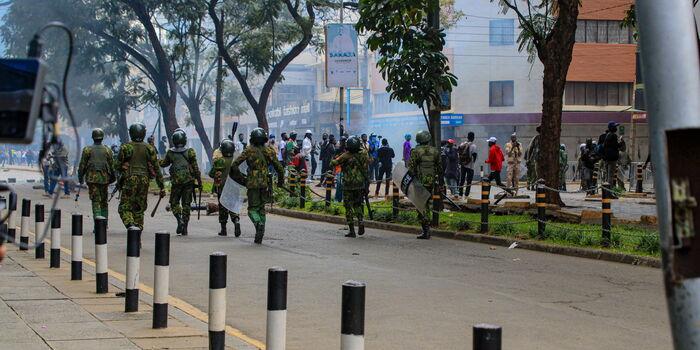
On the evening of June 25, 2025, the Independent Policing Oversight Authority (IPOA) released a preliminary report confirming that eight civilians had lost their lives during nationwide protests commemorating the 2024 anti-Finance Bill uprising. The demonstrations, which swept through 24 of Kenya’s 47 counties, left 207 people injured, including some with gunshot wounds, and saw 61 arrests. IPOA’s statement, issued amid growing public outrage, announced the launch of an investigation into allegations of excessive force by police, including the use of live ammunition, tear gas, water cannons, whips, and batons. The report also noted that some officers concealed their identities, a violation of legal protocols, further fueling calls for accountability.
The protests, dubbed the “Gen Z Memorial March,” marked the first anniversary of the 2024 demonstrations, which saw over 60 deaths and culminated in the storming of Parliament over a controversial tax bill. On June 25, 2025, thousands of youths took to the streets in cities like Nairobi, Kitengela, Mombasa, and Kisumu, waving Kenyan flags and holding placards demanding justice for those killed in 2024. The protests were largely peaceful, with iconic scenes of demonstrators playing football on a deserted Thika Road, but clashes erupted in several areas. In Nairobi’s Central Business District, police deployed tear gas and erected barbed wire barricades, while in Kitengela, reports of water cannons and batons underscored the day’s tensions. IPOA’s confirmation of eight deaths, including fatalities allegedly from gunshot wounds, cast a somber shadow over the commemorations.
“We have documented the use of excessive and varied force by police officers, including live ammunition, which is contrary to the law,” said IPOA Chairperson Ahmed Issack Hassan in a statement released on X. “Our monitoring teams were deployed across 24 counties, and we are committed to expediting investigations into these incidents.” The authority’s report detailed injuries among both civilians and police, noting that demonstrations were infiltrated by “goons,” leading to additional chaos. IPOA’s collaboration with the Kenya National Commission on Human Rights (KNCHR), with officers stationed at the KNCHR Situation Room, aimed to enhance oversight, but the scale of the violence underscored the urgency of their probe.
The protests were fueled by deep-seated grievances over police brutality, economic hardship, and governance issues. The death of blogger Albert Ojwang in police custody earlier in June had reignited public anger, with protesters chanting “No Justice, No Peace” and demanding the resignation of senior police officials. In Nairobi, 24-year-old demonstrator Don Cliff Ochieng expressed frustration with the government’s response. “We’re out here because we’re tired of being killed for speaking out,” he said near the National Archives, where small groups gathered. “Eight more deaths today? How many more before they listen?” Ochieng’s words echoed the sentiment of a generation that has turned to social media to organize and amplify their demands, with hashtags like #JusticeFor2024 trending throughout the day.
IPOA’s report highlighted specific concerns about police conduct. The use of live ammunition was particularly alarming, with KNCHR reporting that all eight deaths were “allegedly from gunshot wounds.” At Kenyatta National Hospital in Nairobi, an official confirmed that 56 patients were admitted with protest-related injuries, most from rubber bullets or live rounds. “We’ve seen too many young people with bullet wounds today,” said a hospital spokesperson, speaking anonymously. “It’s heartbreaking.” The injuries extended beyond civilians, with three police officers among the wounded, though IPOA emphasized that the majority of casualties were protesters, journalists, and bystanders.
The protests’ geographic spread underscored their national significance. From coastal Mombasa to western Kisumu, 24 counties reported demonstrations, with varying degrees of police response. In Matuu, 100 kilometers from Nairobi, hospital administrator Julius Makau reported two deaths from gunshot wounds, one from excessive bleeding. “We received six people with bullet injuries,” Makau said. “It’s not clear who fired, but the police were active in the area.” In Kitengela, a Reuters journalist witnessed a protester’s body with a head wound, while in Nyeri and Kisii, isolated clashes added to the day’s toll. The infiltration of protests by armed civilians, described by IPOA as “goons,” complicated the situation, with reports of motorcyclists wielding whips in Nairobi’s CBD.
The High Court’s suspension of a Communications Authority of Kenya (CA) directive banning live protest coverage was a critical development. Justice Chacha Mwita’s ruling, delivered at 6:30 p.m., restored media signals, allowing stations like NTV and KTN to resume broadcasting. “The media blackout was an attempt to hide what’s happening,” said Jane Mwangi, deputy director of the Kenya Editors’ Guild, outside Milimani Law Courts. “Now the world can see the truth.” The ruling amplified footage of police actions, including tear gas deployment and arrests, which IPOA’s investigation will likely scrutinize. Former Interior CS Fred Matiang’i, in a separate statement, urged dialogue and non-violence, aligning with calls for accountability.
Civil society groups, including Amnesty International Kenya, condemned the violence, with executive director Irũngũ Houghton calling for a judicial commission of inquiry. “Eight deaths in one day is unacceptable,” Houghton said. “The police must be held accountable for using lethal force against peaceful protesters.” Amnesty reported 16 deaths, a figure higher than IPOA’s, highlighting discrepancies in casualty counts. The Law Society of Kenya, in a joint statement with the Kenya Medical Association, urged restraint, noting that journalists and medics were among the injured. “We’re treating patients with injuries that could have been avoided,” said a medic at a Nairobi medical camp, where tear gas was fired nearby.
The government’s response remained cautious. President William Ruto, speaking at a burial in coastal Kenya, urged protesters to avoid “destroying” the country. “It’s our responsibility to keep Kenya safe,” he said, avoiding direct comment on the deaths. Inspector General Douglas Kanja, in a June 24 statement, had promised to protect peaceful demonstrations but warned against public disorder. Police spokesperson Muchiri Nyaga declined to comment on IPOA’s findings, leaving the government’s stance unclear. The deployment of plainclothes officers and unmarked vehicles, criticized by Western governments, added to accusations of covert tactics.
IPOA’s investigation will focus on several key areas, including the use of live ammunition, officer identification, and the role of non-uniformed personnel. The authority pledged to release a comprehensive report with actionable recommendations, but public skepticism persists. “We’ve seen too many reports with no follow-up,” said Aisha Mohamed, a 21-year-old protester in Nairobi. “IPOA needs to show us justice, not just promises.” Mohamed’s placard, reading “Stop Killing Us,” captured the mood of a movement that shows no signs of fading, with social media posts vowing further action if demands go unmet.
The protests also highlighted economic and social challenges driving Kenya’s unrest. With youth unemployment near 20 percent and a cost-of-living crisis, Gen Z’s demands extend beyond police reform to systemic change. “We can’t afford bread, and now we can’t even protest without dying,” said Audrey Bartai, an 18-year-old student in Nairobi. “This isn’t just about 2024—it’s about our future.” Bartai’s words underscored the protests’ evolution from a reaction to a tax bill into a broader call for accountability and opportunity.
As night fell on June 25, protests subsided in most areas, though small groups remained active in Nairobi’s CBD. Police maintained a heavy presence, with reports of tear gas and arrests in Mombasa. IPOA’s probe, expected to intensify in the coming days, will test the government’s commitment to reform. For now, the eight deaths serve as a grim reminder of the cost of dissent in Kenya. “We’re not asking for much—just the right to live and be heard,” said Ochieng. “If they keep killing us, we’ll keep coming back.”
The IPOA report, while preliminary, has set the stage for a reckoning. With investigations underway and public pressure mounting, the coming weeks will determine whether Kenya can address its cycle of protest and repression. For the families of the eight deceased, and the hundreds injured, the pursuit of justice is both personal and national. As Mohamed put it, “We’re fighting for those we lost, and for those still here. This isn’t over.”
Former Kiambu Governor Ferdinand Waititu has secured a major bail reprieve from the High Court, with Justice Winfrida Okwany reducing his bail from Sh53.5 million to Sh20 million cash pending appeal in his ongoing corruption case.
President Ruto and Governor Sakaja signed a cooperation agreement allocating funds for 50,000 new streetlights, water plants saving 50 million litres daily, 27 km Nairobi River sewer and ward road upgrades, with Ruto calling it a partnership to make the city livable while opposition senators warn of devolution threats.
A staff member at Moi Teaching and Referral Hospital allegedly stole Sh10 million by falsifying patient bills as paid in the eCitizen system while diverting the money to her personal account, prompting an ongoing police and hospital investigation.