The High Court had issued an arrest warrant for Juja Member of Parliament George Koimburi and two others. The warrant came after the trio failed to appear before the Milimani Law Courts to face charges of defeating justice and providing false information regarding Koimburi’s alleged abduction earlier this year. The court session, scheduled for the same day, was meant to address a case involving Koimburi and six other individuals, including Kanyenyaini Member of County Assembly Grace Nduta Wairimu, Peter Kiratu Muhia, David Macharia Gatana, and Cyrus Kieru Muhia. The absence of Koimburi and his co-accused has sparked widespread speculation and concern across the political landscape. “This is a serious matter that cannot be ignored,” said a court clerk outside the Milimani complex, where a small crowd of journalists gathered to await updates.
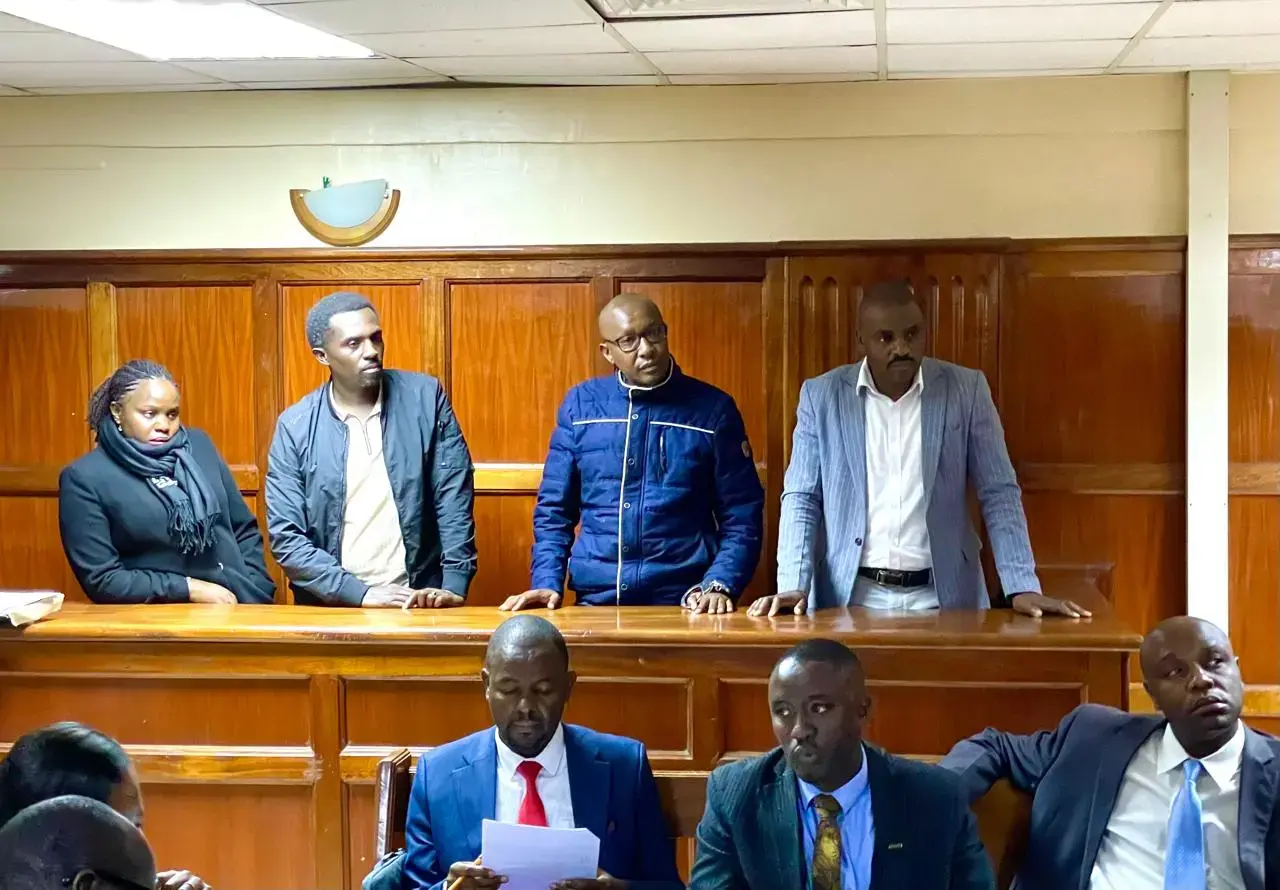
Koimburi, a vocal figure in Kenya’s political scene, has been at the center of controversy since May, when he claimed he was abducted outside a church in Kiambu County. The incident, which saw him later found in a coffee plantation, triggered a wave of outrage and conflicting narratives. Initially, his allies, including former Deputy President Rigathi Gachagua, alleged government involvement, citing injuries Koimburi sustained. However, police investigations later suggested the abduction was staged, a claim Koimburi has denied. The charges of defeating justice and giving false information stem from this alleged fabrication, with prosecutors arguing that the MP and his associates misled authorities and the public. “We expected them to face the law today, but their absence speaks volumes,” said a legal observer standing near the courthouse entrance.
The case involves a broader group of seven individuals, with Koimburi joined by Nduta Wairimu, Muhia, Gatana, and Kieru Muhia, alongside two others whose identities remain under wraps pending further investigation. All were summoned to appear at Milimani Law Courts to answer to the charges, which carry significant legal weight. The court’s decision to issue an arrest warrant reflects the severity of the alleged offense, with magistrates emphasizing the need for accountability. “The law must take its course, regardless of one’s status,” remarked a senior judicial officer as proceedings concluded without the defendants present. The absence has fueled theories about whether Koimburi and his co-accused are evading capture or preparing a defense strategy.
In Juja constituency, where Koimburi has served since 2021, the news has stirred mixed reactions. Residents gathered outside a local market, debating the implications. “He’s always been outspoken, but this could end his career,” said a shopkeeper arranging vegetables, reflecting a sentiment of disappointment among some supporters. Others, however, rallied behind him, with a youth leader in the area stating, “We believe this is a political trap; he needs our support.” The MP’s history of clashing with the government, including his claims about misused taxpayer funds during Raila Odinga’s African Union Commission bid, has framed him as a target for political persecution in the eyes of his base. Yet, the staged abduction allegations have cast doubt on his narrative.
The courtroom drama unfolded as lawyers for the prosecution presented evidence linking the accused to the alleged scheme. Court documents suggest that Koimburi and his associates coordinated to create a false narrative, possibly to garner public sympathy or deflect attention from other legal troubles, including ongoing land fraud investigations. Nduta Wairimu, a local MCA, and the others are accused of playing key roles, with police alleging they provided logistical support or false statements. “We’ve seen enough to justify these charges,” said a prosecutor outside the courtroom, declining to elaborate further. The case has drawn attention to the challenges of distinguishing political theater from criminal intent in Kenya’s polarized climate.
Public response has been swift, with conversations igniting across urban and rural divides. In Nairobi’s bustling streets, a taxi driver tuning into a radio update remarked, “If he faked it, he should face the consequences.” In contrast, a farmer in Kiambu, where the alleged abduction occurred, expressed skepticism. “This feels like a setup to silence him,” he said, pausing from his work in a coffee field. Posts found on X reflect a similar divide, with some users condemning Koimburi’s actions as reckless, while others question the government’s motives, citing a pattern of targeting opposition figures. The sentiment underscores the deep mistrust that has characterized recent political events.
The legal proceedings trace back to May, when Koimburi’s disappearance sparked a national outcry. Video footage showing him being driven away in a Subaru Forester fueled initial abduction claims, but police investigations, including analysis of the scene and witness statements, pointed to inconsistencies. The Directorate of Criminal Investigations reported that Koimburi evaded an earlier arrest attempt on May 23, fleeing on a motorcycle, which raised suspicions about his story. His subsequent hospitalization and the involvement of political allies like Gachagua added layers to the saga, but the court’s latest move signals a shift toward holding him accountable. “The evidence doesn’t lie,” said an investigator leaving the Milimani premises.
Koimburi’s political allies have remained largely silent since the warrant was issued, a departure from their earlier vocal support. Gachagua, who visited Koimburi in hospital, has not commented, leaving supporters to speculate about the next steps. In Juja, a community leader organized a meeting to discuss the situation, with one attendee noting, “We’re waiting to hear from him directly; this silence is worrying.” The MP’s office issued a brief statement postponing planned constituency engagements, citing “unforeseen circumstances,” but offered no insight into his whereabouts or intentions regarding the court case. This has heightened tensions among his constituents, many of whom rely on his leadership.
The other accused individuals face similar scrutiny. Nduta Wairimu, known for her advocacy in Kanyenyaini ward, has been a vocal supporter of Koimburi, while Muhia, Gatana, and Kieru Muhia are linked through community and political networks in Juja. Their failure to appear has led to speculation about a coordinated absence, with some suggesting they may have gone into hiding or are seeking legal counsel. A neighbor near Gatana’s home in Kiambu reported seeing unusual activity late Tuesday night, saying, “There were cars coming and going; something felt off.” The police have not confirmed any arrests as of the afternoon, but patrols have increased in the area.
Legal experts suggest the case could set a precedent for handling politically charged allegations. “This is about more than just Koimburi; it’s about the integrity of our judicial process,” said a lawyer observing the proceedings. The charges of defeating justice and giving false information carry penalties that could include fines or imprisonment, depending on the court’s findings. The involvement of multiple defendants complicates the case, requiring a thorough examination of each role in the alleged scheme. “We need to see all the evidence laid out,” said a law student outside the court, joining a growing crowd of onlookers.
The Milimani Law Courts, a hub of high-profile cases, buzzed with activity as the warrant was issued. Security personnel monitored the entrance, while journalists scrambled to piece together the story. Inside, magistrates deliberated the absence of the accused, ultimately deciding that their non-appearance warranted immediate action. “The court cannot be taken lightly,” said a judicial assistant, organizing files as the session ended. The warrant authorizes police to detain Koimburi and the two others, with plans to reschedule the hearing once they are in custody.
Across Kenya, the development has reignited discussions about political accountability. In Mombasa, a fisherman listening to a radio broadcast remarked, “Politicians always find ways to dodge the law.” In Eldoret, a teacher preparing for class noted, “If he’s guilty, it’s a shame; if not, it’s a travesty.” The case’s timing, coinciding with heightened political tensions following recent protests, adds urgency to the narrative. Families in rural areas like Turkana, where news travels slowly, expressed confusion, with one mother asking, “What does this mean for our leaders?”
As the afternoon wore on, police units were dispatched to locate the fugitives, with reports of increased presence in Juja and surrounding areas. Community members watched nervously, with a shopkeeper in Githunguri saying, “We hope this resolves soon; it’s unsettling.” The outcome of the warrant’s execution remains uncertain, with Koimburi’s next move likely to shape his political future. For now, the streets of Nairobi and beyond wait, caught between outrage and anticipation, as the legal process unfolds.