By Brenda Wereh09 Jul, 202531 mins read 2,376 views
0 comments 0 likes
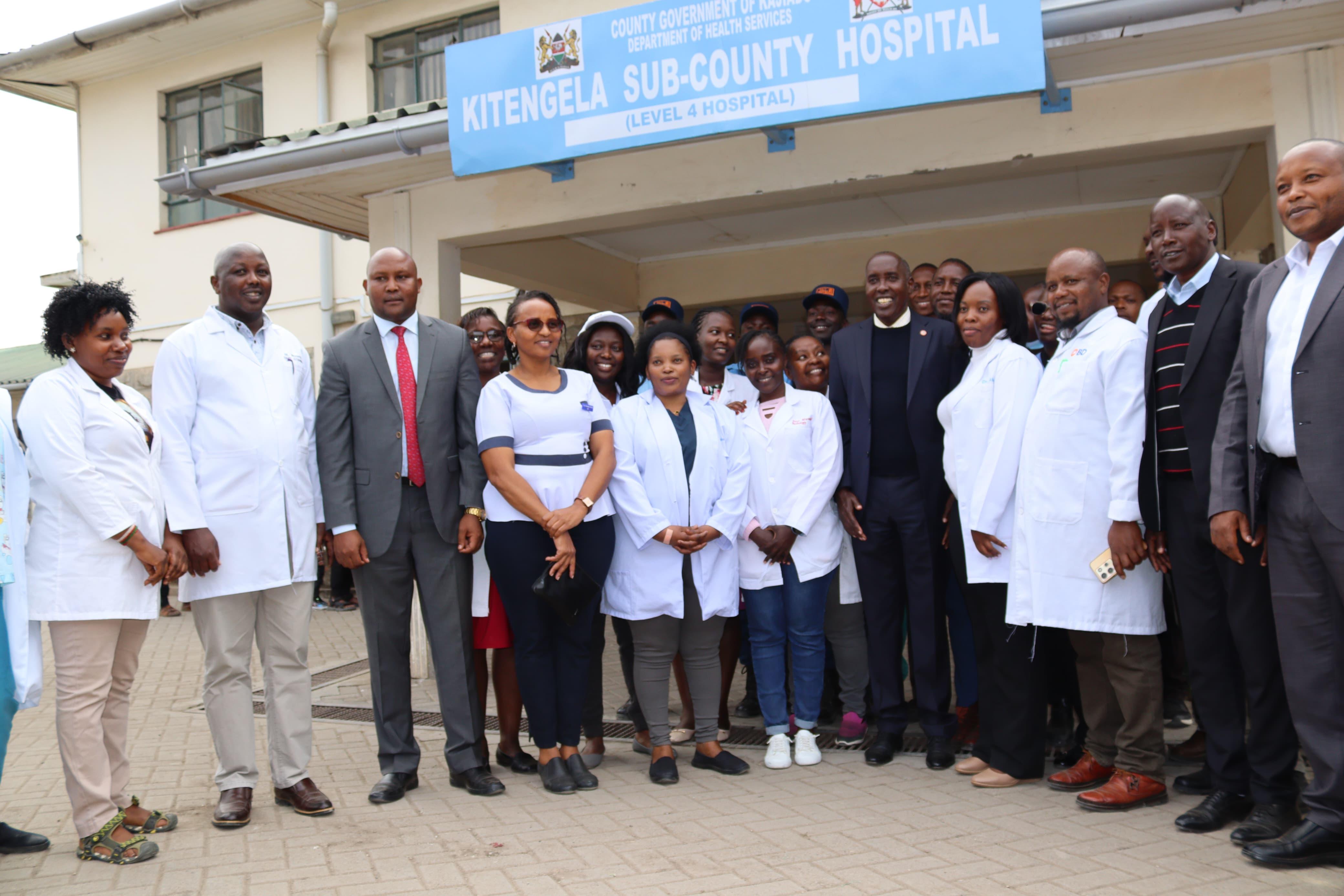
Kajiado Governor Joseph Ole Lenku condemned the violent attack on Kitengela Sub-County Hospital during Saba Saba protests, asserting that the perpetrators were not Kajiado residents and urging police to bring them to justice, while praising health workers for their bravery.
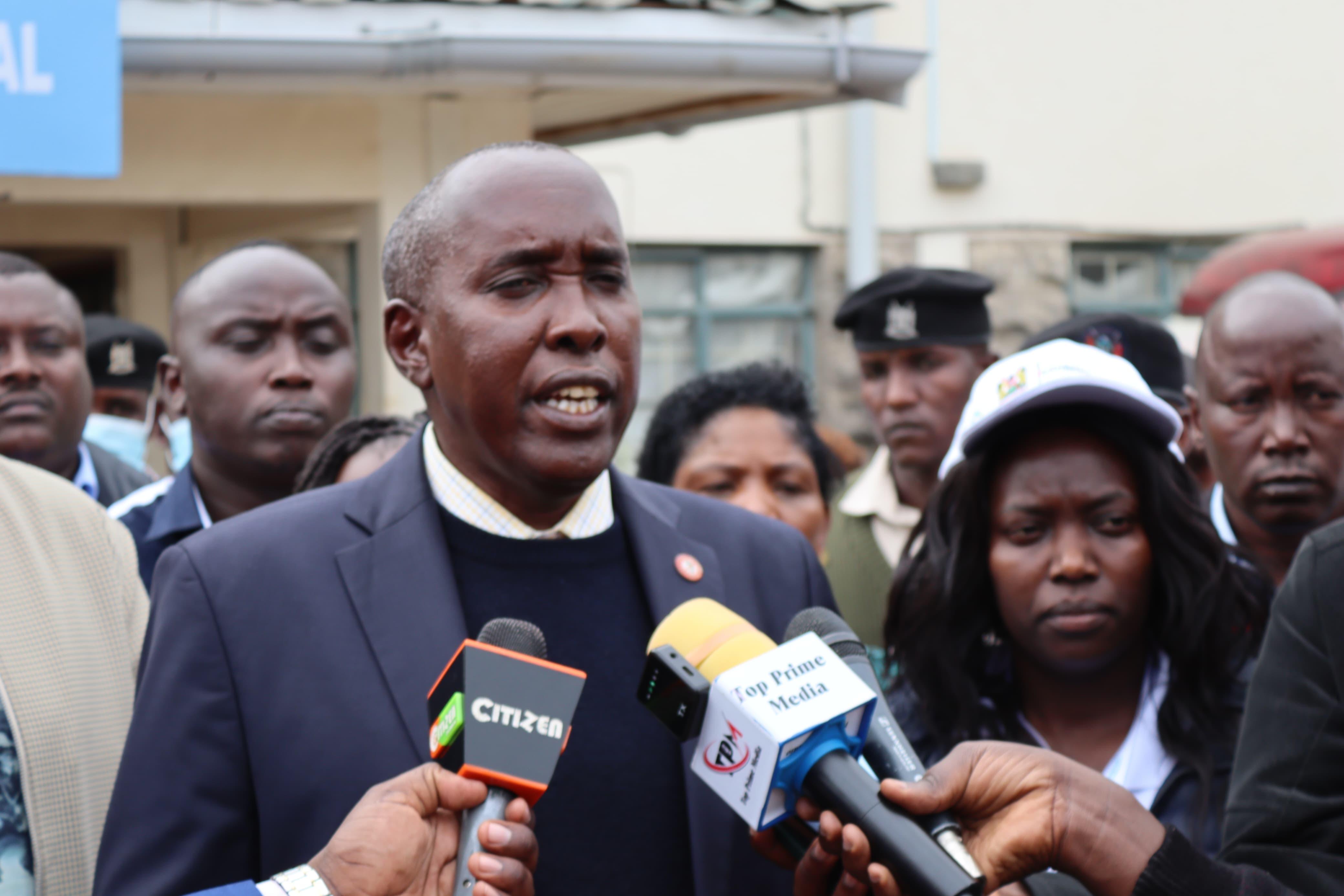
Kajiado Governor Joseph Ole Lenku stood before a somber gathering at Kitengela Sub-County Hospital, delivering a resolute condemnation of the violent attack that disrupted the facility during the previous day’s Saba Saba protests. The governor, flanked by county health officials and local leaders, declared that the perpetrators who stormed the hospital, intimidated medical staff, and vandalized equipment were not residents of Kajiado, a county known for its peaceful coexistence. “Kajiado residents are generally peaceful communities,” Lenku said, his voice firm with conviction. “What we saw sends a worrying message that it is no longer about people seeking their rights, but rather individuals with ill intentions.” His remarks, made in the wake of a chaotic episode that saw a cesarean section interrupted and oxygen machines stolen, underscored the growing tension between Kenya’s protest movement and the sanctity of public institutions.
The attack on Kitengela Sub-County Hospital occurred on July 7, 2025, during the Saba Saba commemorations, which marked the 35th anniversary of the 1990 pro-democracy protests. What began as a demonstration against economic hardship, corruption, and alleged police brutality spiraled into violence, with a group of individuals invading the hospital, wielding clubs and causing panic. The chaos disrupted critical medical procedures, including a cesarean section, and led to the theft of vital equipment like oxygen machines. A particularly harrowing incident involved the body of 21-year-old Brian Kimutai, fatally shot during the protests, which was brought to the hospital by a group that then turned unruly. “I am here as the governor of Kajiado County to strongly condemn this unfortunate situation,” Lenku said, addressing the press at the hospital. “Targeting a healthcare institution is unacceptable, as it undermines public trust and access to critical medical care.”
Lenku’s assertion that the attackers were not from Kajiado sparked immediate debate, with some residents and activists questioning the claim. The governor maintained that the county’s diverse communities, including the Maasai, Kikuyu, and Kamba, have historically lived in harmony, and the violence was the work of outsiders exploiting the protests. “We cannot continue to watch as people’s businesses and public facilities are vandalized,” he said, noting similar incidents in Kiserian and Ngong, where county offices and businesses were looted. He urged citizens to cooperate with police to identify the perpetrators, emphasizing that Kajiado’s reputation for peace must be upheld. “We will not tolerate such actions in Kajiado,” Lenku added, commending residents for showing restraint despite provocation.
The hospital attack drew widespread condemnation from health workers’ unions and local leaders. The Kenya Union of Clinical Officers and the Kenya National Union of Medical Laboratory Officers described the incident as a “threat to health professionals nationwide” and called for armed security at hospitals in protest-prone areas. “Health workers are neutral,” said Peterson Wachira, chairperson of the clinical officers’ union. “In times of war, medics are protected because they save lives.” The unions warned that without adequate protection, health workers might withdraw services, citing the Occupational Health and Safety Act. Kajiado’s Health Executive Committee Member, Alex Kilowua, echoed Lenku’s sentiments, praising hospital staff for their bravery. “Acts of vandalism will not deter us from our responsibility to serve,” Kilowua said, confirming that no staff or patients were physically harmed, though the disruption endangered patient safety.
The Saba Saba protests, driven largely by Generation Z activists, have exposed deep-seated frustrations with Kenya’s economic and political landscape. With a public debt of KSh 11.36 trillion and youth unemployment at 67 percent, the demonstrations have demanded accountability for alleged abductions and police brutality, including the death of blogger Albert Ojwang in custody. The Kitengela incident, however, marked a turning point, with public sentiment on X reflecting outrage over the hospital invasion. “Hospitals are for healing, not violence,” posted a Nairobi resident, while another wrote, “Lenku’s right—those goons aren’t from Kajiado. Protect our health workers!” The hashtag #SabaSaba2025 trended, with videos of the hospital chaos circulating alongside calls for justice.
The mother of Brian Kimutai, Ann Nyawira Gikunju, shared a heart-wrenching account of her 14-hour struggle to secure her son’s body, fearing police interference. “We suspected the police wanted to seize the body to tamper with evidence,” she said, explaining why the family moved it to a private car overnight before transferring it to Shalom Hospital in Machakos. Her story, coupled with reports of a long-standing dispute involving her son and a police officer over a boda boda business, fueled allegations of targeted violence. Lenku, addressing these concerns, called for swift investigations. “The police must bring these criminals to justice,” he said, distancing Kajiado’s residents from the unrest.
The attack on Kitengela Sub-County Hospital is part of a broader wave of violence that has strained Kajiado’s resources. The county, under Lenku’s leadership since 2017, has invested heavily in healthcare, upgrading facilities like Kitengela, Ngong, and Loitokitok to Level 4 status and equipping the Kajiado County Referral Hospital with modern tools like MRI machines and dialysis units. “Our health workers have shown courage under pressure,” Lenku said, noting that the county has recruited specialists and increased staffing to improve service delivery. However, recent challenges, including a nurses’ strike in March 2025 over delayed salaries and unremitted deductions, have highlighted systemic issues. “We’re working to resolve these disputes,” Lenku assured, pledging support for health workers.
Local leaders, including Kitengela Ward MCA and Kajiado East MP Kakuta Maimai, joined Lenku in condemning the attack. “Hospitals are sanctuaries of healing and must never be turned into battlegrounds,” Maimai said, commending police for restoring order. The violence also reignited political tensions, with critics like Kajiado East MP Peris Tobiko, who challenged Lenku in the 2022 elections, pointing to past failures in healthcare delivery. “Our hospitals need protection, not just promises,” Tobiko said, referencing earlier criticisms of inadequate supplies at Kitengela’s facilities. Lenku, however, dismissed such critiques, focusing on his administration’s achievements, including the Mbuzi Moja Afya Bora initiative to promote health insurance.
The governor’s claim that the attackers were outsiders aligns with his broader narrative of unity in Kajiado, a county of 1.1 million people from diverse ethnic backgrounds. As a former Interior Cabinet Secretary and a prominent Maasai leader, Lenku has positioned himself as a unifier, though his tenure has faced scrutiny over alleged corruption and stalled projects. A 2025 Auditor-General’s report flagged KSh 2.3 billion in unaccounted funds, prompting accusations from rivals like Narok Senator Ledama Olekina. Lenku, speaking in Kitengela, sidestepped these controversies, focusing on the hospital attack. “I commend our residents for exercising restraint and thank our health staff for bravely attending to the injured,” he said, urging collaboration with security agencies.
The incident has prompted calls for systemic changes to protect public facilities during protests. Civil society groups have proposed designated protest zones to prevent clashes, while health unions demand stricter security measures. “We need a framework where protests don’t endanger lives,” said a Nairobi-based governance expert. The Kenya National Commission on Human Rights, documenting 31 deaths during the Saba Saba protests, urged investigations into police conduct, noting reports of plainclothes officers and armed gangs operating alongside security forces. “The government must ensure accountability,” said a commission official, reflecting public frustration.
Lenku’s condemnation also comes amid political maneuvering ahead of the 2027 elections. His critics, including Olekina and former MP Katoo Ole Metito, have accused him of divisive tactics, while supporters praise his development record, such as the Dr. Likimani Primary School in Kitengela. “Lenku’s standing up for Kajiado’s peace,” said a local business owner, though others remain skeptical, citing past protests that led to looting in Kitengela. “We need action, not just words,” posted an X user from Ngong.
As Kajiado recovers from the hospital attack, Lenku’s leadership faces a critical test. His call for calm and cooperation with police aims to restore public trust, but the underlying issues of youth unrest and economic hardship persist. “We must protect our institutions and our people,” Lenku said, envisioning a Kajiado where protests do not descend into chaos. The road ahead involves balancing the right to demonstrate with the need for order, a challenge that will shape the county’s future as Kenya navigates its turbulent democratic journey.
Former Kiambu Governor Ferdinand Waititu has secured a major bail reprieve from the High Court, with Justice Winfrida Okwany reducing his bail from Sh53.5 million to Sh20 million cash pending appeal in his ongoing corruption case.
President Ruto and Governor Sakaja signed a cooperation agreement allocating funds for 50,000 new streetlights, water plants saving 50 million litres daily, 27 km Nairobi River sewer and ward road upgrades, with Ruto calling it a partnership to make the city livable while opposition senators warn of devolution threats.
A staff member at Moi Teaching and Referral Hospital allegedly stole Sh10 million by falsifying patient bills as paid in the eCitizen system while diverting the money to her personal account, prompting an ongoing police and hospital investigation.