Kenya’s justice system took a significant step toward addressing police accountability on June 23, 2025, as the Director of Public Prosecutions (DPP) approved murder charges against six police officers implicated in the death of Albert Ojwang, a 31-year-old teacher and blogger. The officers, identified as Samson Talaam, James Mukhwana, Peter Kimani, John Ngige, Brian Njue, and Gin Abwao, are set to be arraigned before the Kibera High Court to face charges under Section 204 of the Penal Code, Cap. 63 of the Laws of Kenya. The charges stem from an investigation by the Independent Policing Oversight Authority (IPOA), which concluded that Ojwang’s death in police custody at Nairobi’s Central Police Station on June 7, 2025, was a result of a brutal assault, not the self-inflicted injuries initially claimed by police. This case, which has sparked nationwide protests and international scrutiny, marks a pivotal moment in Kenya’s ongoing struggle against police brutality.
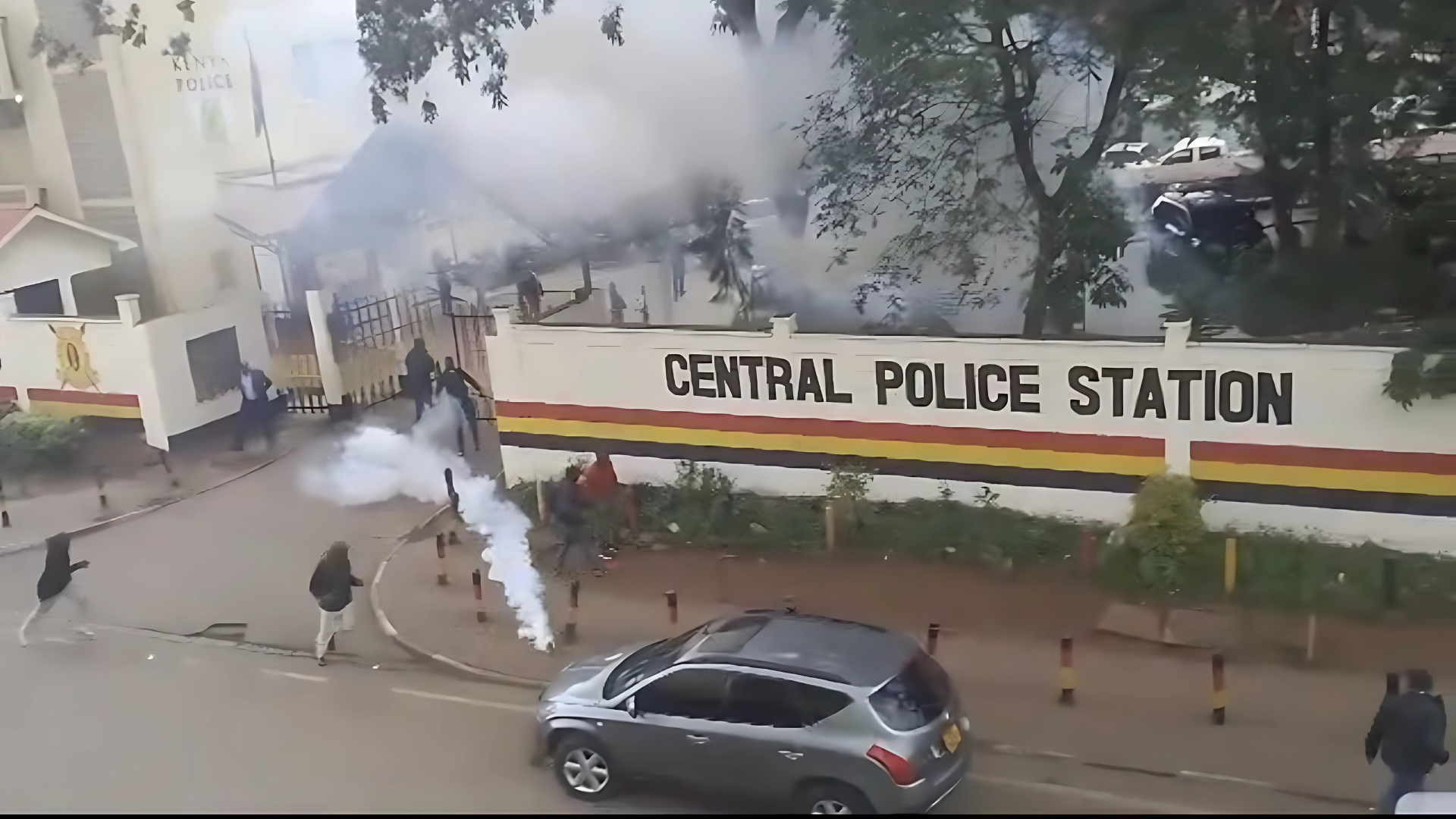
Albert Ojwang, a former educator known for his vocal online presence under the username Pixel Pioneer, was arrested in his home in Kakoth, near Homa Bay, on June 7, 2025. The arrest followed allegations that he had posted defamatory content on social media targeting Deputy Inspector-General of Police Eliud Lagat. Ojwang was transported over 400 kilometers to Nairobi and booked into Central Police Station that evening. Within hours, he was dead, his body bearing marks of severe trauma. “My son died like an animal,” said Meshack Ojwang, Albert’s father, in a tearful statement outside the station. “We trusted the police to protect him, but they took his life.”
The initial police narrative claimed Ojwang had died from head injuries sustained by banging his head against a cell wall. However, a postmortem conducted on June 10, led by government pathologist Dr. Bernard Midia, revealed a starkly different story. The examination found evidence of blunt force trauma, neck compression, and widespread bruising, injuries that were “unlikely to be self-inflicted.” This contradiction fueled public outrage, with hundreds of protesters taking to Nairobi’s streets, waving Kenyan flags and demanding justice. “We’re tired of police killing us and calling it suicide,” said Kelvin Oluoch, a 23-year-old protester. “Ojwang’s death is a wake-up call.”
The IPOA’s investigation, launched swiftly after Ojwang’s death, uncovered disturbing details about the events at Central Police Station. Court documents allege that Officer Commanding Station (OCS) Samson Talaam, the station’s senior officer, played a central role in orchestrating the assault. According to a statement from Police Constable James Mukhwana, Talaam instructed him to “discipline” Ojwang, acting on orders allegedly issued by Deputy Inspector-General Lagat. “I was told there was a directive from DIG Lagat,” Mukhwana said in a sworn statement to IPOA. “The aim was to make sure Ojwang sustained injuries and ended up in hospital.” Mukhwana’s confession, which he initially withheld out of loyalty to his colleagues, implicated four inmates—Collins Ireri, Gil Ammiton, Brian Mwaniki, and Erick Ndambuki—who were allegedly paid to carry out the beating.
Further evidence pointed to a cover-up attempt. IPOA investigators found that the station’s CCTV system had been tampered with, with disks formatted to obscure footage from the night of Ojwang’s death. Two technicians, Kelvin Mutisya Mutava and Bryan Mwaniki Njue, were arrested for their alleged role in disabling the surveillance system. “The tampering with evidence shows a deliberate effort to hide the truth,” said IPOA Director Elema Halake during a press briefing. “We are committed to ensuring every individual involved faces justice.” The DPP, Renson Ingonga, confirmed on June 23 that the investigation’s findings provided sufficient grounds to charge Talaam, Mukhwana, Kimani, Ngige, Njue, and Abwao with murder, marking a rare instance of senior police officers facing such serious charges.
The accused officers, now in custody, are expected to take their plea at Kibera High Court, where the case will be heard under Section 204 of the Penal Code, which carries a maximum penalty of death or life imprisonment for murder. The inclusion of Talaam, a senior officer, has intensified public scrutiny of the National Police Service (NPS). “This case exposes a culture of impunity within the police,” said human rights activist Hanifa Adan. “Officers think they can act above the law, but today, the law is catching up.” The charges also come amid broader concerns about extrajudicial killings, with IPOA reporting that at least 20 people have died in police custody over the past four months.
Ojwang’s death has reignited memories of past high-profile cases, such as the 2016 murder of lawyer Willie Kimani, his client Josephat Mwenda, and their driver Joseph Muiruri, for which a police officer was sentenced to death. “Every time we think the police have reformed, another tragedy happens,” said Sarah Wanjiku, a Nairobi resident who joined the protests. “Ojwang was a teacher, a father, a husband. He didn’t deserve this.” Ojwang’s widow, Nevnina Onyango, recounted his final phone call from the station, where he assured her, “I’ll see you soon.” She told journalists that seeing his body in the morgue, marked by signs of torture, was a moment she would never forget. “My world is dark without him,” she said.
President William Ruto has publicly condemned the incident, calling it “heartbreaking and unacceptable.” In a statement on June 13, he pledged to protect citizens from “rogue police officers” and ordered the NPS to cooperate fully with IPOA’s investigation. However, public trust in the police remains low, with human rights groups like the Kenya Human Rights Commission (KHRC) reporting nearly 160 cases of extrajudicial killings and enforced disappearances in 2024 alone. “The system fails people because it protects its own,” said political analyst John Mwangi. “Charging these officers is a step, but we need systemic change.”
The case has also drawn international attention, with the United States and European Union calling for a transparent investigation. “This is not just a Kenyan issue; it’s a human rights issue,” said a spokesperson for the EU delegation in Nairobi. The pressure has led to Deputy Inspector-General Lagat stepping aside voluntarily to allow for an unimpeded investigation, though he has denied any involvement in Ojwang’s death. “I will provide any support required to establish the truth,” Lagat said in a statement. His role remains under scrutiny, with IPOA summoning him to record a statement.
The arraignment at Kibera High Court is a critical moment for Kenya’s justice system, which has faced criticism for leniency toward police misconduct. “This case could set a precedent,” said Mary Ndungu, a legal expert in Nairobi. “Holding senior officers accountable would show that no one is above the law.” However, skepticism persists, given the rarity of convictions in similar cases. “We’ve seen promises of justice before,” said Ndungu. “The challenge is ensuring the process is fair and not derailed by influence.”
For the Ojwang family, the charges offer a glimmer of hope. “Albert was a good man, a teacher who loved his students,” said his father, Meshack. “We want those responsible to face the full consequences.” As the nation awaits the trial, the case has become a symbol of the fight against police impunity, with protesters vowing to keep the pressure on. “This is for Albert and all the others who’ve died in custody,” said Oluoch. “We won’t stop until justice is served.”