the United Nations Conference on Trade and Development released a sobering report, sounding the alarm on Kenya’s escalating public debt crisis, which has reached a staggering KSh 11.36 trillion by March 2025. The report underscores how the country’s ballooning debt interest payments, which surged to KSh 1.1 trillion in the fiscal year ending June 2024, are devouring nearly a third of national revenue, crowding out critical investments in healthcare, education, and other public services. This marks a 260 percent increase in debt servicing costs since 2016, a trajectory that has left Kenya’s fiscal space increasingly constrained and raised fears of a looming crisis for millions reliant on government-funded programs. As the nation grapples with this financial burden, stakeholders are calling for urgent reforms to avert further deterioration of essential services.
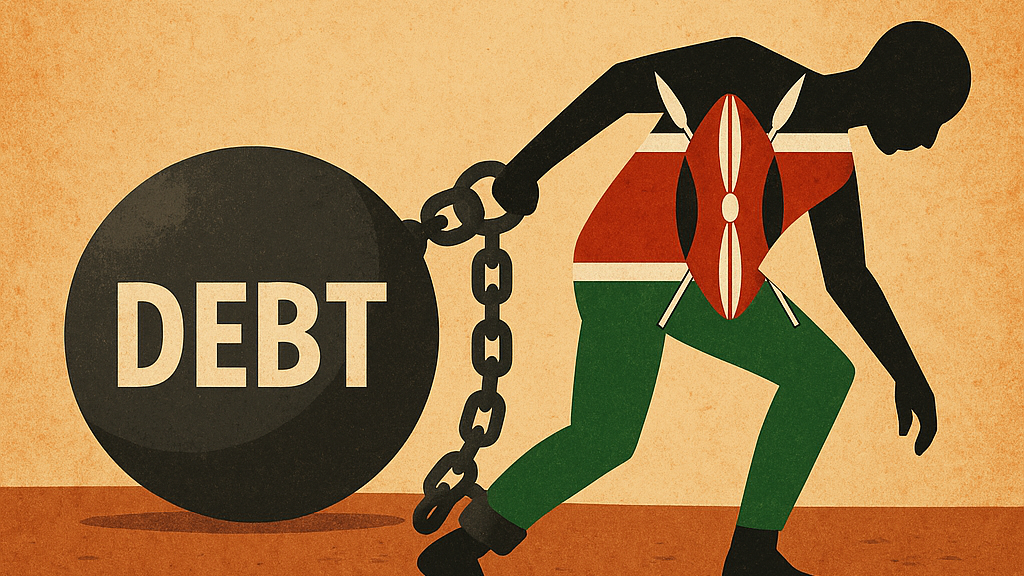
Kenya’s public debt, comprising KSh 6.2 trillion in domestic debt and over KSh 5.1 trillion in external debt, has grown relentlessly over the past decade, driven by ambitious infrastructure projects, pandemic-related spending, and persistent budget deficits. The UN report notes that interest payments alone now outstrip the combined budgets for health and education, with KSh 702.7 billion allocated to education and KSh 138.1 billion to health in the 2025/26 fiscal year, trailing debt servicing by over KSh 250 billion. “We’re at a breaking point,” said Esther Mwangi, a Nairobi-based economist, during a recent fiscal policy forum. “When a third of our revenue goes to interest payments, it’s not just numbers—it’s hospitals without medicine and schools without teachers.”
The healthcare sector, already strained by years of underfunding, faces acute challenges. In rural areas like Turkana and Baringo, health facilities report shortages of essential drugs and medical staff, exacerbated by the government’s limited fiscal space. “We’re turning away patients because we lack basic supplies,” said Dr. Susan Auma, a medical officer at a clinic in Lodwar. “The debt burden means we can’t even maintain our equipment.” The UN report highlights that Kenya is among 22 countries where interest payments now exceed spending on basic services, a sharp rise from 12 countries a decade ago. This trend threatens to undo progress in reducing maternal mortality and improving access to primary care, particularly in marginalized regions.
Education, a cornerstone of Kenya’s Vision 2030 development strategy, is similarly at risk. The 2025/26 budget proposes a KSh 4.3 billion cut to free primary education, impacting programs like school feeding initiatives that support millions of vulnerable children. At Embositit Primary School in Tiaty, Baringo, teachers describe makeshift classrooms and a lack of textbooks. “We’re supposed to prepare the next generation, but we’re struggling to keep the lights on,” said headteacher Joseph Kiprotich. The UN warns that such cuts could deepen inequality, with 36.1 percent of Kenyans living below the national poverty line and youth unemployment hovering above 38 percent. “Education is our way out of poverty,” said a parent in Kisumu, Mary Atieno. “But if the government prioritizes debt over our children, what future do we have?”
The rapid rise in debt servicing costs is tied to Kenya’s growing reliance on short-term domestic borrowing, particularly Treasury bills, which account for over 15 percent of domestic debt as of May 2025. These instruments, while helping to bridge fiscal gaps, have driven up refinancing risks and interest rates, with 91-day Treasury bill rates remaining elevated after peaking in late 2024. “The government is borrowing to pay interest, not to build schools or hospitals,” said Stellar Swakei, an analyst at Standard Investment Bank. “This cycle is unsustainable and crowds out the private sector, stifling economic growth.” The debt-to-GDP ratio, now at 70 percent, exceeds the International Monetary Fund’s recommended threshold of 50 percent for developing countries, signaling heightened fiscal vulnerability.
The Kenya Revenue Authority’s underperformance has compounded the crisis. In the fiscal year ending June 2024, the KRA collected KSh 2.26 trillion against a target of KSh 2.51 trillion, a shortfall attributed to a tough macroeconomic environment and the withdrawal of the contentious Finance Bill 2024, which had aimed to raise KSh 344.3 billion in new taxes. The scaled-down Finance Bill 2025 is projected to yield only KSh 30 billion, further limiting revenue options. “We can’t tax our way out of this,” said a Treasury official, speaking anonymously. “Without serious expenditure reforms, we’re just digging a deeper hole.” The government’s 2025/26 budget of KSh 4.24 trillion, against projected revenues of KSh 3.32 trillion, leaves a KSh 876.1 billion deficit, likely to be financed through more borrowing.
Social media platforms like X have amplified public frustration, with users decrying the prioritization of debt repayment over public services. “Half our taxes go to interest payments, not hospitals or schools,” one user posted. “This is robbery.” Another wrote, “The UN is right—our kids and patients are paying the price for this debt trap.” The hashtag #KenyaDebtCrisis has gained traction, reflecting growing public awareness of the issue. However, some argue the government’s hands are tied. “We borrowed for infrastructure, but now we’re stuck with the bill,” said a commenter, highlighting the trade-offs of past development loans.
The UN report emphasizes the need for fiscal consolidation and enhanced revenue mobilization to avert a full-blown crisis. Proposals include rationalizing non-essential spending, such as the creation of new state departments, which critics argue inflates administrative costs. The 2025/26 budget introduces seven new departments, including one for Justice, Human Rights, and Constitutional Affairs, despite claims of austerity. “We’re cutting fertilizer subsidies for farmers but funding more bureaucracy,” said a farmer in Uasin Gishu, John Kiptoo. “Where’s the logic in that?” The budget also reduces agricultural funding by KSh 3.3 billion, threatening food security at a time when 20.1 million Kenyans live below the poverty line.
International partners have expressed concern, with the World Bank urging structural reforms to boost private sector productivity and expand social protection. “Fiscal policy is more than a budget tool—it’s a lever for equity,” said Naomi Mathenge, a senior World Bank economist. “Kenya must spend smarter to protect the poor.” The International Development Association and International Bank for Reconstruction and Development currently support 32 projects worth $6.5 billion in Kenya, spanning health, education, and infrastructure, but the USAID shutdown in July 2025 has strained donor-dependent programs, particularly in health. “We’re losing external support at the worst possible time,” said a Ministry of Health official, noting the $403.8 million health budget shortfall.
Civil society groups, including the Okoa Uchumi Campaign, have called for a restructuring of the 2025/26 budget to prioritize social sectors. “For every shilling collected, over 60 cents goes to debt servicing,” said a campaign spokesperson during a parliamentary submission. “This is unsustainable and unfair to ordinary Kenyans.” The group advocates for cutting wasteful spending, such as high administrative costs in the Public Administration and International Relations sector, which consumes 11 percent of the budget, compared to 6 percent for health and 3 percent for social protection. “We need bold political will to redirect funds to where they’re needed most,” the spokesperson added.
The government, led by Treasury Cabinet Secretary John Mbadi, has defended its fiscal strategy, citing efforts to narrow the fiscal deficit to 4.3 percent of GDP in 2025/26, down from 5.6 percent in 2024. “We’re committed to fiscal discipline,” Mbadi said at a recent budget briefing. “But we can’t ignore our debt obligations.” The Treasury has introduced measures like zero-based budgeting and an e-procurement system to enhance transparency and reduce corruption, which reportedly costs Kenya KSh 2 billion daily. However, critics argue these measures fall short without addressing systemic inefficiencies, such as off-budget commitments and duplicated roles across government agencies.
As Kenya navigates this crisis, the UN report serves as a stark reminder of the trade-offs between debt repayment and public welfare. With interest payments projected to exceed KSh 1 trillion by June 2025, the government faces tough choices. “We’re robbing our future to pay for the past,” said Mwangi, the economist. “Without reform, we risk a generation without adequate healthcare or education.” For ordinary Kenyans, the consequences are already tangible, from empty hospital shelves to underfunded schools. As calls for action grow louder, the nation stands at a crossroads, balancing fiscal survival with the urgent needs of its people.