By Brenda Wereh09 Jul, 202531 mins read 2,326 views
0 comments 0 likes
Kenya’s United Opposition launched a nationwide boycott of businesses tied to President William Ruto’s administration, citing state-sponsored violence and extrajudicial killings during the Saba Saba protests, demanding justice for victims and systemic reforms.
https://shinebet.co.ke/
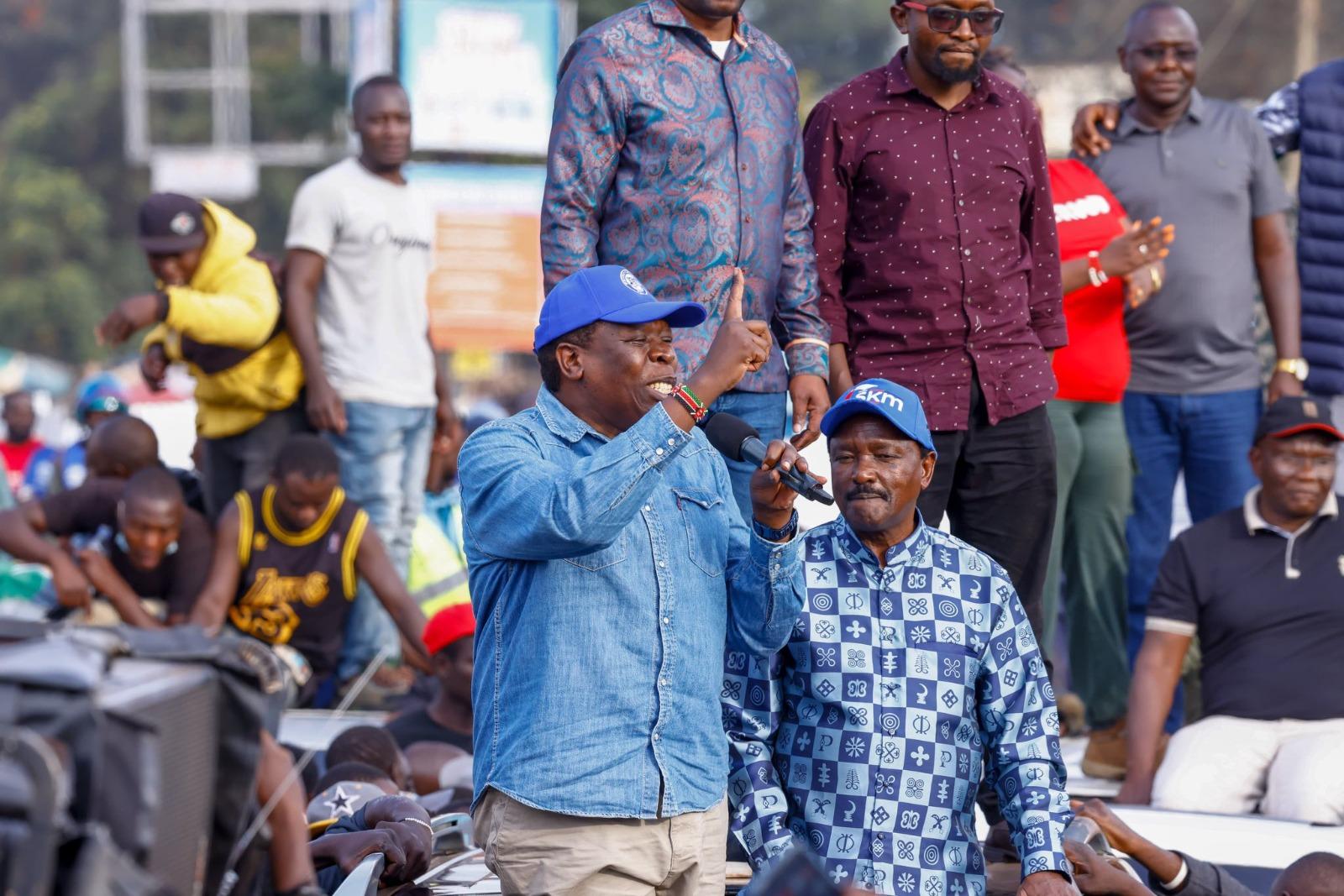
On the evening of July 8, 2025, Kenya’s United Opposition, a coalition of prominent political figures, stood united at the SKM Command Centre in Nairobi’s Karen suburb, issuing a clarion call for a nationwide boycott of businesses, services, and institutions linked to President William Ruto’s Kenya Kwanza administration. The move, announced amid escalating tensions following the violent Saba Saba protests that claimed 31 lives, marks a bold escalation in the opposition’s campaign for justice and accountability. Led by former Deputy President Rigathi Gachagua, alongside Kalonzo Musyoka, Martha Karua, and Fred Matiang’i, the opposition accused the government of orchestrating state-sponsored violence, ethnic persecution, and extrajudicial killings, particularly targeting the youth-led Gen Z movement. “We are calling for a boycott that will shake the foundations of this regime,” Gachagua declared, his voice resolute. “We will not rest until every drop of innocent blood is accounted for.”
The Saba Saba protests, commemorating the 1990 pro-democracy demonstrations, erupted on July 7, 2025, across cities like Nairobi, Kisumu, and Mombasa, driven by grievances over high taxes, unemployment, corruption, and police brutality. The protests turned deadly, with the Kenya National Commission on Human Rights reporting 31 fatalities, including a 12-year-old girl shot in Kiambu, and over 400 injuries. The opposition alleges that rogue police officers and state-sponsored militias were deployed to suppress dissent, with reports of abductions and targeted killings fueling public outrage. “This regime is hostile and cannot be reasoned with,” said Musyoka, a former Vice President and Wiper Party leader. “We urge Kenyans to shun businesses owned or operated by its enablers, from telecoms to retail.” The coalition promised to release a “list of shame” identifying state-linked businesses, encouraging citizens to crowdsource information on affiliations.
The boycott strategy draws inspiration from past opposition campaigns, such as the 2017 National Super Alliance (NASA) boycott targeting firms like Safaricom and Brookside Dairy for their alleged ties to then-President Uhuru Kenyatta’s administration. This time, the opposition aims to disrupt revenue streams of companies perceived as pro-government, including those in telecommunications, hospitality, and retail, though specific names were not disclosed at the press briefing. “We’re not just targeting businesses; we’re exposing the economic pillars of this oppression,” said Karua, a veteran human rights lawyer and NARC-Kenya leader. She emphasized that the boycott extends to events and forums organized by pro-regime actors, including civil society groups seen as legitimizing state violence. The opposition’s call has resonated on social media, with the hashtag #BoycottKenyaKwanza trending on X, where users shared lists of businesses allegedly linked to Ruto’s allies.
The opposition’s campaign is not limited to economic pressure. Through the People’s Restoration Justice Commission (PRJC), launched on June 24, 2025, the coalition is documenting atrocities committed during the protests, including the death of blogger Albert Ojwang in custody and the Kitengela Sub-County Hospital attack, where protesters disrupted a cesarean section and stole oxygen machines. Makueni Senator Dan Maanzo, a PRJC member, outlined plans to pursue private prosecutions if the Director of Public Prosecutions fails to act. “We will provide evidence to the DPP, but if he delays, we’ll take matters into our own hands,” Maanzo said, noting that the commission’s membership would expand to include journalists, retired judges, and human rights representatives. “This is a people’s initiative until justice is served,” he added, underscoring the coalition’s commitment to accountability.
Public sentiment is divided. On X, some Kenyans expressed support, with one user posting, “Boycotting these businesses is our power to fight back. Let’s hit them where it hurts.” Others, however, questioned the feasibility, citing the 2017 boycott’s limited impact. “Safaricom and M-Pesa are too essential,” wrote a Nairobi resident. “How do we boycott what we need to survive?” The 2017 boycott, which targeted Safaricom, Brookside, and Bidco, led to reported losses but failed to sustain momentum, with companies like Safaricom retaining market dominance. Economists warn that a widespread boycott could exacerbate Kenya’s economic challenges, with a projected growth rate of 4.8 percent in 2025 already strained by a KSh 11.36 trillion public debt and protest-related disruptions. “This could hurt small businesses more than the big players,” said an economist in Nairobi, noting that supply chain disruptions could lead to job losses.
The government has dismissed the boycott as an “extortion racket.” Interior Minister Kipchumba Murkomen defended the administration, accusing the opposition of inciting violence and exploiting the protests. “These are desperate attempts to destabilize the economy,” Murkomen said, assuring businesses of state protection. President Ruto, addressing a development forum in Nakuru, called for unity and urged Kenyans to reject divisive tactics. “We’re building a nation, not tearing it down,” he said, highlighting initiatives like the ClimateWorx program, which employs 110,000 youth in green projects. However, the opposition’s allegations of state-sponsored violence, including the use of plainclothes officers and armed gangs, have gained traction, with human rights groups documenting excessive force in counties like Kisumu and Machakos.
The boycott call coincides with broader demands for systemic reform. The opposition has criticized Ruto’s “broad-based government,” formed with ODM leader Raila Odinga, as a betrayal of democratic principles. Odinga’s absence from the SKM briefing, attributed to police roadblocks preventing his attendance at a Kamukunji rally, underscored the government’s heavy-handed response. “Raila’s dialogue with Ruto weakens our cause,” said a Gen Z activist on X, reflecting distrust in traditional political elites. The PRJC aims to bridge this gap by supporting citizen-led resistance, including community-based mobilization and legal action against perpetrators of violence. “We’re not just boycotting; we’re reclaiming our democratic space,” said Matiang’i, a former Interior Cabinet Secretary now aligned with the opposition.
The economic implications are significant. Kenya’s private sector, a key driver of the region’s largest economy, relies on consumer confidence and stability. The 2024 protests against the Finance Bill, which led to its withdrawal, already disrupted businesses, with looting reported in Meru and Nyeri. A successful boycott could further strain sectors like retail and hospitality, where Ruto’s allies reportedly hold stakes. “Businesses are already reeling from protest disruptions,” said a Nairobi retailer. “A boycott could force us to cut jobs.” The Kenya Private Sector Alliance has called for dialogue to avert economic fallout, but the opposition remains steadfast, urging citizens to shun state-sponsored events and forums.
The boycott also highlights Kenya’s deep-seated issues of inequality and elite politics. The opposition argues that state-linked businesses perpetuate economic marginalization, benefiting a small cadre of politically connected individuals. “These companies thrive on our oppression,” said Kituyi, a former Trade Minister, reading the opposition’s statement. “By boycotting them, we’re demanding a fairer Kenya.” The PRJC plans to present evidence to international bodies, accusing the government of crimes against humanity. This international dimension has raised concerns among investors, with a 2025 risk assessment warning that political unrest could deter long-term investment in Kenya’s tech and tourism sectors.
The boycott’s success hinges on public participation, particularly among Gen Z, who have driven recent protests. Unlike the 2023 Azimio-led demonstrations, the 2025 movement is largely nonpartisan, with youths rejecting traditional political affiliations. “We’re not following politicians; we’re fighting for our future,” said a protester in Kisumu. The opposition’s call has sparked grassroots efforts, with activists compiling lists of businesses on X, though some question the accuracy of these crowdsourced efforts. “We need clear evidence of who’s linked to the regime,” posted a Mombasa resident, reflecting skepticism about targeting businesses without proof.
As Kenya approaches the 2027 elections, the boycott signals a new phase in the opposition’s strategy. By combining economic pressure with legal and media campaigns, the coalition aims to hold the government accountable while mobilizing citizens. “This is about justice, not just politics,” said Karua, urging Kenyans to join the resistance. The government’s response, including increased security at protest hotspots, suggests a prolonged standoff. With the memory of Saba Saba’s bloodshed fresh, the opposition’s boycott call is a gamble that could either galvanize a movement or deepen Kenya’s economic and social divides.
Former Kiambu Governor Ferdinand Waititu has secured a major bail reprieve from the High Court, with Justice Winfrida Okwany reducing his bail from Sh53.5 million to Sh20 million cash pending appeal in his ongoing corruption case.
President Ruto and Governor Sakaja signed a cooperation agreement allocating funds for 50,000 new streetlights, water plants saving 50 million litres daily, 27 km Nairobi River sewer and ward road upgrades, with Ruto calling it a partnership to make the city livable while opposition senators warn of devolution threats.
A staff member at Moi Teaching and Referral Hospital allegedly stole Sh10 million by falsifying patient bills as paid in the eCitizen system while diverting the money to her personal account, prompting an ongoing police and hospital investigation.