By Brenda Wereh24 Jun, 202531 mins read 2,560 views
0 comments
A detailed look at the Kenya Urban Roads Authority’s Sh7.6 billion contract for Nairobi’s Bus Rapid Transit Line 5 along Outer Ring Road, a Korean-funded project to ease traffic congestion with 13 stations, bridges, and modern infrastructure.
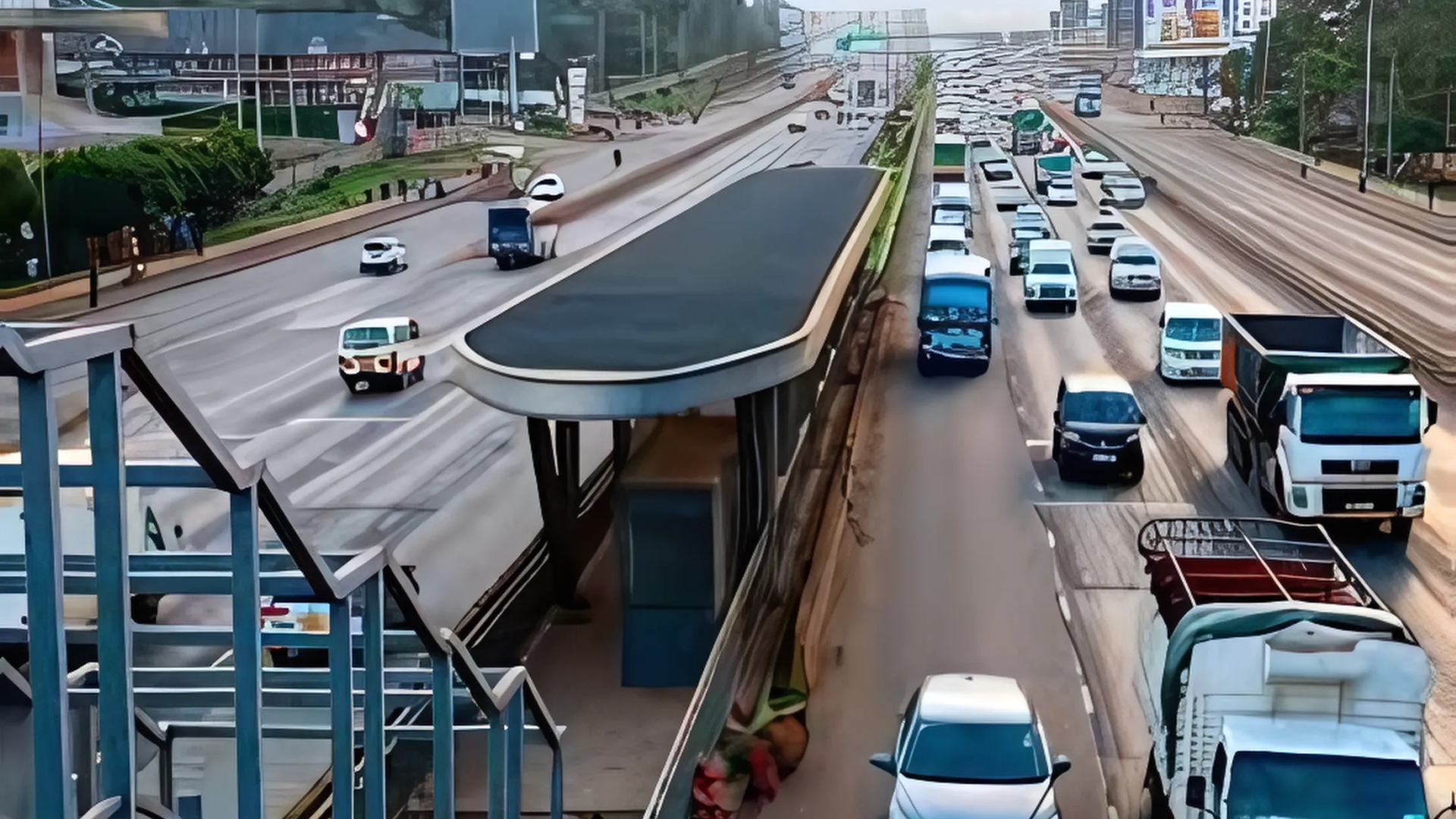
Nairobi’s chronic traffic congestion, a daily ordeal for millions of commuters, is set to receive a significant reprieve with the Kenya Urban Roads Authority (KURA) securing approval to award a Sh7.6 billion ($59 million) contract for the construction of Bus Rapid Transit (BRT) Line 5 along Outer Ring Road. Announced on June 23, 2025, the project, funded by a loan from the Export-Import Bank of Korea through the Economic Development Cooperation Fund (EDCF), marks a pivotal step in Kenya’s efforts to modernize urban transport. Spanning 10.5 kilometers from Taj Mall to North Airport Road, the initiative will feature 13 state-of-the-art BRT stations, three river bridges, two overpass bridges, enhanced drainage systems, street lighting, and landscaping. With construction slated to begin in January 2026 and a completion timeline of two years, the project promises to alleviate gridlock, reduce carbon emissions, and enhance mobility for Nairobi’s Eastlands residents.
Outer Ring road
The BRT Line 5, dubbed Nyati, is part of the Nairobi Integrated Urban Development Master Plan, which envisions a network of five BRT corridors to decongest the capital’s central business district (CBD). The 10.5-kilometer stretch will traverse key areas, including Ridgeways, Balozi (Allsops), and Imara Daima, connecting densely populated neighborhoods with critical economic hubs. “This project is a lifeline for Nairobi,” said KURA Director-General Silas Kinoti during a stakeholder meeting in Kamukunji. “We’re addressing traffic congestion, improving safety, and creating a sustainable transport system for our people.” The initiative builds on Kenya’s broader vision to transform public transport, with the Nairobi Metropolitan Area Transport Authority (NAMATA) overseeing the development of five BRT lines named after the country’s Big Five animals: Ndovu, Simba, Chui, Kifaru, and Nyati.
The Outer Ring Road, once a transformative infrastructure project funded by a Sh14 billion African Development Bank loan in 2015, has struggled to keep pace with Nairobi’s rapid population growth. Areas like Pipeline Estate and Kariobangi junction have become notorious chokepoints, with commuters spending hours in traffic. “I leave home at 5 a.m. to get to work by 8 a.m.,” said Mary Wanjiku, a shopkeeper in Embakasi. “The traffic on Outer Ring Road is unbearable, and we need solutions now.” The BRT Line 5 aims to address these woes by introducing dedicated two-lane bus corridors designed for high-capacity, low-emission buses, achieving an average speed of 30 km/h—among the fastest globally for BRT systems. This speed is expected to slash commute times, offering relief to daily commuters and boosting productivity in a city where traffic congestion costs an estimated Sh100 billion annually in lost hours and fuel.
The project’s scope is extensive, reflecting a comprehensive approach to urban mobility. The construction will include three river bridges spanning approximately 1,024 meters and two overpass bridges covering 323 meters, ensuring seamless connectivity across natural and infrastructural barriers. Thirteen BRT stations will be strategically placed to serve high-traffic areas, equipped with modern amenities like ticketing systems and real-time passenger information. “These stations will be more than just bus stops,” said Kinoti. “They’ll be hubs of convenience, with safe access and smart technology.” Additionally, a 1,365-square-meter BRT depot with parking, access roads, and drainage will support operational efficiency. The project also involves upgrading pedestrian infrastructure, including new footbridges and modifications to existing ones, alongside street lighting and landscaping to enhance the aesthetic and safety of the corridor.
The Korean funding underscores a growing partnership between Kenya and South Korea, with the tender restricted to Korean firms under EDCF guidelines. This decision has sparked debate, with some local contractors expressing disappointment over their exclusion. “We have the expertise to deliver such projects,” said James Otieno, a Nairobi-based contractor. “Why limit it to foreign firms?” Kinoti defended the decision, noting that the loan terms prioritize Korean expertise due to their proven track record in urban transport systems. A Korean consortium, led by Kunhwa Engineering & Consulting Co. Ltd., already secured a Sh583 million consultancy contract in 2022 to oversee design and supervision, signaling confidence in their ability to deliver. Bidding for the main contract, which opened in September 2024, requires firms to demonstrate experience in similar projects and financial stability, with bids set to close on November 19, 2025.
The project aligns with Kenya’s environmental goals, emphasizing low-carbon transport solutions. The BRT system will integrate with plans for electric buses, building on a Sh8.7 billion deal signed with the U.S. Millennium Challenge Corporation (MCC) in 2024 to acquire climate-friendly buses for BRT Line 2. “We’re not just easing traffic; we’re reducing Nairobi’s carbon footprint,” said Transport Principal Secretary Charles Hinga. The inclusion of electric vehicle charging stations and a vehicle enforcement system with CCTV surveillance further enhances the project’s sustainability and safety credentials. Nairobi Governor Johnson Sakaja, a vocal supporter, called the initiative “a partnership for Nairobi’s future” during a public participation forum in Embakasi South, urging residents to back the project despite short-term construction disruptions.
Public engagement has been a cornerstone of the project’s rollout. KURA held community forums in Kamukunji, Kware, and Fedha in September 2024 to gather feedback, addressing concerns about potential displacements and traffic disruptions during construction. “We want this to be a project that reflects the needs of the people,” said Kinoti, emphasizing the importance of stakeholder input. Residents like Peter Kamau, a matatu driver in Donholm, expressed cautious optimism. “If it reduces traffic, I’m all for it,” he said. “But they need to ensure matatu operators aren’t pushed out of business.” The project includes plans for park-and-ride facilities, allowing commuters to switch from private vehicles to BRT buses, potentially easing the impact on the matatu industry, which employs thousands.
The BRT Line 5 is part of a broader network aimed at revolutionizing Nairobi’s transport system. Line 1 (Ndovu) spans Limuru to Kitengela, while Line 2 (Simba), 70% complete, runs from Rongai to Thika. Line 3 (Chui) connects Tala to Ngong, and Line 4 (Kifaru) covers Mama Lucy Hospital to Kikuyu. These corridors, gazetted by NAMATA in 2019, aim to integrate with the Nairobi Railway City project, which includes a revamped central station and non-motorized transport corridors. However, past BRT efforts, like the stalled Thika Road project, highlight the challenges ahead. That initiative, launched in 2020 with a Sh5.6 billion contract, faltered due to funding shortages, leaving boarding stations incomplete. “We can’t afford another failure,” said Kamau. “The government must follow through this time.”
Economic benefits are a key selling point. The project is expected to create jobs in construction, maintenance, and bus operations, particularly for youth in Eastlands. “This is a chance to employ our young people,” said Sakaja, noting that local labor will be prioritized where possible. The BRT system also aims to boost businesses along Outer Ring Road by improving access and reducing travel times. “My shop loses customers when traffic is bad,” said Wanjiku. “If this BRT works, it could bring more people to my business.” The project’s focus on modern infrastructure, including drainage to mitigate flooding, addresses longstanding issues in areas like Pipeline, where heavy rains often disrupt travel.
Skeptics, however, point to Kenya’s history of delayed infrastructure projects and cost overruns. The Outer Ring Road’s initial construction, completed in 2017, faced criticism for design flaws that failed to anticipate population growth. “We need guarantees that this won’t be another half-finished project,” said economist Mary Wanjiku. KURA has pledged rigorous oversight, with the Korean consultancy ensuring compliance with international standards. The two-year timeline, while ambitious, is feasible given the project’s clear scope and funding. “We’re committed to delivering on time,” said Kinoti. “This is a priority for the government and our partners.”
As Nairobi prepares for construction, the BRT Line 5 represents a bold step toward a more connected, sustainable city. With traffic congestion costing the economy billions and urban populations soaring, the project’s success could redefine mobility in Eastlands and beyond. “This is about giving Nairobians the transport system they deserve,” said Hinga. For commuters weary of gridlock, the promise of faster, greener travel offers hope, but its realization will depend on meticulous execution and community support.
Former Kiambu Governor Ferdinand Waititu has secured a major bail reprieve from the High Court, with Justice Winfrida Okwany reducing his bail from Sh53.5 million to Sh20 million cash pending appeal in his ongoing corruption case.
President Ruto and Governor Sakaja signed a cooperation agreement allocating funds for 50,000 new streetlights, water plants saving 50 million litres daily, 27 km Nairobi River sewer and ward road upgrades, with Ruto calling it a partnership to make the city livable while opposition senators warn of devolution threats.
A staff member at Moi Teaching and Referral Hospital allegedly stole Sh10 million by falsifying patient bills as paid in the eCitizen system while diverting the money to her personal account, prompting an ongoing police and hospital investigation.