By Brenda Wereh29 Jul, 202526 mins read 2,332 views
0 comments 0 likes
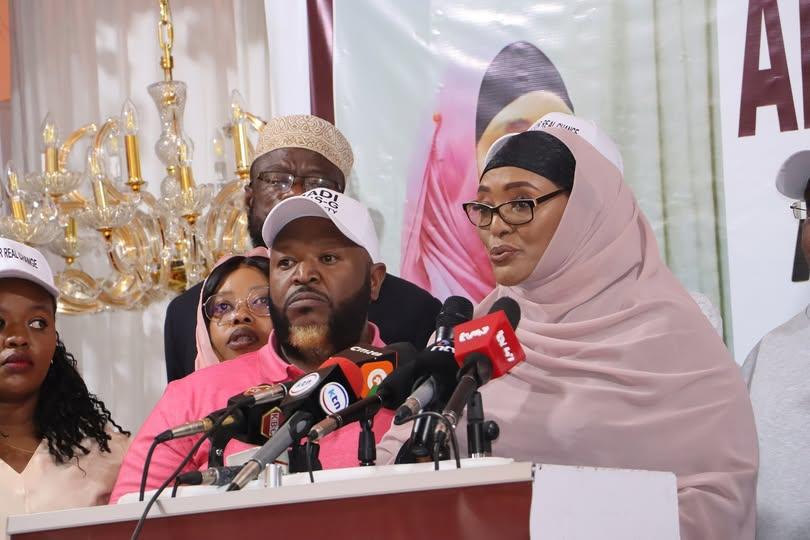
Amina Alake, wife of former presidential candidate Abduba Dida, declared her 2027 presidential bid with the Alliance for Change party, adding a fresh perspective to Kenya’s political scene.
A new chapter in Kenya’s political saga unfolded on Tuesday, July 29, 2025, as Amina Alake, wife of former presidential candidate Abduba Dida, formally announced her bid for the presidency in the 2027 General Election. The declaration, made during a vibrant rally in Nairobi at 10:00 AM East Africa Time, positions her as a candidate for the Alliance for Change (AFC) party, bringing a disruptive voice to a landscape long dominated by male contenders. Alake’s entry comes as her husband serves a final four years of community work in the United States, part of a seven-year jail term stemming from a 2022 conviction. Addressing a crowd of supporters waving party flags, Alake said, “It’s time for a new leadership that listens to all Kenyans, not just the loudest voices.” Her candidacy promises to challenge the status quo, drawing attention to gender dynamics in a race filled with seasoned male politicians.
Alake, a mother of three and a community organizer with roots in Wajir, steps into the political arena with a platform emphasizing inclusive governance, education reform, and economic empowerment for marginalized regions. The AFC, originally founded by Dida in 2010, has re-emerged under her leadership, capitalizing on his past campaigns that gained traction through televised debates in 2013 and 2017. Despite Dida’s legal troubles in the US—where he was sentenced for stalking and intimidation charges—Alake has framed her bid as a continuation of his vision, adapted to address current challenges. A local trader in Nairobi, setting up his stall, remarked, “Her husband spoke boldly; now she’s bringing that spirit back.” The move has sparked curiosity about whether her familial ties will bolster or burden her campaign.
Public reaction across Kenya has been a blend of excitement and skepticism. In Kisumu, a teacher preparing lessons listened to the news on a radio, saying, “A woman leading could change things if she’s strong.” In Mombasa, a fisherman mending his nets expressed doubt. “Can she handle the big men in politics?” he asked, glancing at the shore. Alake’s entry disrupts a 2027 race already shaping up with familiar names like William Ruto, seeking re-election, and Raila Odinga, contemplating another run despite his age. Her focus on grassroots mobilization, drawing from her work with women’s cooperatives, sets her apart, though some question her political experience. A youth leader in Naivasha, organizing a forum, added, “This could inspire more women, but she needs a solid plan.”
The context of Dida’s absence adds complexity to Alake’s campaign. Convicted in November 2022 in Illinois for stalking and violating a restraining order, he began a seven-year sentence, with the final four years converted to community work following good behavior. Based in Chicago, he has maintained contact with AFC supporters via video calls, endorsing Alake’s bid. “My wife carries our shared dream forward,” Dida said in a recorded message played at the rally. His past runs—securing 52,848 votes in 2013 and 38,004 in 2017—established a modest but loyal base, which Alake now seeks to expand. A mother in Nyeri, feeding her children, noted, “If she’s like her husband, she might surprise us,” as she cleared the table.
The morning’s announcement drew a diverse crowd to Nairobi’s Jeevanjee Gardens. In Thika, a father waiting at a clinic said, “My daughter admires her courage; we’ll watch her closely.” In Baringo, a herder tending cattle paused to hear a broadcast, adding, “A woman from the north could bring new ideas.” Alake’s campaign highlights issues like water access and youth unemployment, resonating with rural voters. The AFC plans to leverage digital platforms, a strategy Dida pioneered, to reach younger audiences. However, her lack of high-level political office raises questions about her readiness, a point some rivals may exploit. A health worker in Kisii, coordinating a vaccination drive, said, “She needs to prove she can lead, not just inspire.”
As the day progressed, the story rippled through Kenya’s regions. In Marsabit, a herder listening to a radio update noted, “Her husband’s voice was heard; now it’s hers.” In Mombasa’s markets, a vendor packing fish asked, “Will the big parties let her rise?” The 2027 race, still two years away, already features Ruto’s United Democratic Alliance and Odinga’s Orange Democratic Movement, with other contenders like Fred Matiang’i also testing the waters. Alake’s gender and regional background—rare among presidential hopefuls—could appeal to voters seeking diversity, though she faces an uphill battle against established machines. A youth leader in Naivasha, reflecting on the rally, said, “Her entry shakes things up; let’s see if it lasts.”
The afternoon brought a reflective mood to offices and homes. In Eldoret, a public servant preparing a report said, “A new face is welcome, but experience matters.” In Kisumu, a mother checking on her family added, “I hope she fights for us women.” Alake’s platform includes reviving AFC’s focus on interfaith dialogue and education, themes Dida championed. Her community work, including literacy programs in Wajir, bolsters her credibility, though critics argue it lacks the scale of national governance. A community organizer in Turkana, planning a radio talk, remarked, “She’s a fresh start, but the old guard won’t step aside easily.” The campaign’s early momentum hinges on building a coalition beyond Dida’s former supporters.
Economic challenges, with public debt at Sh10 trillion and inflation at 5.5%, frame Alake’s entry. She proposes leveraging local resources to create jobs, a message tailored to regions like North Eastern where infrastructure lags. A lawyer in Nairobi, discussing over tea, noted, “Her ideas are bold, but she’ll need funding and alliances.” The AFC’s modest resources contrast with the war chests of major parties, though Alake’s grassroots approach may offset this. A vendor in Timau, closing his stall, said, “If she can deliver, I’ll vote for her.” Her husband’s legal situation, while a potential liability, also humanizes her narrative, appealing to voters who value resilience.
The evening saw continued engagement across the country. In Nakuru, a group at a market debated the news. “Can she beat Ruto or Raila?” one trader asked, sorting vegetables. In Nairobi’s cyber cafes, a student scrolling through updates noted, “People are talking about her online.” Alake plans a nationwide tour, starting in Wajir, to build support, with AFC elders pledging to mobilize voters. A youth leader in Kitale, organizing an event, reflected, “Her bid could change who runs in 2027.” The political landscape, shaped by the 2022 election’s close margin, now faces a wildcard, with Alake’s success depending on her ability to navigate gender biases and political rivalries.
Dida’s legacy, marked by his 2013 debate fame and moral stance, looms large. His incarceration has shifted AFC’s leadership to Alake, who has managed family and party duties during his absence. “We stand together, even from afar,” she said at the rally, earning cheers. In rural areas like Kitale, a farmer tending fields said, “Her husband’s fight was ours; now it’s hers.” In urban centers like Mombasa, a vendor packing goods added, “She’ll need more than family name to win.” The 2027 race, with its testosterone-driven history, now includes a voice promising change, though the path to State House remains daunting. A community elder in Nakuru, leading a discussion, concluded, “This is a test of Kenya’s readiness for new leadership.”
Former Kiambu Governor Ferdinand Waititu has secured a major bail reprieve from the High Court, with Justice Winfrida Okwany reducing his bail from Sh53.5 million to Sh20 million cash pending appeal in his ongoing corruption case.
President Ruto and Governor Sakaja signed a cooperation agreement allocating funds for 50,000 new streetlights, water plants saving 50 million litres daily, 27 km Nairobi River sewer and ward road upgrades, with Ruto calling it a partnership to make the city livable while opposition senators warn of devolution threats.
A staff member at Moi Teaching and Referral Hospital allegedly stole Sh10 million by falsifying patient bills as paid in the eCitizen system while diverting the money to her personal account, prompting an ongoing police and hospital investigation.