Chaos erupted in Kitengela, Kajiado County, as Kenya marked the 35th anniversary of the historic Saba Saba protests, a day synonymous with the fight for democratic reforms. What began as a call for better governance and accountability descended into a harrowing scene at Kitengela Sub-County Hospital, where a group of armed goons stormed the facility, disrupting critical medical procedures, assaulting patients and staff, and vandalizing essential equipment. The unprecedented attack, which included the disruption of an ongoing cesarean section and the theft of oxygen machines, has sparked widespread outrage, with medical unions, human rights groups, and citizens demanding swift action to hold the perpetrators accountable. The incident, occurring amid nationwide unrest that left 11 dead and 567 arrested, has raised urgent questions about the safety of healthcare facilities during political protests.
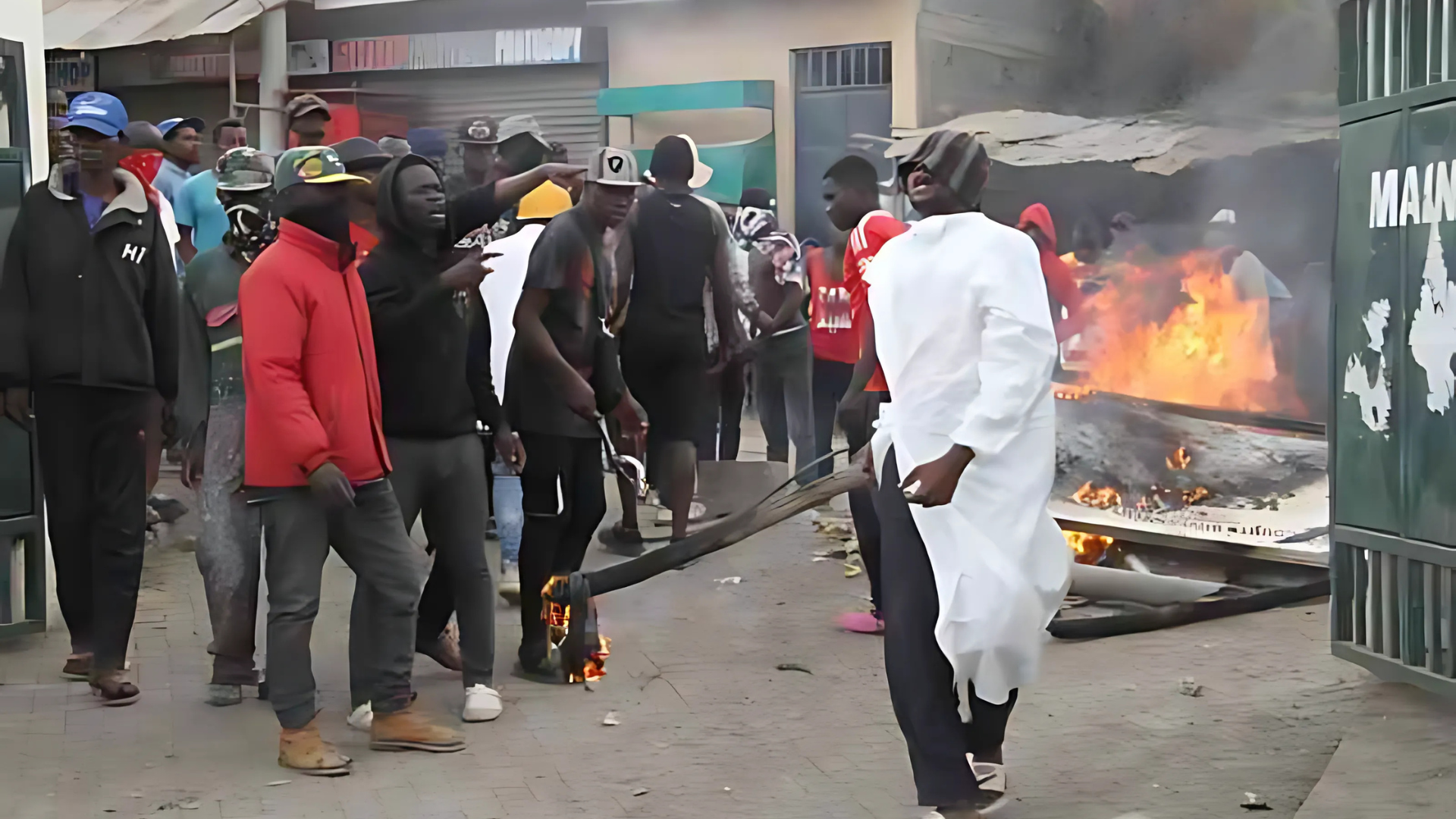
The invasion unfolded in the late afternoon, as tensions from the Saba Saba demonstrations escalated in Kitengela town. Protesters, largely driven by Generation Z’s grievances over governance, economic hardship, and police brutality, clashed with security forces along Old Namanga Road. Amid the chaos, a group of individuals, described by witnesses as “goons,” stormed the hospital compound, forcing their way into wards and the operating theatre. “It was like a nightmare,” recounted Tatio Sani, a medic at the facility, in a widely shared video. “They came in hundreds, shouting and breaking everything. We ran for our lives, leaving patients behind.” The attackers, some wielding crude weapons like clubs and machetes, set fire to the hospital gate and unleashed tear gas, endangering vulnerable patients, including those with respiratory conditions.
The most shocking violation occurred in the hospital’s operating theatre, where a cesarean section was underway. The intruders disrupted the procedure, endangering the lives of the mother and newborn. “This is a grave breach of medical ethics and human decency,” said Dr. Kireki Omanwa, president of the Kenya Obstetrical and Gynaecological Society, in a statement condemning the attack. “A hospital is a sanctuary, and to invade it during a life-saving procedure is inhumane.” The Kenya Medical Association echoed this sentiment, calling for the immediate closure of the hospital until safety could be guaranteed. “Our members were chased, patients beaten, and equipment stolen,” said a spokesperson. “This cannot be tolerated.”
The attack was reportedly triggered by the death of Brian Kimutai, a 21-year-old protester shot dead by police during the demonstrations. His body was taken to Kitengela Sub-County Hospital, prompting an angry crowd to storm the facility, alleging that police intended to remove the body. “They were furious, believing the hospital was colluding with authorities,” said a nurse, who requested anonymity for safety reasons. In a twist of irony, one of the attackers was injured during the chaos and sought treatment at the same hospital, highlighting the reckless nature of the assault. Red Cross officials later transferred three other gunshot victims to Kenyatta National Hospital, as Kitengela’s staff struggled to restore order.
The incident has drawn sharp condemnation from health workers’ unions, including the Kenya Union of Clinical Officers, which invoked the Occupational Safety and Health Act to demand the withdrawal of staff from the facility until security is assured. “Attacking a hospital is an act of self-destruction,” said Pius Nyakundi, the union’s secretary general. “These are the lifelines for our families and communities.” The union reported that critical equipment, including oxygen machines vital for patients with respiratory issues, was destroyed or stolen, further hampering the hospital’s ability to function. Emergency services have since been scaled down, with staff working to restock supplies and repair damaged infrastructure.
Public reaction, amplified on platforms like X, has been one of horror and disbelief. “You don’t fight injustice by attacking a hospital,” posted a Kitengela resident. “This is recklessness, not activism.” Another user wrote, “Hospitals are sacred. How do you disrupt a C-section? This is a disgrace.” The hashtag #KitengelaHospitalAttack trended, with videos showing goons forcing their way into the facility and patients fleeing in panic. Some users speculated that the attackers were “government-funded goons” hired to discredit the protests, a claim also made by the Kenya Human Rights Commission, which reported similar attacks on its Nairobi office the previous day. “The state must answer for this chaos,” said a commission official, though police denied involvement, promising to investigate.
The Kajiado County government has called for a thorough probe, urging security agencies to review CCTV footage and social media videos to identify the culprits. “We condemn this brazen act of vandalism,” said a county spokesperson. “Hospitals must remain safe spaces for all.” Despite no reported deaths among patients or staff, the psychological toll on healthcare workers is immense. “I hid under a desk, hearing screams everywhere,” said a nurse. “We’re trained to save lives, not to run from them.” The county praised the medical team’s resilience but emphasized the need for community unity to prevent such incidents.
The attack on Kitengela Sub-County Hospital is part of a broader wave of violence during the 2025 Saba Saba protests, which saw clashes in 17 counties, including Nairobi, Embu, and Nyeri. The Kenya National Commission on Human Rights documented 10 deaths and 29 injuries, with reports of police using live ammunition and tear gas. In Embu, an ambulance from Level 5 Hospital was stoned, further highlighting the targeting of medical services. “These acts violate Article 43 of the Constitution, which guarantees the right to healthcare,” said Dr. Amakove Wala, a vocal critic of the hospital attack. “Pregnant women and children were turned away at roadblocks. This is a crisis.”
The protests, driven by frustration over Kenya’s KSh 11.36 trillion debt, high taxation, and allegations of abductions, reflect deep-seated discontent among the youth. The death of blogger Albert Ojwang in police custody earlier in 2025 has fueled demands for accountability, with protesters chanting “Ruto must go” in Nairobi’s streets. However, the invasion of a hospital has shifted the narrative, with many Kenyans questioning the methods of some demonstrators. “We’re fighting for justice, but attacking a hospital undermines our cause,” said a protester in Kisumu. “We need to protect our own.”
Security forces have faced criticism for their heavy-handed response, with reports of hooded officers in unmarked vehicles patrolling protest hotspots. The commission noted that police ignored a High Court order requiring identifiable uniforms, raising fears of extrajudicial actions. “The presence of criminal gangs alongside police is alarming,” said a human rights lawyer in Nairobi. “It’s unclear who’s orchestrating this violence.” The National Police Service, however, maintained that officers showed restraint, with 52 police injuries reported nationwide. “We’re investigating all incidents, including the hospital attack,” said spokesperson Muchiri Nyaga.
The incident has prompted calls for dialogue to address the root causes of the unrest. Former Makueni Governor Kivutha Kibwana urged President Ruto to engage with Gen Z leaders, warning that brutality could escalate tensions. “The youth want jobs and fairness,” Kibwana said. “Ignoring them risks more chaos.” Civil society groups have also proposed safe protest zones to prevent clashes, though past efforts have been thwarted by security crackdowns. As Kitengela Sub-County Hospital works to recover, with scaled-down services and traumatized staff, the incident serves as a stark reminder of the delicate balance between protest and public safety.
The attack has also sparked a broader debate about the sanctity of healthcare facilities. Medical unions are demanding legislation to designate hospitals as protected zones during protests, with severe penalties for violations. “We can’t work in fear,” said a doctor at the facility. “The government must act.” As Kenya reflects on the legacy of Saba Saba, a day meant to celebrate democratic gains, the invasion of a hospital has left a bitter mark, raising questions about the cost of dissent and the need to safeguard those who serve the vulnerable.