By Brenda Wereh03 Jul, 202531 mins read 2,510 views
0 comments 0 likes
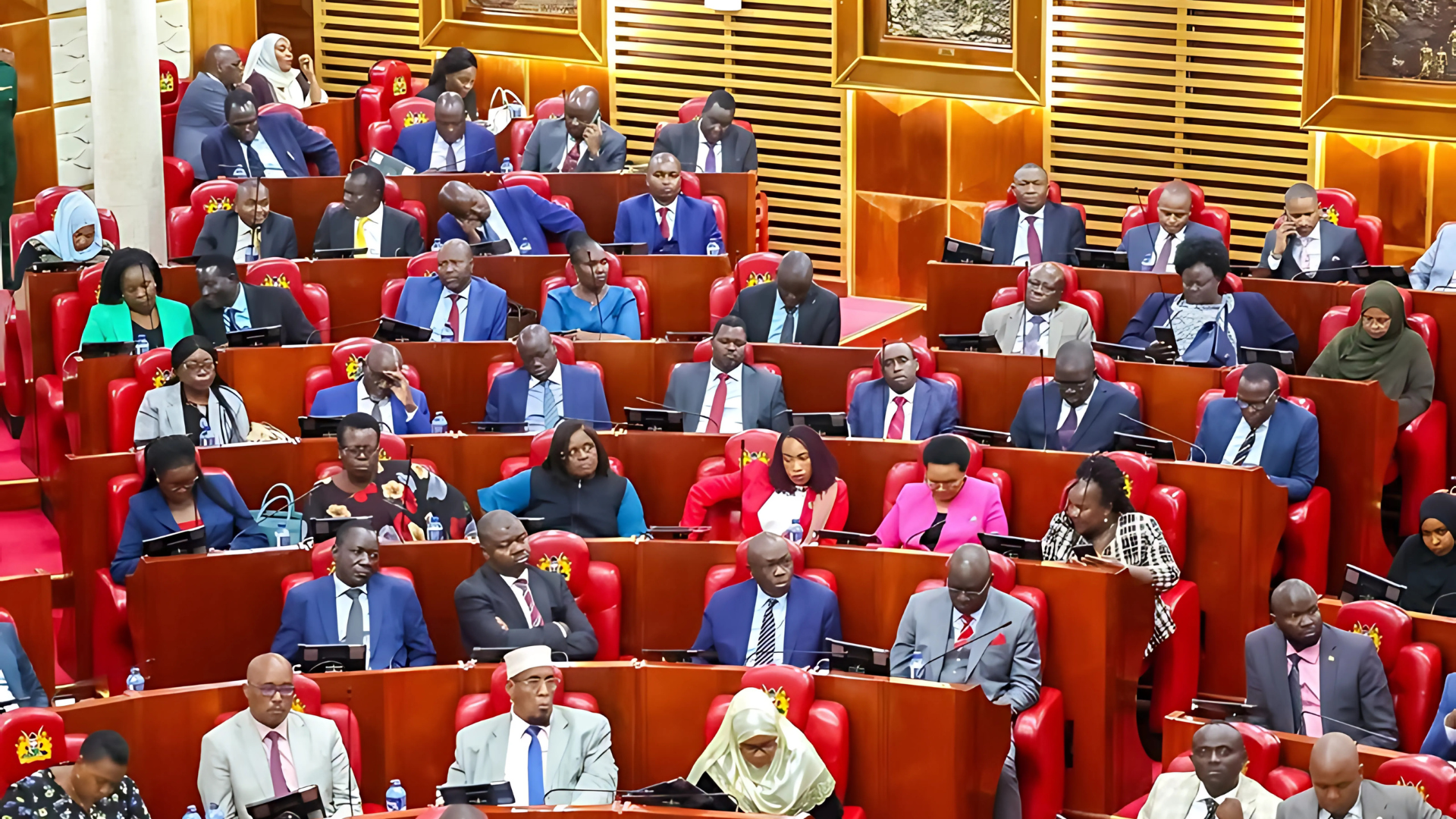
Teso North MP Oku Kaunya presented the National Police Service (Amendment) Bill, 2025, to the National Assembly, proposing a mandatory retirement age of 60 for the Inspector General and Deputy Inspectors General, addressing legal gaps and ensuring structured leadership transitions in Kenya’s police service.
https://shinebet.co.ke/
A significant legislative proposal was tabled before Kenya’s National Assembly, aiming to set a mandatory retirement age of 60 for the Inspector General of Police and Deputy Inspectors General. Sponsored by Teso North MP Oku Kaunya, the National Police Service (Amendment) Bill, 2025, seeks to amend the National Police Service Act, Cap 84, to address a critical gap in the current law, which lacks an age limit for the country’s top police leadership positions. The bill, presented to the National Assembly Committee on Administration and Internal Security, also proposes a single four-year term for Deputy Inspectors General, aligning their tenure with that of the Inspector General. The move has sparked debate about leadership succession, officer morale, and the balance between experience and renewal in Kenya’s police force, with stakeholders calling for broader reforms to enhance professionalism and accountability
The absence of a retirement age for senior police leadership has long been a point of contention, particularly highlighted during the recent vetting of Inspector General Douglas Kanja, who was appointed despite being close to or past the typical retirement age for public servants. “The law is silent on the age limit for these critical positions,” Kaunya told the committee, chaired by Vice Chairperson Dado Rasso. “This gap creates uncertainty and undermines structured succession planning.” The bill introduces new sections 11A and 11B, stipulating that no person appointed as Inspector General or Deputy Inspector General may serve beyond the age of 60, a standard consistent with the mandatory retirement age for most public servants in Kenya, as outlined by the Public Service Commission.
The proposal comes at a time when Kenya’s public service retirement policies are under scrutiny. In 2009, the government raised the mandatory retirement age from 55 to 60 to alleviate pressure on the pension bill, which reached Sh69.22 billion in the six months to December 2021. However, the police service, particularly its top ranks, has operated under different rules, with the Inspector General’s four-year term defined by the Constitution but no explicit age cap. “This bill ensures clarity and fairness,” said Kaunya. “It prevents situations where senior officers serve indefinitely, blocking opportunities for younger, qualified leaders.” The bill also addresses concerns about officers being overlooked for promotions, a recurring issue raised by junior ranks.
The National Assembly Committee on Administration and Internal Security, while reviewing the bill, urged Kaunya to consider additional reforms, particularly around promotions. “We see cases where junior officers suddenly outrank their more experienced seniors,” said Rasso. “This disrupts morale and needs to be addressed in the bill.” The committee suggested consulting with the Kenya Defence Forces, which has a well-defined structure for ranks and retirement, to refine the proposal. Unlike the police, the military mandates that its leaders retire at 62 for generals and 59 for colonels, or earlier if their four-year term ends, ensuring a balance between experience and renewal. “The KDF model works because it’s predictable,” said a committee member. “We need something similar for the police.”
Public sentiment, as reflected on platforms like X, shows mixed reactions. “Setting an age limit makes sense, but 60 might be too low for such critical roles,” one user posted. “Experience matters in policing.” Others supported the bill, arguing it would open doors for younger officers. “Top bosses staying too long blocks promotions,” another user wrote. “This bill could shake things up.” The hashtag #PoliceReforms2025 trended briefly, capturing both optimism and skepticism about the proposed changes. Some users questioned whether the bill would address deeper issues like corruption and inefficiency, with one stating, “Retirement age won’t fix a broken system. We need accountability.”
The bill’s focus on a 60-year retirement age aligns with broader efforts to standardize public service regulations. The Public Service Commission Act, amended in 2017, sets 60 as the mandatory retirement age for civil servants, with exceptions for persons with disabilities, who may serve until 65, and academic staff at universities, who can work until 70. However, the lack of a specific age limit for top police positions has led to inconsistencies. For instance, during Kanja’s vetting, questions about his age sparked debate, with some MPs arguing that state officers, like the Inspector General, are exempt from standard retirement rules. “The Constitution prioritizes term limits for the IGP, not age,” said a parliamentary source. “But this has created ambiguity that the bill seeks to resolve.”
The proposed legislation also introduces a term limit for Deputy Inspectors General, who currently face no such restriction. By capping their tenure at four years, renewable once, the bill aims to prevent prolonged acting appointments and ensure regular leadership transitions. “Acting roles create uncertainty,” said Kaunya. “Officers in acting capacities often lack the authority to make bold decisions.” The bill requires that any officer appointed in an acting capacity for the Inspector General or Deputy Inspector General roles must meet all qualifications and not exceed the 60-year age limit, reinforcing merit-based appointments.
The economic implications of the bill are significant. Kenya’s pension bill, projected at Sh207 billion for the 2024/2025 financial year, is a growing concern, and early retirements could strain it further. “Retiring senior officers at 60 will increase pension payouts,” said a financial analyst in Nairobi. “But it could also reduce costs associated with contract extensions for retirees.” The National Treasury has warned that pension liabilities, already a burden, require careful management. In 2023, the Salaries and Remuneration Commission opposed proposals to lower the retirement age to 55, citing increased pension costs and the loss of experienced workers. “A 60-year cap for police leadership is more reasonable,” said the analyst. “It balances fiscal responsibility with the need for fresh leadership.”
The bill has drawn comparisons to other public service reforms, such as the Public Service Commission (Amendment) Bill, 2023, sponsored by Embakasi Central MP Benjamin Gathiru, which sought to cap the retirement age for all civil servants at 60 and limit acting appointments to six months. While that bill faced resistance from unions concerned about contractual breaches, Kaunya’s proposal targets a specific sector, making it less contentious but equally impactful. “Police leadership sets the tone for the entire service,” said a retired police officer in Mombasa. “A clear retirement age ensures accountability and keeps the force dynamic.”
Stakeholders, including the National Police Service Commission, have been invited to provide input during public participation, set to conclude by July 15, 2025. “We want a law that strengthens the service, not one that creates new problems,” said Rasso. The committee has also called for engagement with the Salaries and Remuneration Commission to ensure the bill aligns with broader public service policies. “The police aren’t separate from the public service,” said a commission official. “Any change must fit within existing frameworks.”
Critics argue that the bill alone won’t address systemic challenges in the police service, such as underfunding, poor working conditions, and allegations of extrajudicial actions. “Retirement age is a start, but we need more,” said a human rights activist in Nairobi. “Officers need better training and resources, not just new bosses.” The 2024 Gen Z protests, which saw police criticized for excessive force, have intensified calls for comprehensive reforms. “The public wants a police service they can trust,” said the activist. “This bill could be part of that, but it’s not the whole answer.”
As the bill moves to the committee stage, MPs are expected to refine its provisions, potentially incorporating suggestions on promotions and training. “We’re not just setting an age limit,” said Kaunya. “We’re building a framework for a modern, accountable police service.” The proposal has also drawn attention to the need for succession planning, with MPs like John Kaguchia emphasizing mentorship for younger officers. “Senior leaders must train their successors before retiring,” Kaguchia said. “That’s how we ensure continuity.”
The bill’s passage is not guaranteed, as it faces scrutiny over its impact on pension costs and officer morale. However, its focus on clarity and fairness has garnered support from MPs who see it as a step toward modernizing the police. “This is about giving Kenyans a police service that evolves with the times,” said Kaunya. As public participation continues, the nation awaits a law that could redefine leadership in one of its most critical institutions, balancing the wisdom of experience with the energy of youth.
Former Kiambu Governor Ferdinand Waititu has secured a major bail reprieve from the High Court, with Justice Winfrida Okwany reducing his bail from Sh53.5 million to Sh20 million cash pending appeal in his ongoing corruption case.
President Ruto and Governor Sakaja signed a cooperation agreement allocating funds for 50,000 new streetlights, water plants saving 50 million litres daily, 27 km Nairobi River sewer and ward road upgrades, with Ruto calling it a partnership to make the city livable while opposition senators warn of devolution threats.
A staff member at Moi Teaching and Referral Hospital allegedly stole Sh10 million by falsifying patient bills as paid in the eCitizen system while diverting the money to her personal account, prompting an ongoing police and hospital investigation.