Inspector General of Police Douglas Kanja, flanked by senior security officials, delivered a national address from Kenya Police Headquarters in Nairobi, outlining the National Police Service’s stance on the planned Gen Z-led demonstrations scheduled for June 25. The protests, marking the first anniversary of the 2024 anti-government unrest, have sparked widespread attention, with Kanja emphasizing the delicate balance between upholding constitutional rights and maintaining public order. His remarks, measured yet firm, sought to set clear boundaries for protesters while acknowledging their right to assemble under Kenya’s Constitution.
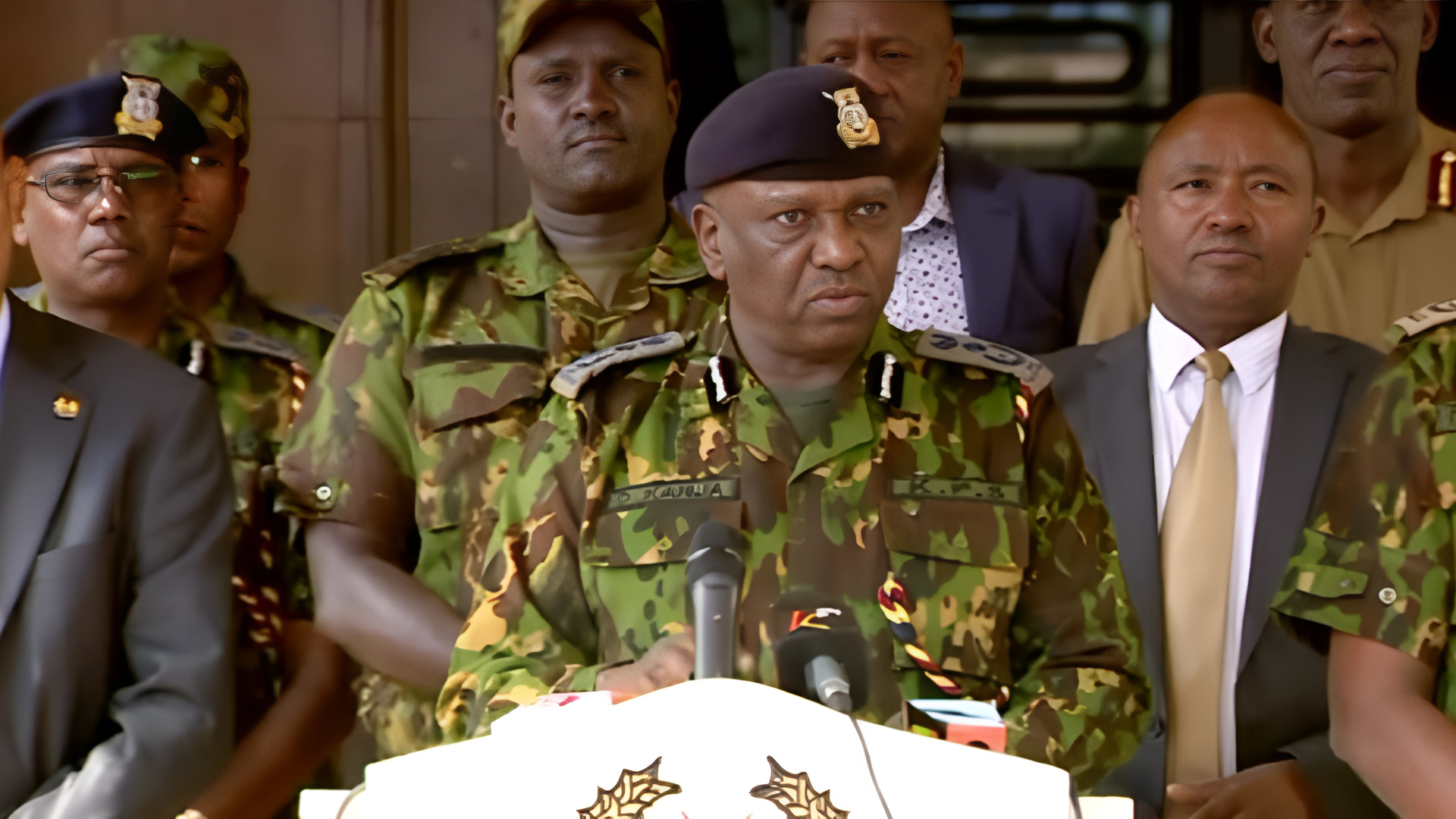
Kanja’s address came amid heightened tensions, as the nation braces for demonstrations expected to draw thousands to major urban centers, including Nairobi, Mombasa, and Kisumu. The protests, driven by Kenya’s youth, aim to commemorate those killed during last year’s unrest, particularly during the storming of Parliament on June 25, 2024, and to renew demands for justice, accountability, and an end to police brutality. Against this backdrop, Kanja’s message was both a reassurance and a warning, underscoring the police’s commitment to facilitating peaceful protests while vowing to act decisively against any breaches of the law.
“Article 37 of our Constitution guarantees every Kenyan the right to peacefully assemble, demonstrate, picket, and present petitions to public authorities,” Kanja said, standing before a backdrop of the National Police Service emblem. “This right is sacrosanct, and the National Police Service is committed to protecting it. However, this right comes with the responsibility to act peacefully and unarmed, as stipulated by our laws.” He cited the Public Order Act, which mandates that protest organizers notify authorities in advance, and the Penal Code, which outlines penalties for unlawful assemblies.
Kanja’s tone grew stern as he addressed potential provocations, urging protesters to refrain from actions that could escalate tensions with law enforcement. “We appeal to all Kenyans participating in tomorrow’s demonstrations to avoid provocative acts against our officers,” he said. “Such conduct only heightens tension and undermines the peaceful exercise of your rights.” He emphasized that police officers, often working under challenging conditions, deserve respect as they carry out their mandate to protect lives and property.
A significant portion of Kanja’s address focused on the sanctity of protected areas, such as government installations and critical infrastructure, which are off-limits under the Protected Areas Act. “Unauthorized persons must refrain from accessing protected areas,” he said, referencing legal provisions that safeguard zones like the Jomo Kenyatta International Airport, State House, and other sensitive sites. “The National Police Service will lawfully and firmly prevent any attempts to breach these areas, and violators will face legal consequences.” His remarks appeared to respond to social media calls for protesters to “occupy” key public spaces, a tactic that fueled clashes during last year’s demonstrations.
The Inspector General also acknowledged the strain felt by the police force during the 2024 protests, which saw over 50 deaths, hundreds injured, and allegations of excessive force. “Our officers are the silent patriots of this nation,” Kanja said, praising their dedication. “They work tirelessly, often in tough conditions, to ensure Kenya remains safe. We stand by them as they execute their duties in accordance with the Constitution.” He assured the public that the police leadership was committed to improving protest management, citing ongoing efforts to revise standard operating procedures and enhance officer training.
Kanja’s address was not delivered in isolation. Senior security officials, including representatives from the Kenya Defence Forces and the Directorate of Criminal Investigations, stood alongside him, signaling a unified approach to managing the protests. The presence of these figures underscored the government’s determination to prevent a repeat of last year’s chaos, which saw Parliament breached and parts of Nairobi’s City Hall set ablaze. Sources within the security sector indicate that a multi-agency operation has been activated, with increased patrols and surveillance in key areas.
The protests have drawn mixed reactions from political leaders. Opposition figure Raila Odinga, speaking earlier in Mombasa, endorsed the demonstrations but urged protesters to follow legal protocols. “The government must allow Kenyans to express their views,” Odinga said, criticizing attempts to suppress the marches. President William Ruto, addressing a rally in Bomet, called for national unity and vowed to protect the nation from unrest. “Kenya is bigger than any group of people,” Ruto said. “We must stand together to protect our homeland.”
Civil society groups and human rights organizations have voiced concerns about the potential for violence, citing a history of police brutality during protests. A joint statement from Amnesty International Kenya and the Law Society of Kenya called for independent investigations into last year’s deaths and urged the police to exercise restraint. “The right to protest is a cornerstone of our democracy,” the statement read. “Security forces must uphold this right, not undermine it.” Families of victims from the 2024 protests have also announced plans to join the marches, carrying candles and placards in memory of their loved ones.
Kanja addressed these concerns indirectly, reaffirming the role of oversight bodies like the Independent Policing Oversight Authority in investigating allegations of misconduct. “Any instances of excessive force will be thoroughly investigated,” he said. “We are committed to accountability and operating within the legal framework.” He also appealed for public cooperation, urging citizens to report suspicious activities that could undermine the protests, such as attempts by criminal elements to infiltrate the demonstrations.
The international community has taken note of the upcoming protests, with foreign missions issuing statements urging restraint. A communique from the United States, United Kingdom, and Canada emphasized the importance of safeguarding the right to assemble while avoiding violence. “Kenya’s democratic traditions depend on the free expression of its people,” the statement read. “We urge all parties to ensure peaceful demonstrations and respect for human rights.”
As the nation awaits June 25, security forces have been placed on high alert, with reports of increased police presence in Nairobi’s Central Business District and other key areas. In Kisumu, a stronghold of opposition support, organizers have announced plans for peaceful marches through public squares. In Mombasa, youth groups have coordinated candlelight vigils to honor last year’s victims. The protests, while leaderless and largely organized via social media, reflect a deep-seated frustration among Kenya’s youth, who feel marginalized by economic challenges and unaccountable governance.
Kanja concluded his address with a call for unity, echoing sentiments expressed by other leaders. “Kenya is our homeland, and we have a shared duty to protect it,” he said. “Let us exercise our rights responsibly, with patriotism and respect for one another. The National Police Service remains committed to serving all Kenyans and ensuring a safe environment for tomorrow’s demonstrations.” His words, delivered with calm authority, set the tone for what promises to be a pivotal moment in Kenya’s democratic journey.