By Brenda Wereh26 Jun, 202530 mins read 2,606 views
0 comments 0 likes
Prosecutors in Sean "Diddy" Combs’ federal trial in New York dropped charges of attempted kidnapping, attempted arson, and aiding and abetting sex trafficking, streamlining the case as closing arguments loom, while racketeering and other sex trafficking charges remain.
In a dramatic turn of events, federal prosecutors in New York announced on June 25, 2025, that they would no longer pursue several serious allegations against music mogul Sean "Diddy" Combs, just one day before closing arguments in his high-profile sex trafficking and racketeering trial. The decision to drop charges related to attempted kidnapping, attempted arson, and aiding and abetting sex trafficking has reshaped the case, focusing the jury’s attention on the remaining counts of racketeering conspiracy, sex trafficking by force, fraud, or coercion, and transportation to engage in prostitution. Combs, who has pleaded not guilty to all charges, faces a potential life sentence if convicted, but the prosecution’s move to streamline the case has sparked debate about the strength of their evidence and the trial’s outcome.
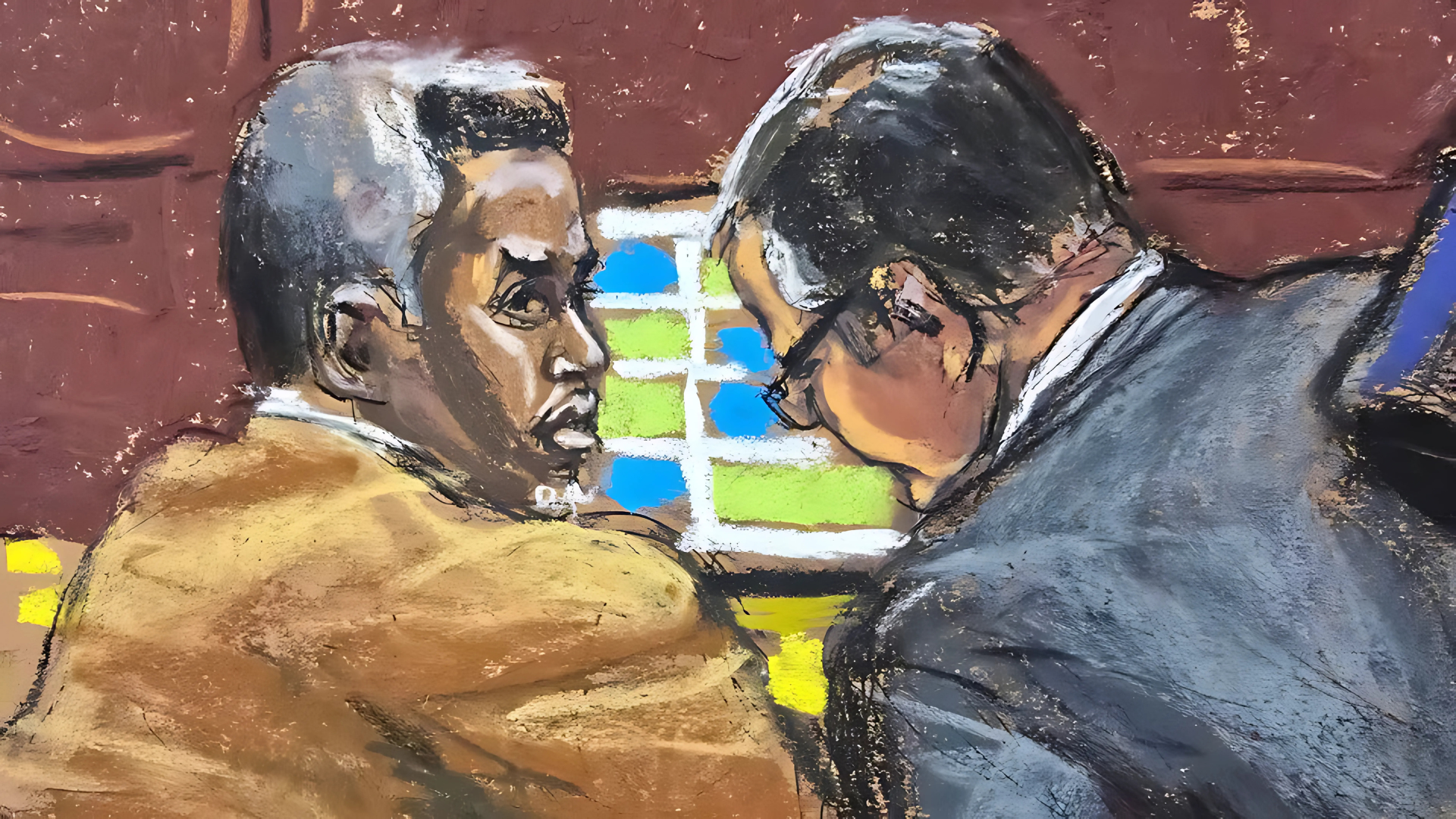
Sean "Diddy" Combs and his defense lawyer Marc Agnifilo during Combs' sex trafficking trial in New York City on June 24 in this courtroom sketch. - Jane Rosenberg/Reuters
The trial, which began on May 5, 2025, in Manhattan federal court, has captivated public attention, drawing parallels to other high-profile cases involving influential figures in the entertainment industry. Combs, a 55-year-old hip-hop icon who founded Bad Boy Records and shaped the careers of artists like The Notorious B.I.G., was arrested in September 2024 following raids on his Los Angeles and Miami homes. The initial indictment accused him of running a criminal enterprise since at least 2008, engaging in crimes including sex trafficking, forced labor, kidnapping, arson, bribery, and obstruction of justice. The allegations painted a grim picture of Combs orchestrating elaborate sexual performances called “Freak Offs,” involving coercion, drugs, and violence. “To the public, he was Puff Daddy, a cultural icon,” a prosecutor said during opening statements. “But there was another side to him.”
The dropped charges relate to specific incidents tied to the racketeering conspiracy count. Prosecutors initially alleged that Combs attempted to kidnap his former employee, Capricorn Clark, by taking her to a building for a lie detector test over stolen jewelry, and his ex-girlfriend, Casandra “Cassie” Ventura, by holding her at the London Hotel. They also claimed he attempted to arson a car belonging to rapper Kid Cudi, motivated by jealousy over Cudi’s relationship with Ventura. However, in a letter to Judge Arun Subramanian, the government acknowledged difficulties in proving these claims. “The Government is no longer planning to proceed on these theories of liability, so instructions are no longer necessary,” the filing stated, citing the court’s push for streamlined jury instructions. The move suggests prosecutors lacked sufficient evidence to connect Combs directly to these acts, particularly the arson incident, where no clear link was established during the trial.
The decision has been interpreted as a strategic retreat to simplify the case for the jury. “They’re trying to make it easier for the jury to focus on the core allegations,” said Neama Rahmani, a former federal prosecutor not involved in the case. “Dropping these charges doesn’t mean the case is weak, but it shows they’re prioritizing what they can prove.” The remaining charges still carry significant weight. The racketeering count alleges that Combs led a criminal organization through his business empire, using his power to coerce women into sexual acts, often during multi-day “Freak Offs” that he directed and recorded. Prosecutors claim these events involved drugs to ensure compliance and threats to victims’ careers or financial support. The sex trafficking charges focus on coercion and forced labor, with prosecutors emphasizing that neither physical restraint nor commercial sex acts are required to prove the offenses.
The trial, spanning six weeks, featured testimony from 34 witnesses, including Ventura, another woman identified as “Jane,” and former employees like Capricorn Clark. Ventura, whose 2016 assault by Combs in a Los Angeles hotel was captured on security footage, testified about years of physical and sexual abuse, describing how Combs used threats and financial control to manipulate her. The video, showing Combs throwing Ventura to the floor and kicking her, has been a cornerstone of the prosecution’s case, though Combs’ attorneys argued it reflected a “complex, consensual relationship” rather than trafficking. Jane, another accuser, detailed similar experiences, alleging Combs coerced her into sexual acts with male sex workers during “Freak Offs.” Clark testified about being forcibly taken to a building by Combs, who was armed, though prosecutors now concede they couldn’t substantiate the kidnapping claim.
Combs’ defense team, led by attorney Alexandra Shapiro, has maintained that the relationships were consensual and that the prosecution failed to prove criminal intent. After the government rested its case on June 24, Shapiro moved for a judgment of acquittal, arguing, “There’s, at best, thin proof any of the other employees participated, and no evidence they believed he was sex trafficking.” The defense opted not to call witnesses, instead presenting text messages between Combs, Ventura, and Jane to suggest the women were willing participants. “These were strong, independent women who could have left,” Shapiro said in court. “Domestic violence is not sex trafficking.” The defense’s strategy has been to cast doubt on the prosecution’s narrative, framing the allegations as exaggerated or motivated by personal grievances.
The dropped charges have fueled speculation about the case’s trajectory. Posts on social media platforms like X reflect divided sentiments, with some users claiming the prosecution’s case is unraveling. “Diddy will walk,” one user wrote, citing the withdrawn charges as evidence of a weak case. Others argue the remaining charges are still formidable, pointing to the testimony and video evidence. The case’s high stakes have drawn comparisons to R. Kelly’s 2021 conviction for racketeering and sex trafficking, where similar strategies were used to target a music industry titan. Over 120 lawsuits against Combs, including claims from 25 minors, allege decades of abuse, amplifying public scrutiny. “This is about accountability,” said attorney Tony Buzbee, representing many plaintiffs. “The truth is coming out.”
The prosecution’s decision to streamline the case comes amid broader legal and cultural shifts. Recent reforms extending statutes of limitations in some states have encouraged victims to come forward, while documentaries like “Diddy: The Making of a Bad Boy” have heightened public interest. Combs’ team has pushed back, filing a defamation lawsuit against media outlets for their coverage. The trial’s outcome could set a precedent for how influential figures are held accountable, with implications for Hollywood and beyond. “This case is a test of whether power can shield someone from justice,” said a legal analyst observing the trial.
As closing arguments approach on June 26, the jury faces a complex task. Prosecutors have emphasized that prior consent does not preclude coercion, arguing that Combs used his wealth and influence to trap victims in cycles of abuse. “Just because someone received compensation doesn’t mean it wasn’t forced labor,” a prosecutor said, addressing Jane’s testimony about payments. The defense, meanwhile, insists the government’s evidence is circumstantial and lacks the specificity needed for a racketeering conviction. “The prosecution has thrown everything at him, but it’s not sticking,” said a member of Combs’ legal team outside the courthouse.
The trial’s developments have left Combs’ supporters and critics anxiously awaiting the verdict. His rise from Harlem to a global brand, with a net worth once estimated at $1 billion, makes the stakes monumental. If convicted, Combs could spend the rest of his life in prison, a fall that would reverberate through the music industry. Yet, the dropped charges have given his defense renewed confidence. “We’re ready for the jury to see the truth,” Shapiro said after the government’s announcement. For victims like Ventura, the trial represents a chance for justice after years of silence. “I just want people to know what happened,” she told the court, her voice steady.
As the courtroom drama unfolds, the world watches a case that blends celebrity, power, and allegations of systemic abuse. The prosecution’s decision to drop key charges may simplify the jury’s deliberations, but it also underscores the challenges of proving complex crimes like racketeering. Whether Combs walks free or faces conviction, the trial has already exposed a darker side of fame, sparking conversations about accountability and the cost of unchecked influence. For now, all eyes are on the Manhattan courthouse, where the next few days will determine the fate of one of hip-hop’s most enduring figures.
Former Kiambu Governor Ferdinand Waititu has secured a major bail reprieve from the High Court, with Justice Winfrida Okwany reducing his bail from Sh53.5 million to Sh20 million cash pending appeal in his ongoing corruption case.
President Ruto and Governor Sakaja signed a cooperation agreement allocating funds for 50,000 new streetlights, water plants saving 50 million litres daily, 27 km Nairobi River sewer and ward road upgrades, with Ruto calling it a partnership to make the city livable while opposition senators warn of devolution threats.
A staff member at Moi Teaching and Referral Hospital allegedly stole Sh10 million by falsifying patient bills as paid in the eCitizen system while diverting the money to her personal account, prompting an ongoing police and hospital investigation.