Raila Odinga, the former Prime Minister of Kenya and leader of the Orange Democratic Movement (ODM), hosted Hiroshi Matsuura, the Ambassador of Japan to Kenya, at his residence in Nairobi. This courtesy call, as described by Odinga himself, underscores the enduring and multifaceted relationship between Kenya and Japan, a partnership that has spanned decades and significantly contributed to Kenya’s development trajectory.
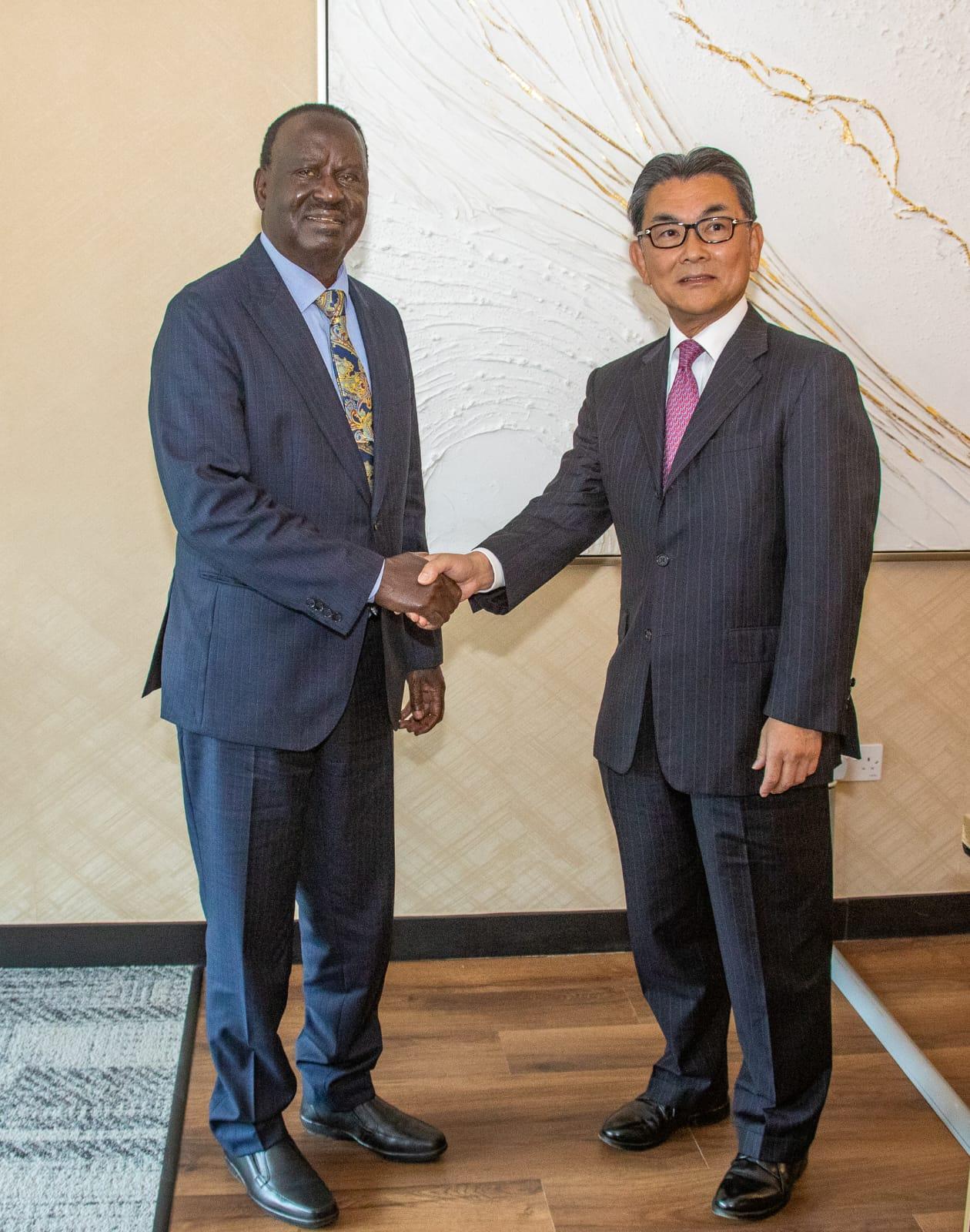
The meeting, which took place amid Kenya’s complex socio-political landscape, highlights the diplomatic ties between the two nations and Odinga’s continued influence in Kenyan and regional politics. This article delves into the context, significance, and potential implications of this high-profile engagement, exploring the historical ties between Kenya and Japan, Odinga’s role in fostering diplomacy, and the broader geopolitical dynamics at play.
Background: Kenya-Japan Relations
Kenya and Japan have maintained cordial bilateral relations since Kenya’s independence in 1963. Japan has been a key development partner, contributing to infrastructure, education, healthcare, and environmental conservation in Kenya. Over the years, Japan’s Official Development Assistance (ODA) has funded transformative projects, such as the Mombasa Port Development Project, the Olkaria Geothermal Power Plant, and various water and sanitation initiatives in rural and urban areas. These projects have bolstered Kenya’s economic growth and aligned with its Vision 2030 development agenda, which seeks to transform the country into a middle-income economy.
The Japan International Cooperation Agency (JICA) has been instrumental in implementing these initiatives, fostering capacity building and technology transfer. For instance, JICA’s support for Kenya’s geothermal energy sector has positioned the country as a leader in renewable energy in Africa. Additionally, Japan has supported Kenya’s education sector through scholarships and technical training programs, enabling thousands of Kenyans to study in Japan or receive specialized training.
Beyond economic cooperation, Kenya and Japan share a commitment to regional stability and global issues such as climate change and peacekeeping. Kenya’s strategic position in East Africa makes it a vital partner for Japan, which seeks to strengthen its presence in Africa under its Free and Open Indo-Pacific (FOIP) strategy. This framework emphasizes maritime security, economic partnerships, and democratic values, aligning with Kenya’s aspirations for regional leadership and economic integration within the East African Community (EAC).
The Meeting: Context and Significance
Raila Odinga’s hosting of Ambassador Hiroshi Matsuura on July 16, 2025, was a notable event given Odinga’s stature as a veteran politician and his evolving role in Kenyan governance. Odinga, often referred to as “Baba” by his supporters, announced the meeting on his official X account, stating, “I had the pleasure of receiving H.E. Hiroshi Matsuura, the Ambassador of Japan to Kenya, for a courtesy call. Kenya and Japan have enjoyed longstanding and cordial bilateral relations spanning decades. Japan has been a key partner in Kenya’s development journey, particularly…” The post, which was widely shared, underscored the diplomatic weight of the encounter and sparked discussions about its potential implications.
While the specific details of the discussions were not publicly disclosed, the courtesy call likely focused on strengthening bilateral ties, exploring new areas of cooperation, and addressing regional issues. Odinga’s residence in Nairobi, often a hub for high-level political and diplomatic engagements, provided an informal yet significant setting for the meeting. The presence of Matsuura, a seasoned diplomat representing Japan’s interests in Kenya, signals Japan’s intent to maintain strong ties with influential Kenyan figures, even those outside formal government structures.
The timing of the meeting is noteworthy. It occurred against the backdrop of Kenya’s complex political landscape, marked by youth-led protests, economic challenges, and debates over governance reforms. Odinga, who has recently aligned himself with President William Ruto’s administration through a broad-based government agreement, has been a polarizing figure. His call for a national dialogue to address socio-political and economic grievances, particularly following the Saba Saba protests on July 7, 2025, has drawn both support and criticism. The meeting with Matsuura suggests that Odinga is leveraging his diplomatic connections to bolster his influence and contribute to Kenya’s international relations, even as he navigates domestic political dynamics.
Raila Odinga’s Diplomatic Role
Raila Odinga’s engagement with Ambassador Matsuura is consistent with his long-standing role as a statesman and regional leader. As a former Prime Minister (2008–2013) and a key figure in Kenya’s democratic struggles, Odinga has cultivated relationships with global leaders and institutions. His advocacy for multiparty democracy in the 1990s, notably during the Saba Saba protests, earned him international recognition as a champion of democratic reforms.
In recent years, Odinga has expanded his diplomatic footprint, particularly in African and global affairs. In June 2025, he hosted Somaliland President Dr. Abdirahman Mohamed Abdilahi at his Nairobi residence, a meeting that highlighted his role in regional diplomacy. Odinga’s involvement in the East African Community (EAC)-led Nairobi Process, aimed at resolving conflicts in the region, further underscores his influence beyond Kenya’s borders.
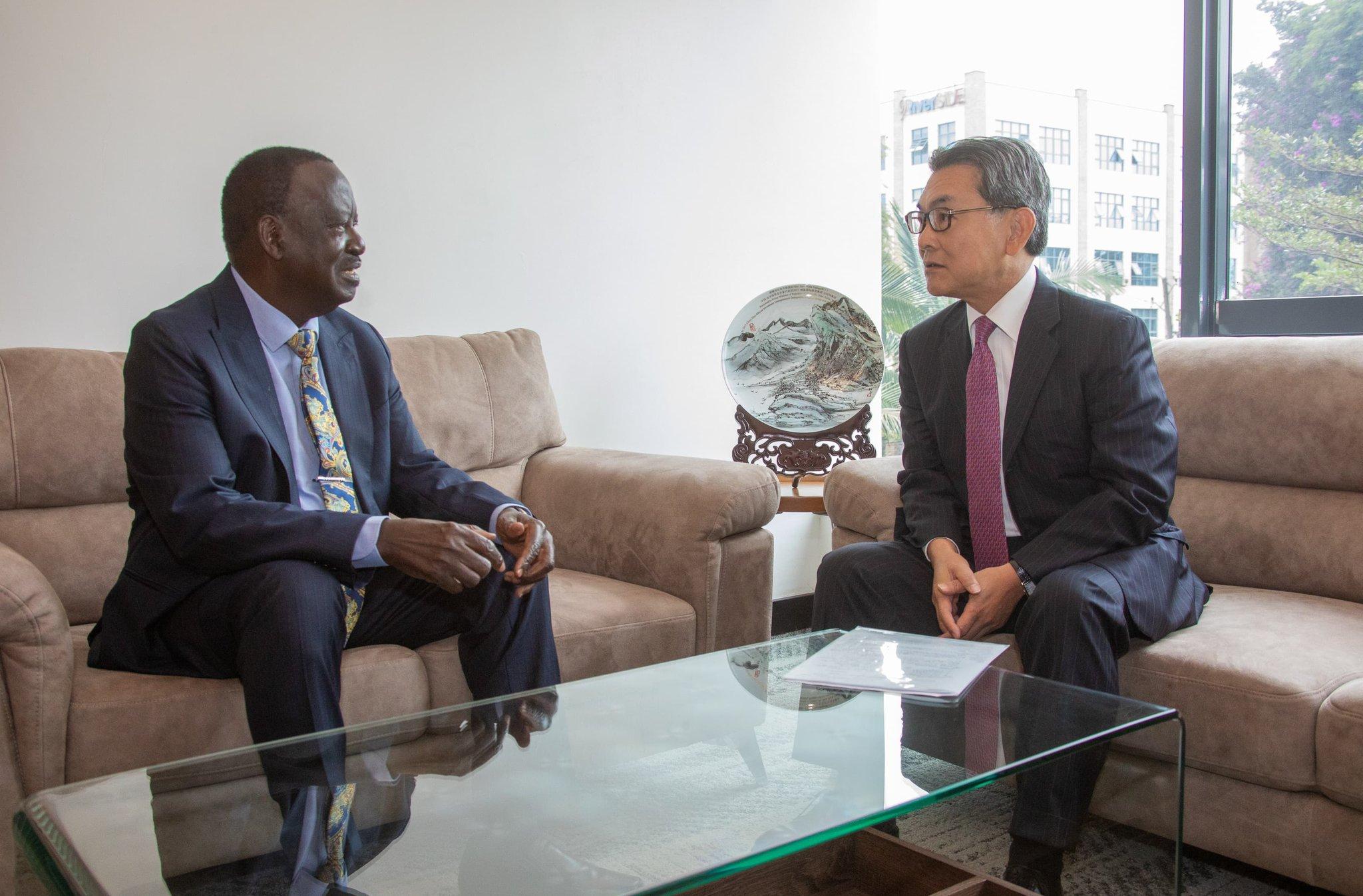
The meeting with Matsuura aligns with Odinga’s efforts to position himself as a bridge between Kenya and international partners. Japan, with its focus on development and stability in Africa, likely views Odinga as a valuable interlocutor, given his political clout and ability to mobilize support across diverse constituencies. The courtesy call may have served as an opportunity to discuss Japan’s ongoing and future contributions to Kenya, including potential investments in infrastructure, renewable energy, and technology.
Japan’s Strategic Interests in Kenya
Japan’s engagement with Kenya, as exemplified by Matsuura’s visit to Odinga, reflects its broader strategic interests in Africa. The continent is increasingly important to Japan’s foreign policy, particularly in the context of its rivalry with China, which has significantly expanded its influence in Africa through the Belt and Road Initiative. Japan’s FOIP strategy seeks to counterbalance China’s dominance by promoting transparent, rules-based partnerships. Kenya, as a regional economic and political hub, is a critical partner in this endeavor.
Ambassador Matsuura’s visit to Odinga’s residence may also signal Japan’s interest in deepening ties with Kenya’s political elite, regardless of their formal positions in government. Odinga’s recent alignment with President Ruto’s administration, formalized through a Memorandum of Understanding, has positioned him as a key player in Kenya’s governance structure. Japan likely sees value in engaging with Odinga to ensure continuity in bilateral relations, especially as Kenya approaches the 2027 elections, where Odinga’s political plans remain a subject of speculation.
Moreover, Japan’s focus on maritime security and trade aligns with Kenya’s role as a gateway to East Africa. The Port of Mombasa, a critical node in regional trade, has benefited from Japanese investment, and further collaboration in this area could enhance Kenya’s position as a logistics hub. Discussions between Odinga and Matsuura may have touched on such opportunities, as well as Japan’s potential role in supporting Kenya’s youth empowerment initiatives, a key issue amid recent protests.
Domestic Political Context
The meeting occurred at a time of significant political flux in Kenya. Odinga’s decision to align with Ruto’s government has sparked debate, with some praising it as a pragmatic move to stabilize the country, while others, including former allies like Fred Matiang’i, have criticized it as a betrayal of opposition principles. The ODM Nairobi leadership has reaffirmed its support for the Ruto-Odinga pact, emphasizing its potential to address governance and economic challenges.
However, Odinga’s call for a national conclave to address youth grievances and implement reforms has met with mixed reactions. Supporters, including MPs like Silvanus Osoro and Johana Ngeno, view it as a timely initiative to foster unity and dialogue. Critics, such as Matiang’i and governance expert Philip Kisia, argue that it risks perpetuating elite-driven politics without addressing systemic issues.
The meeting with Matsuura, while primarily diplomatic, may also serve Odinga’s domestic agenda by reinforcing his image as a statesman capable of attracting international support. By hosting a high-profile diplomat, Odinga signals to his base and critics alike that he remains a central figure in Kenya’s political and diplomatic spheres.
Implications for Kenya-Japan Relations
The courtesy call between Odinga and Matsuura has several potential implications for Kenya-Japan relations. First, it reinforces the personal and institutional ties that underpin bilateral cooperation. Odinga’s influence within ODM and his role in the broad-based government make him a key stakeholder in ensuring that Japanese-funded projects align with Kenya’s development priorities.
Second, the meeting may pave the way for new areas of collaboration. Japan’s expertise in technology and innovation could support Kenya’s digital transformation goals, particularly in the context of youth empowerment and job creation. Odinga’s emphasis on youth inclusion in his proposed national dialogue aligns with Japan’s interest in supporting human capital development in Africa.
Finally, the engagement highlights the importance of non-governmental actors in diplomacy. While Matsuura represents Japan’s official stance, Odinga’s role as a political leader and influencer allows him to facilitate informal channels of communication. This dynamic is particularly relevant in Kenya, where political alliances and personal relationships often shape policy outcomes.
Raila Odinga’s hosting of Japanese Ambassador Hiroshi Matsuura on July 16, 2025, is a testament to the enduring partnership between Kenya and Japan, as well as Odinga’s continued relevance in Kenyan and regional politics. The courtesy call, set against the backdrop of Kenya’s socio-political challenges and Japan’s strategic interests in Africa, underscores the importance of diplomatic engagement in fostering development and stability. As Kenya navigates its domestic and international priorities, such interactions will play a critical role in shaping its future trajectory. By leveraging his diplomatic clout, Odinga not only strengthens Kenya-Japan ties but also reinforces his position as a pivotal figure in the country’s political landscape.