By Brenda Wereh04 Jul, 202528 mins read 2,384 views
0 comments 0 likes
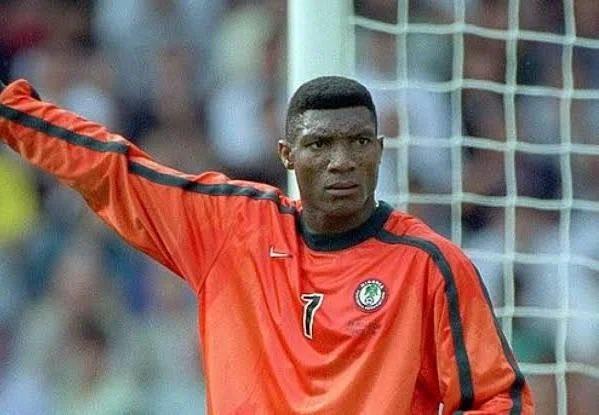
Nigeria’s football community was plunged into mourning with the death of legendary Super Eagles goalkeeper Peter Rufai, fondly known as Dodo Mayana, who passed away at 61 in Lagos after battling a prolonged illness, leaving behind a storied legacy.
https://shinebet.co.ke/
Nigeria’s football fraternity was enveloped in grief as news broke of the passing of Peter Rufai, the iconic Super Eagles goalkeeper known affectionately as Dodo Mayana, who died at the age of 61 in a Lagos hospital. Rufai, whose heroic performances defined an era of Nigerian football, had been battling an undisclosed illness for several weeks, according to close associates. His death marks a profound loss for a nation that celebrated his contributions to the 1994 Africa Cup of Nations victory and Nigeria’s historic World Cup appearances in 1994 and 1998. As tributes pour in from players, officials, and fans, Rufai’s legacy as a trailblazer, mentor, and symbol of excellence endures, inspiring generations both on and off the pitch.
Born on August 24, 1963, in Lagos, Peter Rufai began his football journey with local clubs like Stationery Stores and Femo Scorpions, quickly earning a reputation for his commanding presence and acrobatic saves. “Peter was a giant between the posts,” said Waidi Akanni, a former teammate and close friend, who confirmed Rufai’s passing. “His reflexes and leadership were unmatched, and his loss leaves a void in our hearts.” Rufai’s career took him across continents, playing for clubs in Belgium, the Netherlands, Portugal, and Spain, including stints with Lokeren, Go Ahead Eagles, Farense, and Deportivo La Coruña. His international career, spanning 1981 to 1998, saw him earn 65 caps for Nigeria, cementing his status as one of the country’s greatest goalkeepers.
Former Super Eagles captain and goalkeeper Peter Rufai
Rufai’s defining moment came during the 1994 Africa Cup of Nations in Tunisia, where he was Nigeria’s first-choice goalkeeper as the Super Eagles clinched the title with a 2-1 victory over Zambia. “That win was for all Nigerians,” Rufai once said in a 2010 interview, reflecting on the triumph. “We played with heart, and I was proud to guard the goal for my country.” His heroics continued at the 1994 FIFA World Cup in the United States, Nigeria’s debut on the global stage, where he captained the team to the Round of 16. Despite a heartbreaking extra-time loss to Italy, Rufai’s performance earned global acclaim. He reprised his role as the No. 1 goalkeeper at the 1998 World Cup in France, further solidifying his legend.
The news of Rufai’s death sent shockwaves through Nigeria’s football community, already reeling from the loss of other 1994 squad members like Rashidi Yekini and Stephen Keshi. “This is really, really shocking,” said Mohammed Sanusi, General Secretary of the Nigeria Football Federation, in a statement. “We didn’t even know he had been ill.” The NFF, alongside clubs like Rangers International, paid heartfelt tributes, with the Super Eagles’ official X account posting, “Forever in our hearts, Dodo Mayana. Your legacy lives on between the sticks and beyond.” President Bola Ahmed Tinubu also expressed his sorrow, recalling Rufai’s contributions to Nigeria’s historic 1994 achievements. “He brought honor to our nation,” Tinubu said, noting Rufai’s pioneering role as one of Nigeria’s earliest professional footballers in Europe.
Rufai’s impact extended beyond his playing days. After retiring, he dedicated himself to mentoring young talent through his Staruf Football Academy and initiatives like the Dodomayana Soccerthon, which provided training and opportunities for aspiring athletes. “Peter was passionate about giving back,” said Kadiri Ikhana, a former Super Eagles coach. “He wanted to see the next generation succeed, and his academy was his way of ensuring that.” Rufai also served as coordinator for the Nigeria U23 team, sharing his expertise with young players. His humility and discipline, qualities often praised by peers, made him a beloved figure in communities across Lagos and beyond.
The outpouring of tributes on X reflected the depth of Rufai’s influence. “Dodo Mayana was our hero,” wrote a fan from Abuja. “Those saves in ’94 are etched in my memory forever.” Another user posted, “From Stationery Stores to the World Cup, Peter Rufai showed us what greatness looks like. Rest well, legend.” The hashtag #DodoMayana trended as fans shared clips of his iconic saves, particularly from the 1994 AFCON final and World Cup matches. Super Eagles captain Ahmed Musa penned an emotional tribute, saying, “I can’t believe I’m typing this. Your heroic reflexes brought us pride on the world stage. You’ll inspire us forever.” Former senator Shehu Sani also mourned, calling Rufai “a symbol of excellence and leadership.”
Rufai’s journey was not without challenges. His European career, which began with Lokeren in Belgium in 1986, required him to navigate cultural and professional barriers as one of Nigeria’s first football exports. “It wasn’t easy being an African player in Europe back then,” said Sani Toro, a former NFF official. “But Peter’s talent and work ethic opened doors for others.” His stints with clubs like Hércules and Deportivo La Coruña showcased his adaptability, though injuries and competition occasionally limited his playing time. Despite these hurdles, Rufai’s charisma and professionalism earned him respect across the footballing world.
The circumstances of Rufai’s illness remain private, with family sources indicating he had been unwell for weeks before his death at approximately 6 a.m. on July 3. His remains were deposited at a Lagos hospital, according to associates, as preparations for his funeral began. The secrecy surrounding his health surprised many, as Rufai had maintained a low profile in recent months. “He was a private man, even in his struggles,” said Akanni, his former teammate. “He didn’t want people to worry.” The lack of prior public knowledge about his condition amplified the shock, with fans and officials alike expressing disbelief at the sudden loss.
The broader context of Rufai’s passing adds to its poignancy. Nigeria’s 1994 squad, celebrated as the golden generation, has now lost several key figures, leaving fans nostalgic for an era of unparalleled success. “It feels like we’re losing our heroes one by one,” said a fan in Enugu. “Peter was the backbone of that team.” The National Sports Commission, led by Chairman Mallam Shehu Dikko, described Rufai as “a rare soul whose humility, strength, and passion inspired us all.” The NSC’s statement emphasized his role in mentoring youth, noting that his legacy would endure through the players he coached and inspired.
The economic and social impact of Rufai’s death resonates deeply in Lagos, where he was a local icon. His academy in Idimu provided opportunities for underprivileged youth, and its future is now uncertain. “Peter’s work kept kids off the streets,” said a community leader in Lagos. “We need to keep his vision alive.” Clubs like Stationery Stores, where Rufai began his career in 1980, have called for a national day of remembrance to honor his contributions. “He was one of us,” said a club official. “His journey from Lagos to the world stage is a story every young player should know.”
As Nigeria mourns, calls for a lasting tribute have emerged. Suggestions include naming a stadium or football academy after Rufai, reflecting his impact on the sport. “He deserves to be remembered not just as a goalkeeper but as a national treasure,” said a sports journalist in Abuja. The NFF has promised to organize a memorial match, with details to be announced in the coming weeks. For now, the football community is united in grief, celebrating a man who embodied resilience and excellence.
Rufai’s death is a reminder of the fragility of life and the enduring power of legacy. From his debut in 1981 to his final World Cup appearance in 1998, he carried Nigeria’s hopes between the posts, inspiring a nation with his courage and skill. “Peter was more than a player; he was a brother,” said Segun Odegbami, a former Super Eagles captain. “His spirit will always be with us.” As Nigeria prepares to bid farewell to Dodo Mayana, his story remains a beacon for future generations, a testament to the heights achievable through talent, dedication, and love for the game.
Former Kiambu Governor Ferdinand Waititu has secured a major bail reprieve from the High Court, with Justice Winfrida Okwany reducing his bail from Sh53.5 million to Sh20 million cash pending appeal in his ongoing corruption case.
President Ruto and Governor Sakaja signed a cooperation agreement allocating funds for 50,000 new streetlights, water plants saving 50 million litres daily, 27 km Nairobi River sewer and ward road upgrades, with Ruto calling it a partnership to make the city livable while opposition senators warn of devolution threats.
A staff member at Moi Teaching and Referral Hospital allegedly stole Sh10 million by falsifying patient bills as paid in the eCitizen system while diverting the money to her personal account, prompting an ongoing police and hospital investigation.