US President Donald Trump intensified a growing rift with tech mogul Elon Musk, accusing him of benefiting from unparalleled government subsidies and threatening to sever federal contracts with Musk’s companies, Tesla and SpaceX. The remarks, posted on Trump’s Truth Social platform, mark a significant escalation in a feud that has unraveled the once-close alliance between the two influential figures. Trump’s comments suggest that without these subsidies, Musk’s business empire could collapse, forcing him to “close up shop and head back to South Africa,” while claiming the move would save the US “a fortune.” The public spat, which has unfolded across social media and public statements, has sent shockwaves through financial markets and raised questions about the future of Musk’s government-backed ventures.
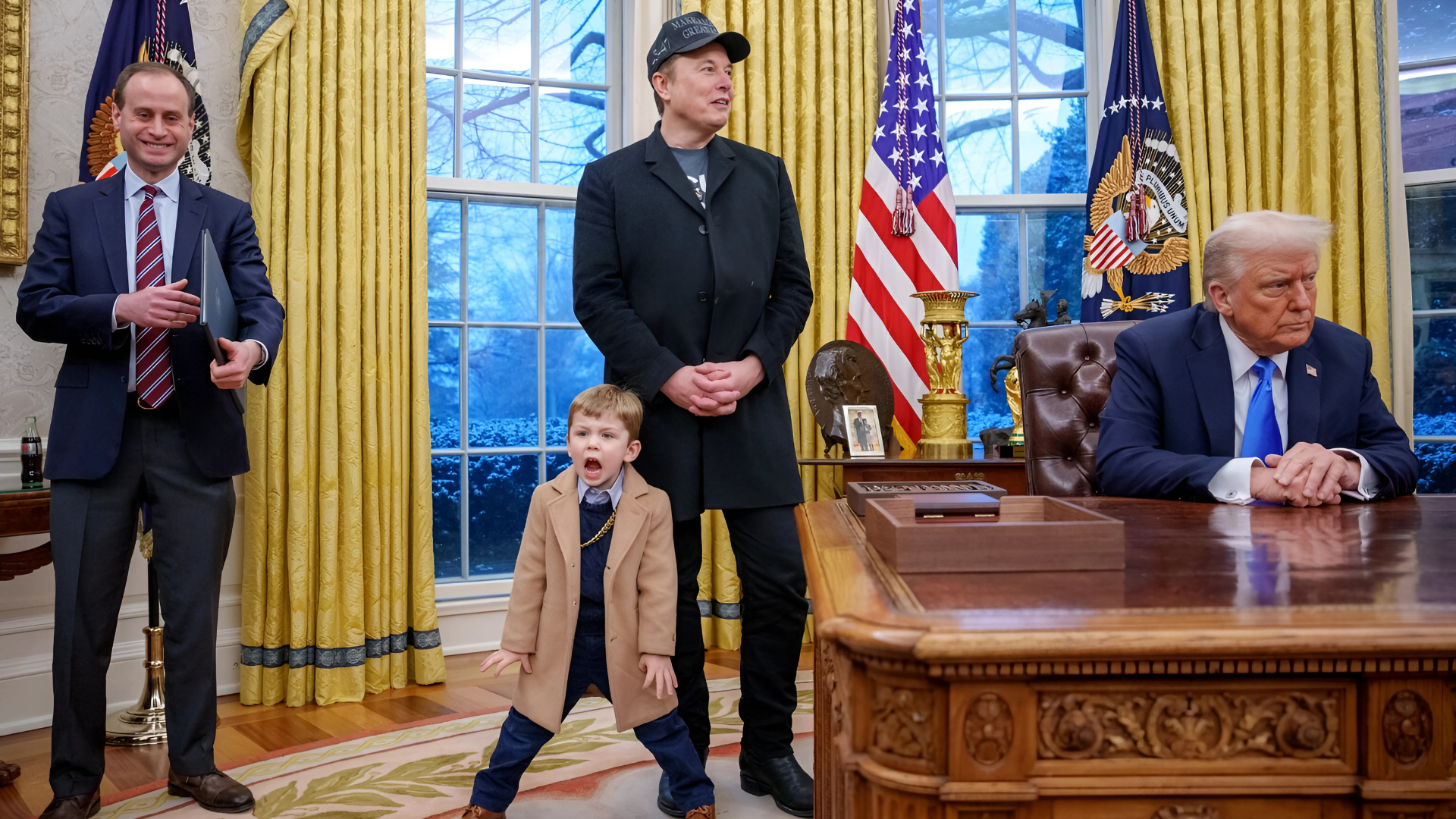
The president’s latest remarks came during a heated exchange over a sweeping tax and spending bill, dubbed the “One Big Beautiful Bill Act” by Trump, which Musk has publicly criticized as a “disgusting abomination” that would balloon the national deficit. “Elon may get more subsidy than any human being in history, by far, and without subsidies, Elon would probably have to close up shop and head back to South Africa,” Trump wrote on Truth Social. “No more rocket launches, satellites, or electric car production, and our country would save a fortune. Perhaps we should have DOGE take a good, hard look at this? Big money to be saved!” The mention of DOGE, the Department of Government Efficiency formerly led by Musk, was a pointed jab, referencing Musk’s brief stint as a special advisor to the Trump administration.
Musk, who spent over $250 million supporting Trump’s 2024 presidential campaign, fired back on his social media platform X, dismissing the president’s claims as exaggerated and urging Congress to eliminate wasteful spending in the bill. “I am literally saying cut it all. Now,” Musk posted, emphasizing his willingness to forgo electric vehicle (EV) subsidies if other “pork” spending was also removed. “Keep the EV/solar incentive cuts in the bill, even though no oil and gas subsidies are touched—very unfair! But ditch the mountain of disgusting pork in the bill.” Musk’s response highlights his broader critique of the bill, which nonpartisan analysts estimate could add $3 trillion to the US deficit over the next decade.
The feud has significant implications for Musk’s companies, which have long relied on federal support. Tesla, the leading US electric vehicle manufacturer, benefited from a $465 million Department of Energy loan in 2010 to boost EV production, which it repaid years later. The company has also profited from consumer tax credits for EV purchases, credits that the Republican bill seeks to eliminate. SpaceX, Musk’s aerospace company, is one of NASA’s largest contractors, securing $3.8 billion in federal contracts in 2024 alone and over $20 billion since 2008 for services like transporting astronauts to the International Space Station (ISS). Starlink, SpaceX’s satellite subsidiary, is also vying for billions in broadband subsidies and air traffic control contracts. “Musk’s businesses are deeply intertwined with government funding,” said a Washington-based policy analyst. “Cutting these ties would be a seismic shift for both Tesla and SpaceX.”
The public fallout began earlier in the week when Musk criticized the tax and spending bill, arguing it undermined the cost-cutting efforts he championed as head of DOGE. During his tenure, Musk oversaw mass layoffs and agency downsizing but fell short of his ambitious goal to cut $2 trillion from the federal budget, achieving only about 0.5% of that target. Trump, in response, suggested Musk’s opposition stemmed from personal grievances, including the removal of EV subsidies and Trump’s decision to withdraw the nomination of Jared Isaacman, a Musk ally, to lead NASA. “Elon knew the inner workings of this bill better than almost anybody,” Trump said during a White House press event. “All of a sudden, he had a problem when he found out we’re cutting the EV mandate.”
Musk’s retorts grew increasingly personal, including a now-deleted post on X accusing Trump of withholding Jeffrey Epstein files due to his own implication in them—a claim made without evidence and later softened as Musk appeared to backtrack. “Good advice,” Musk responded to an X user urging him to “cool off” after he threatened to decommission SpaceX’s Dragon spacecraft, critical for US missions to the ISS. The threat, if carried out, would force NASA to rely on Russian spacecraft, a move that analysts called “unthinkable” given current geopolitical tensions. “Musk’s initial reaction was impulsive, but he’s clearly aware of the stakes,” said a space policy expert. “SpaceX is too vital to US interests for such a drastic step.”
The financial markets reacted swiftly to the escalating tensions. Tesla’s stock plummeted 14.3% on June 5, wiping out approximately $150 billion in market value, with an additional 6% drop before trading opened on July 1. Investors expressed concern over the potential loss of federal support for Tesla, particularly as the company faces declining global sales amid increased competition and backlash tied to Musk’s political activities. “This feud is a nightmare for Tesla shareholders,” said a Wall Street trader. “The uncertainty around subsidies and contracts is spooking the market.” SpaceX, being privately held, is less exposed to immediate market volatility, but its reliance on government contracts makes it vulnerable to policy shifts.
Public sentiment, as reflected on X, reveals a polarized response. “Trump’s got a point—Musk’s companies have raked in billions in taxpayer money,” one user posted. “But threatening to tank SpaceX? That’s cutting off America’s space program to spite Musk.” Another user defended Musk, writing, “Elon’s created jobs and innovation with those subsidies. Trump’s just mad he’s not getting his way.” The hashtag #TrumpVsMusk trended briefly, capturing the public’s fascination with the clash between two of America’s most prominent figures.
The feud has drawn reactions from political figures as well. Vice President JD Vance, speaking on the podcast “This Past Weekend w/ Theo Von,” described Musk’s attacks as “nuclear” but expressed hope that he might “come back into the fold.” “Elon’s an incredible entrepreneur, but he’s gone a bit off the handle,” Vance said. “The bill’s not perfect, but it’s good for the country.” Meanwhile, former Trump advisor Steve Bannon called for investigations into Musk’s immigration status and alleged drug use, escalating the rhetoric. “Musk’s out of line, and the president should hit back hard,” Bannon told reporters.
The dispute also underscores Trump’s willingness to wield government power against critics, a pattern noted by observers. “This is Trump using the state as a personal tool to punish disloyalty,” said a political analyst. “It’s not about policy—it’s about settling scores.” In recent months, Trump has targeted universities, law firms, and former officials with similar threats, raising concerns about the politicization of federal resources. “The Musk quote is further proof that Trump sees the government as his own means of rewarding friends and punishing enemies,” said a former Federal Election Commission official.
For Musk, the feud poses risks beyond immediate financial losses. Tesla’s push into autonomous vehicles, particularly its robotaxi program in Texas, depends on favorable regulatory decisions from the US Transportation Department. SpaceX’s role in NASA’s lunar missions and potential contracts for Trump’s proposed “Golden Dome” missile defense system could also be jeopardized. “Musk’s empire is at a crossroads,” said a tech industry insider. “He’s betting big on innovation, but he can’t afford to alienate the government entirely.”
Despite the heated exchanges, some Republicans are urging reconciliation. House Speaker Mike Johnson, who spoke with Musk about the bill, called his criticism “very disappointing” but expressed hope for a resolution. “Elon’s a brilliant guy, but he’s wrong on this one,” Johnson said. “The bill’s good for America, and I think he’ll come around.” Others, like Representative Thomas Massie, dismissed the idea of cutting SpaceX contracts, noting their critical role in US space exploration. “Trump’s not going to tank our only way to the ISS,” Massie said. “That’s ridiculous.”
As the feud continues, both men appear to be recalibrating. Trump, speaking to reporters on Air Force One, downplayed the conflict, saying he was “too busy running the country” to focus on Musk. Musk, meanwhile, has shifted his tone slightly, focusing on broader critiques of government spending rather than personal attacks. “The truth will come out,” Musk posted on X, hinting at future revelations without elaborating.
The clash between Trump and Musk, two larger-than-life figures, has captivated the nation and raised questions about the intersection of politics, business, and personal loyalty. For now, the outcome remains uncertain, with billions in contracts and subsidies hanging in the balance. “This is a battle of egos, but the stakes are real,” said a political strategist. “Musk and Trump need each other more than they’re willing to admit.” As the bill moves through the Senate, all eyes will be on whether this public brawl reshapes the relationship between Washington and one of America’s most influential entrepreneurs.